
Bank of England Governor Bailey Warns Central Banks Must Challenge Populism Amid Trump's Criminal Probe of Fed Chair Powell
Bank of England's Andrew Bailey urges central bankers to push back against populist threats to institutional independence as Trump administration launches investigation into Fed Chair Powell.
Sandeep Gawdiya
1/16/20268 min read
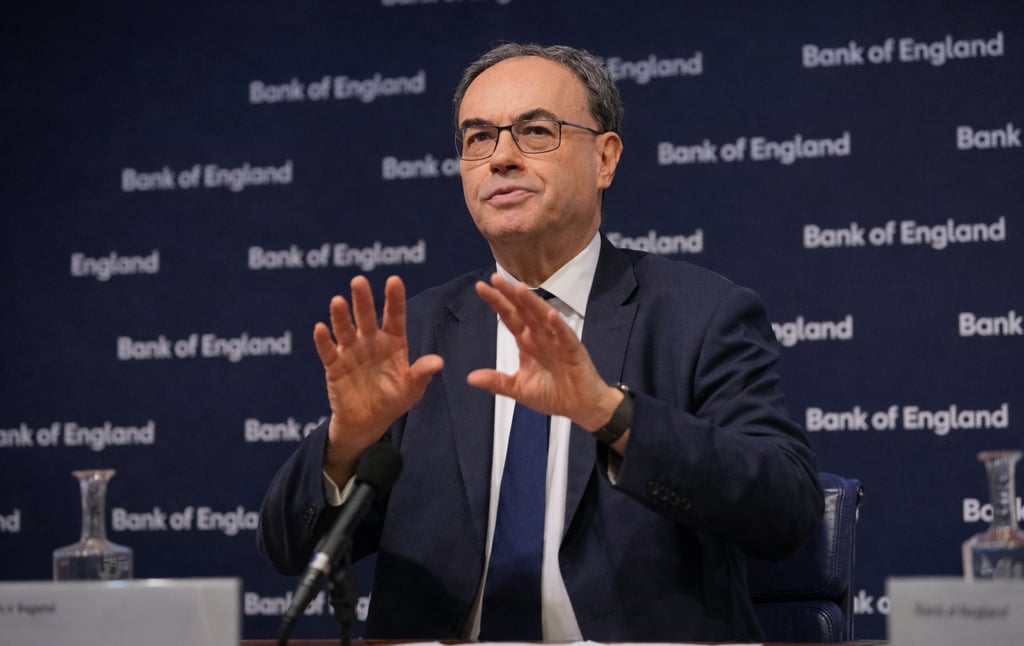
Bank of England Governor Bailey Warns Central Banks Must Challenge Populism Amid Trump's Criminal Probe of Fed Chair Powell
In an unusually forceful defense of institutional independence and multilateral cooperation, Bank of England Governor Andrew Bailey has called on central bankers and international financial policymakers to actively "challenge back" against rising populist forces that threaten to undermine the credibility and effectiveness of economic institutions worldwide. Bailey's remarks, delivered at a closed-door meeting of the Bellagio Group of economists and central bank officials earlier this week but published on Friday, January 16, 2026, come amid unprecedented tensions between political leadership and monetary authorities—most notably the Trump administration's launch of a criminal investigation into Federal Reserve Chair Jerome Powell that has sent shockwaves through the global financial community.
Bailey's Bellagio Group Speech: A Defense of Institutional Independence
According to the full text of his speech published on the Bank of England's official website and reported by Reuters, Bloomberg, the BBC, and other major international outlets, Bailey identified what he termed the "rise of so-called populism" as making the fundamental tasks of economic governance and international cooperation substantially harder. Speaking to the Bellagio Group—an elite gathering of central bankers, finance officials, and economists—Bailey outlined three defining features of contemporary populism that he argued pose direct threats to effective policymaking.
"First, a tendency to emphasize domestic production and wealth distribution as in opposition to international openness rather than as complementary," Bailey stated, according to the official Bank of England transcript. "Second, a tendency to attribute unfavorable conditions to outside forces, rather than to point to shared challenges. And, third, encouraging a decline in trust such that institutions—domestic and international—are viewed as distant, unresponsive and acting for the benefit of powerful and uncontrollable interests."
The Bank of England Governor's remarks, as reported by Reuters and City AM, directly challenged the populist narrative that paints institutions like central banks and international bodies such as the International Monetary Fund as serving elite interests rather than public welfare. "Part of the purpose of international agencies is that from time to time they have to tell us what we don't want to hear, let alone act upon," Bailey said. "Of course, they have to be accountable for the accuracy and quality of the assessment. But, accepting that, we have to call out messenger shooting."
Bloomberg reported that Bailey framed his defense of multilateral institutions within the context of persistently weak global growth and declining living standards, which he argued have made it harder for populations to perceive the benefits of international economic cooperation. "Populism is making it harder to tackle the world's economic challenges and is no answer to the problems of weak growth and living standards," Bloomberg quoted Bailey as saying, adding that the governor emphasized that soft economic performance has created fertile ground for anti-institutional sentiment.
Call to Action: "Challenge Back, in Deeds More Than Just Words"
Perhaps most significantly, Bailey moved beyond mere diagnosis to issue a direct call to action for fellow institutional leaders. As reported by City AM, Reuters, and RTÉ, the governor urged economic policymakers to actively resist attempts to discredit or intimidate independent institutions. "For those of us entrenched in institutions, our response must be to push back, demonstrating this through actions rather than mere rhetoric," Bailey stated, according to Reuters. "However, we also need to make certain that our own affairs are well-managed."
This emphasis on demonstrating institutional integrity through actions represents an acknowledgment that central banks and multilateral organizations must not only defend their independence rhetorically but also ensure their operations maintain public trust through transparency, accountability, and demonstrable commitment to public welfare. City AM reported that Bailey warned erosion of trust in institutions like the Bank of England would directly harm prosperity and increase economic instability.
"[We must] recognize the importance of, and invest in the broadest sense, in the multilateral institutions," Bailey said, according to City AM's reporting. "We should not pretend that all has been perfect, and we must be prepared to make changes where they are called for, as was done in the past. But we must be clear and agreed that a world without effective institutions is unlikely to be stable."
The governor also identified what he characterized as four major "headwinds" to economic and social progress that multilateral institutions must address: aging populations that weigh on growth and add fiscal pressure; economic shocks associated with climate change; defense spending's fiscal consequences; and restrictions being placed on free trade. "Now is not the time to close the world to the benefits of trade," Bailey warned, as reported by City AM. "But to do this, we have to be realistic and assertive in defining and achieving robust openness."
Context: Trump Administration's Unprecedented Attack on Federal Reserve Independence
Bailey's speech cannot be separated from the extraordinary crisis currently engulfing the U.S. Federal Reserve and its chair, Jerome Powell. As reported by the BBC, NBC News, CNN, and Reuters, the U.S. Department of Justice initiated a criminal investigation into Powell in late 2025, issuing subpoenas to the Federal Reserve in what multiple sources describe as an unprecedented escalation in the conflict between President Donald Trump and the central bank over monetary policy decisions.
According to NBC News, citing three sources familiar with the matter, the U.S. Attorney's Office for the District of Columbia launched the investigation in November 2025 without notifying key officials within the Justice Department, the White House, or the Treasury Department before issuing subpoenas related to Federal Reserve office renovation projects. The investigation became public on January 12, 2026, when Powell himself disclosed its existence in an unusual public statement.
"The threat of criminal charges arises from the Federal Reserve making interest rate decisions based on our best judgment of what serves the public interest, rather than aligning with the president's wishes," Powell stated, as reported by NBC News. Powell characterized the investigation as "unprecedented" and suggested it stemmed from Trump's frustration over the Fed's refusal to cut interest rates as quickly as the president has publicly demanded.
The BBC reported that federal prosecutors have issued subpoenas to the Federal Reserve and hinted at potential criminal indictment related to Powell's testimony before a Senate committee concerning Federal Reserve property renovations—allegations Powell and numerous observers have characterized as a pretext for political intimidation. CNN noted that the investigation comes after months of Trump criticizing Powell's monetary policy decisions and even hinting at the possibility of firing him, though the president's legal authority to dismiss the Fed chair remains uncertain.
Trump himself told NBC News he was unaware of the investigation initially, while simultaneously continuing his criticism of the Fed chair. "He should feel pressure because the rates are far too high," Trump said. "That's the only pressure he's got." However, Reuters reported that in late December 2025, Trump had indicated legal actions against Powell were forthcoming, stating: "We're considering filing a suit against Powell for incompetence."
Unprecedented Global Solidarity: 11 Central Bank Chiefs Rally Behind Powell
The Trump administration's investigation triggered an extraordinary response from the international central banking community. As reported by Reuters, the BBC, and Central Banking magazine, on January 13, 2026, the governors of eleven major central banks issued an unprecedented joint statement expressing "full solidarity" with Powell and the Federal Reserve's institutional independence.
The signatories of this historic statement, according to Central Banking and the BBC, included European Central Bank President Christine Lagarde, Bank of England Governor Andrew Bailey, Bank of Canada Governor Tiff Macklem, and Pablo Hernández de Cos, General Manager of the Bank for International Settlements, among others. The statement affirmed that "Chair Powell has acted with integrity, remained focused on his responsibilities, and demonstrated an unwavering commitment to the public good."
"We stand in full solidarity with the Federal Reserve System and its Chair Jerome H. Powell," the joint statement read, according to Reuters. "The independence of central banks is essential to ensuring price stability, financial stability, and economic stability for the benefit of the citizens we serve."
This coordinated international response represents an almost unprecedented intervention by central bankers into what might typically be considered a domestic political matter within a single country. The extraordinary nature of the statement underscores the degree to which global monetary authorities view the Trump administration's actions as threatening fundamental principles of central bank independence that have been established as international norms over recent decades.
Reuters reported that the coordinated response was also joined by a separate statement from former Federal Reserve chairs Ben Bernanke, Janet Yellen, and Alan Greenspan, along with former Treasury secretaries from both major U.S. political parties, who accused the Trump administration of behaving like "emerging markets with weak institutions." CNN noted that even some Republican senators, including Thom Tillis of North Carolina, quickly connected the Powell investigation to Trump's broader efforts to "end the independence of the Federal Reserve."
Broader Implications: The Future of Central Bank Independence
Bailey's speech, while not explicitly referencing the Powell investigation according to City AM—despite his being a signatory of the central bank solidarity statement—clearly speaks to the broader institutional vulnerabilities the Federal Reserve crisis exemplifies. His warning that populism encourages viewing institutions as "distant, unresponsive and acting for the benefit of powerful and uncontrollable interests" directly addresses the rhetorical strategies employed by political leaders seeking to undermine institutional authority.
The Bank of England governor's emphasis on multilateral institutions needing to "tell us what we don't want to hear" and his condemnation of "messenger shooting" can be read as implicit criticism of administrations that respond to unwelcome economic analysis or policy decisions with legal threats or political intimidation. His call for institutions to "challenge back, in deeds more than just words" while ensuring "our houses are in order" suggests a strategy of defending independence through both assertive public communication and demonstrable institutional integrity.
RTÉ reported that Bailey's speech emphasized the critical importance of international agencies whose role includes delivering uncomfortable messages about economic imbalances and risks. "Of course, they have to be accountable for the accuracy and quality of the assessment," Bailey acknowledged, according to RTÉ. "But, accepting that, we have to call out messenger shooting."
The Global Banking and Finance publication noted that Bailey's remarks represent a significant intervention by one of the world's most influential central bankers into debates about the proper relationship between monetary authorities and elected political leadership. The timing of the speech's publication—released Friday, January 16, 2026, just days after the global central banking community rallied behind Powell—ensures maximum attention to Bailey's arguments at a moment when central bank independence faces perhaps its most serious challenge in decades.
Four Headwinds and the Case for International Cooperation
Beyond his warnings about populism, City AM reported that Bailey identified four structural challenges requiring coordinated international responses: demographic aging that reduces growth potential and increases fiscal pressures; climate change creating economic shocks and transition costs; rising defense spending with significant fiscal implications; and increasing restrictions on international trade that threaten efficiency gains from economic openness.
"The rise of populism makes the task [of multilateral institutions] harder," Bailey said, according to City AM. His argument suggests that precisely when global cooperation is most needed to address these structural challenges, political dynamics are making such cooperation more difficult to sustain. The governor's call for "robust openness" in trade policy, delivered at a moment when protectionist sentiment is rising across major economies, represents a direct challenge to nationalist economic agendas.
Bloomberg emphasized that Bailey's speech defended the international economic system and its multilateral institutions at a time when weak growth has made identifying the benefits of internationalism more difficult for ordinary citizens. This acknowledgment of the political economy challenges facing pro-globalization arguments suggests Bailey recognizes that defending institutional independence requires not just asserting its importance but demonstrating tangible benefits to skeptical populations.
Conclusion: A Defining Moment for Global Economic Governance
Andrew Bailey's forceful defense of central bank independence and multilateral cooperation, delivered against the backdrop of the Trump administration's unprecedented investigation of Federal Reserve Chair Powell, marks a potentially defining moment in the relationship between democratic politics and technocratic economic institutions. The Bank of England governor's call for institutions to "challenge back" represents a departure from the traditionally apolitical public stance of central bankers, reflecting recognition that institutional independence cannot be taken for granted but must be actively defended.
The convergence of Bailey's speech with the extraordinary joint statement from eleven central bank chiefs signals that global monetary authorities view the threats to institutional independence as sufficiently serious to warrant unprecedented coordinated action. Whether this defensive mobilization proves sufficient to protect central bank autonomy amid rising populist pressures remains to be seen. But Bailey's argument that "a world without effective institutions is unlikely to be stable" stakes out clear ground: the integrity of independent monetary policy and multilateral economic cooperation represents not merely a technical preference but a fundamental prerequisite for economic stability and prosperity.
As the Trump administration's investigation of Powell continues and political pressures on central banks intensify across multiple democracies, Bailey's Bellagio Group speech may be remembered as an early articulation of how institutional leaders chose to respond to populist challenges—not with retreat or accommodation, but with principled defense of independence grounded in demonstrated commitment to public welfare.
Updates
Delivering timely news and inspiring life stories.
Links
Contact
+917976343438
© 2025. All rights reserved.