
Canada Breaks With US to Strike Landmark Trade Deal With China, Slashing EV and Canola Tariffs
Prime Minister Carney announces Canada will cut 100% tariff on Chinese EVs to 6.1% in exchange for reduced duties on canola, marking major shift from US policy.
GLOBAL TRADE & INTERNATIONAL RELATIONS
Sandeep Gawdiya
1/17/20267 min read
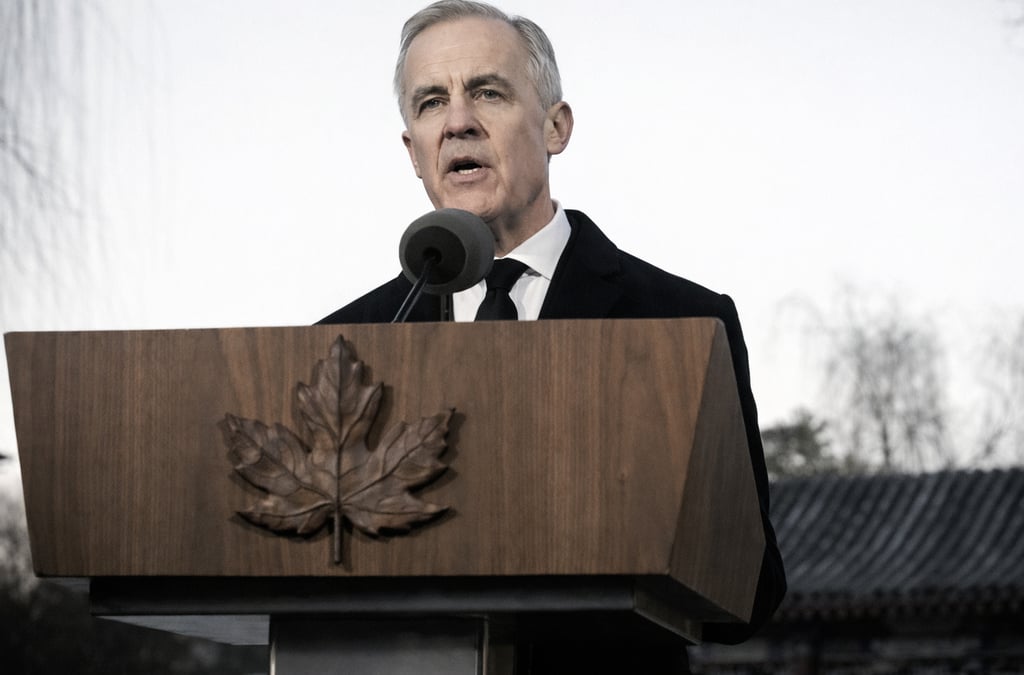
In a dramatic departure from United States trade policy, Canadian Prime Minister Mark Carney announced Friday a landmark agreement with China that will slash tariffs on electric vehicles and agricultural products, signaling a fundamental recalibration of Canada's relationship with both global superpowers. The deal, announced after two days of high-level meetings in Beijing with Chinese President Xi Jinping, allows up to 49,000 Chinese electric vehicles into Canada annually at a dramatically reduced tariff rate of 6.1%—down from the 100% tariff Canada had imposed in alignment with Washington just two years ago.
In exchange, China agreed to reduce its combined tariff on Canadian canola seeds from approximately 84% to around 15% by March 1, 2026, reopening a critical market for Canadian farmers that had been effectively closed by Beijing's retaliatory trade measures. The preliminary agreement also addresses barriers affecting Canadian peas, seafood, and other agricultural exports, while establishing what both leaders characterized as a "new strategic partnership" between the two Pacific nations.
A Calculated Pivot Amid Trump's Threats
Carney's Beijing announcement represents far more than a trade adjustment—it constitutes a strategic pivot by a traditional U.S. ally caught between two superpowers as President Donald Trump threatens Canada with annexation rhetoric and punishing tariffs. The timing is particularly significant, coming as the three North American nations approach a critical review of the USMCA free trade agreement, which Trump recently dismissed as "irrelevant" while floating the idea of making Canada the "51st state".
"Our relationship has progressed in recent months with China. It is more predictable and you see results coming from that," Carney told reporters in Beijing, drawing an implicit contrast with the turbulent and unpredictable relationship with Washington. The Canadian prime minister emphasized that his government is focused on building an economy less reliant on the United States during what he described as "a time of global trade disruption".
Vivek Astvansh, a business professor at McGill University in Montreal, characterized the move bluntly: "Carney has indicated to the Trump administration that it is becoming more favorable towards China." The message appears designed to demonstrate that Canada has alternatives to U.S. markets and is prepared to exercise them if Washington continues its aggressive trade posture.
The Mechanics of the EV Agreement
Under the carefully structured agreement, Canada will initially permit 49,000 Chinese electric vehicles to enter the country annually at the most-favored-nation tariff rate of 6.1%—representing a return to import volumes close to the year prior to recent trade tensions in 2023-2024. This quota is designed to grow to approximately 70,000 vehicles over five years, though it will remain capped at less than 3% of the total Canadian automotive market.
Crucially for Canadian consumers, the agreement stipulates that by 2030, at least 50% of the quota must be reserved for affordable electric vehicles with an import price of $35,000 Canadian or less. This provision addresses one of the major barriers to EV adoption in Canada—the high cost of currently available models—and could significantly accelerate the country's transition to electric transportation.
The Canadian government emphasized that the agreement is expected to catalyze "considerable new Chinese joint-venture investment in Canada with trusted partners" to protect and create automotive manufacturing jobs while ensuring a robust build-out of Canada's EV supply chain. Carney framed this as an opportunity for Canada to learn from innovative partners, enhance local demand, and access supply chains necessary to establish a competitive electric vehicle sector.
Greg Layson, digital and mobile editor at Automotive News Canada, characterized the immediate impact as modest: "This is a baby step. This is the door cracking. It's not the floodgate opening. That is the takeaway from this." However, the symbolic and strategic implications extend far beyond the initial numbers.
Agricultural Relief for Canadian Farmers
For Canada's agricultural sector, particularly canola producers, the agreement provides critical relief from punitive Chinese tariffs that had devastated exports. China's retaliatory trade measures, imposed in response to Canada's alignment with U.S. policy on Chinese EVs and other issues, had included 100% duties on Canadian canola oil and meal, 25% tariffs on pork and seafood, and a crushing 75.8% tariff on canola seeds imposed in August 2025.
The collective impact of these tariffs effectively closed the Chinese market to Canadian canola—a $4 billion industry for which China represents the largest export market. Chinese imports from Canada fell 10.4% in 2025 to $41.7 billion, according to Chinese trade data, underscoring the economic pain Canadian exporters had endured.
By March 1, 2026, China has committed to reducing combined tariffs on Canadian canola seed to approximately 15%, restoring market access that Canadian farmers had lost. The agreement also addresses barriers to Canadian peas, seafood, and other agricultural products, providing comprehensive relief to sectors that had been collateral damage in broader geopolitical tensions.
Mixed Reactions: From Trump's Shrug to Ontario's Alarm
The international response to Carney's agreement has revealed the complex crosscurrents of North American trade politics. President Trump, despite his administration's generally hawkish stance on China, surprised observers by offering a relatively mild reaction to Canada's pivot.
"It's a good thing for him to sign a deal," Trump told reporters Friday, adding, "If you can make a deal with China, you should do that." The president's comments stood in stark contrast to earlier statements from U.S. Trade Representative Jamieson Greer, who called Canada's decision "problematic" and warned that Ottawa might "come to regret it in the long run".
U.S. Senator Marco Rubio took a harder line, declaring that America "got absolutely rolled" by the Canada-China deal and expressing concern about Chinese EVs gaining a foothold in North America that could eventually threaten U.S. markets.
Within Canada, reactions have been sharply divided. Ontario Premier Doug Ford, whose province serves as Canada's automotive manufacturing heartland, expressed alarm about the agreement. "The government is opening the flood to cheap Chinese-made electric vehicles without any real guarantees of equal investments in Canada's economy, auto sector, and supply chain," Ford posted on social media platform X.
Canadian automotive industry leaders have sought clarity on how the agreement will affect domestic manufacturing competitiveness, particularly given the integrated nature of North American automotive supply chains. The concern centers on whether increased Chinese EV imports might disadvantage Canadian and U.S. manufacturers while failing to deliver promised investment.
Strategic Context: Frozen Relations Thaw
The trade agreement marks a dramatic thaw in Canada-China relations that had been frozen since 2018, when Canada arrested Huawei executive Meng Wanzhou at Vancouver airport on a U.S. extradition request. China retaliated by detaining two Canadian citizens—Michael Kovrig and Michael Spavor—on espionage charges in what was widely viewed as hostage diplomacy. The "two Michaels" spent nearly three years in Chinese detention before being released in September 2021, coinciding with Meng's return to China following a deal with U.S. prosecutors.
Since then, bilateral relations remained strained, with Canada largely aligning with U.S. positions on issues ranging from Xinjiang human rights concerns to technology security and trade. Former Prime Minister Justin Trudeau maintained the 100% tariff on Chinese EVs, imposed 25% tariffs on Chinese steel and aluminum, and generally kept Beijing at arm's length.
Carney's pivot represents a calculated gamble that rebuilding ties with China can provide economic benefits and strategic flexibility that outweigh risks of antagonizing Washington. A crucial advance came in October when Carney and Xi met at a regional summit in South Korea, where the Chinese leader extended an invitation to visit Beijing. The speed of Carney's subsequent trip signaled urgency in recalibrating the relationship.
The USMCA Wild Card
Perhaps the greatest uncertainty surrounding Carney's China agreement involves its potential impact on the upcoming USMCA review. The trade pact among Canada, the United States, and Mexico is scheduled for renegotiation, and the Trump administration has indicated it wants greater alignment among the three nations—particularly regarding exclusion of Chinese goods and investments from North America.
Carney's decision to open Canada's doors to Chinese EVs places Ottawa at odds with Washington's stated objectives just as these critical negotiations approach. However, some analysts suggest this may be precisely Carney's intent—demonstrating that Canada has alternatives may strengthen his negotiating position with Trump, who has threatened punitive tariffs on Canadian goods.
John Mahon, director of MacPherson Leslie & Tyerman's advisory division and former deputy director focusing on China at Global Affairs Canada, emphasized that the tariff-rate quota system limiting Chinese EVs to less than 3% of the Canadian market appears designed to alleviate concerns from both Washington and Ontario's automakers. "This deal does not open the floodgates for Chinese EVs but allows for a controlled introduction of trade to test the market and validate potential investments," Mahon stated.
Economic and Environmental Implications
The immediate beneficiaries of the agreement are likely to be Canadian consumers, who will gain access to more affordable electric vehicle options. With Chinese EVs entering at dramatically lower price points than currently available models—particularly those meeting the sub-$35,000 threshold specified in the agreement—the deal could significantly accelerate EV adoption in Canada.
Experts predict that Chinese manufacturers could capture approximately 10% of Canada's electric vehicle market under the new arrangement. This will create competitive pressure on U.S.-based companies like Tesla, which have been expanding their Canadian market presence. The increased competition may drive down prices across the board, benefiting consumers but potentially squeezing profit margins for established manufacturers.
From an environmental perspective, the increased availability of affordable EVs could help Canada meet its climate commitments by accelerating the transition away from gasoline-powered vehicles. However, questions remain about whether the benefits of increased EV adoption outweigh potential economic costs to domestic automotive manufacturing.
Looking Ahead: High-Wire Diplomacy
As John Rapley noted in The Globe and Mail, Carney's Beijing achievements are significant, but questions about what comes next loom large. "Ultimately, Carney seems to believe that he has more flexibility in navigating the dynamics between the two global superpowers and various domestic stakeholders than is generally recognized," Rapley observed. "He appears willing to risk a fallout from the USMCA in order to diversify Canadian trade and forge a new trajectory for the Canadian automotive sector".
Whether this high-wire diplomatic act succeeds will depend on multiple factors: China's follow-through on promised investments in Canadian automotive manufacturing, Trump's response during USMCA renegotiations, the reaction of Canadian consumers and manufacturers to increased Chinese EV availability, and the broader trajectory of U.S.-China relations.
For now, Carney's message to both superpowers is clear: Canada is charting its own course, seeking to maximize its strategic autonomy even as it navigates between the world's two largest economies. Whether this gamble pays off will become evident in the months ahead as the full implications of this landmark agreement unfold.
Updates
Delivering timely news and inspiring life stories.
Links
Contact
+917976343438
© 2025. All rights reserved.