
Chile Declares State of Catastrophe as Deadly Wildfires Ravage Central Regions, Killing at Least 18 and Forcing Mass Evacuations
VALPARAÍSO, Chile — Chilean President Gabriel Boric has declared a state of catastrophe for multiple regions as devastating wildfires continue to tear through central Chile, claiming at least 18 lives and forcing more than 20,000 residents to evacuate their homes. The rapidly spreading blazes, fueled by extreme heat, powerful winds, and prolonged drought conditions, have engulfed thousands of hectares of land and threaten several populated areas in what officials are calling one of the worst wildfire emergencies in the country's recent history.
WORLD NEWS & NATURAL DISASTERS
Sandeep Gawdiya
1/19/20267 min read
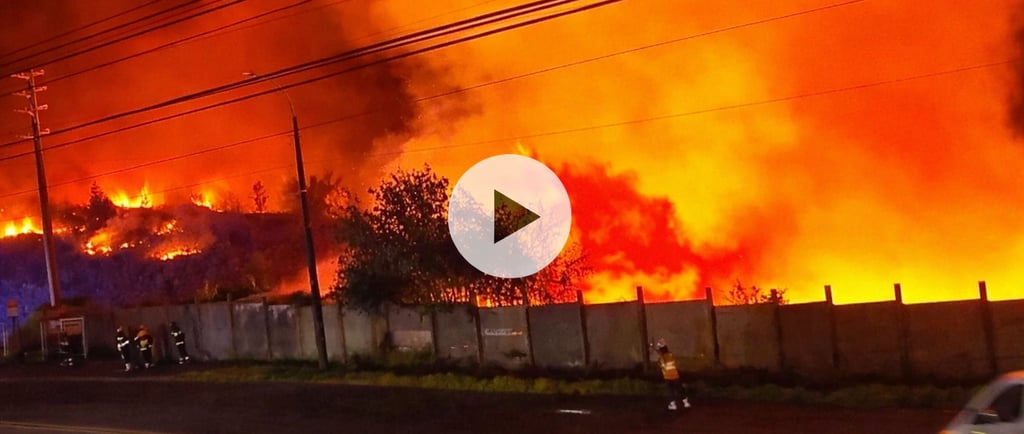
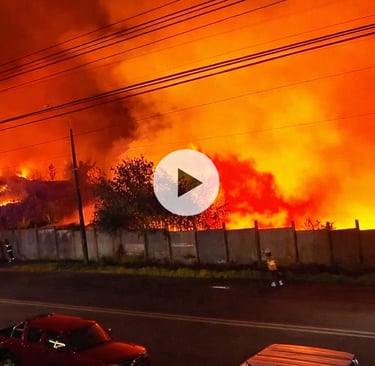
The fires, which ignited on Friday evening in the coastal region of Valparaíso and quickly spread inland toward Santiago, have overwhelmed firefighting resources and prompted an urgent mobilization of military personnel, aircraft, and international assistance. As of Sunday morning local time, authorities confirmed that 18 people have perished in the flames, with dozens more reported missing and at least 47 individuals hospitalized with severe burns and smoke inhalation.
"This is an unprecedented crisis that demands our immediate and total response," President Boric stated during an emergency press conference held in Santiago early Sunday. "We are facing extreme weather conditions that have turned our beautiful landscape into a tinder box. My government is deploying every available resource to combat these fires and protect our citizens. I extend my deepest condolences to the families who have lost loved ones in this tragedy."
The declaration of a state of catastrophe grants the government expanded powers to coordinate emergency responses, mobilize military forces, restrict movement in affected areas, and allocate emergency funds without the usual bureaucratic delays. The decree affects the regions of Valparaíso, Metropolitan Santiago, O'Higgins, and Maule, where more than 60 separate fire fronts are currently active.
Meteorological officials attribute the severity of the fires to a dangerous combination of factors that have created near-perfect conditions for rapid fire spread. Temperatures across central Chile have soared above 40 degrees Celsius (104 degrees Fahrenheit) in recent days, while humidity levels have dropped below 10 percent in some areas. Compounding the situation, powerful coastal winds gusting up to 70 kilometers per hour have been driving the flames across the landscape at alarming speeds, making containment efforts extremely difficult.
"We are dealing with a perfect storm of conditions," explained Dr. Rodrigo Fernández, a climate scientist at the University of Chile. "The combination of record-breaking heat, critically low humidity, strong winds, and vegetation that has been dried out by years of below-average rainfall has created an environment where fires can ignite easily and spread explosively. These are exactly the conditions that led to catastrophic fires in Australia, California, and the Mediterranean in recent years."
The most severely affected area is the hillside communities surrounding Valparaíso, Chile's third-largest city and a UNESCO World Heritage site known for its colorful historic architecture and steep hillside neighborhoods. Flames have raced through informal settlements and residential areas built on the hills overlooking the Pacific Ocean, destroying hundreds of homes and forcing residents to flee with whatever possessions they could carry.
Carmen Morales, 56, a resident of the Cerro La Cruz neighborhood in Valparaíso, described the terrifying moments when fire descended on her community. "We saw the smoke in the distance around noon, but nobody thought it would reach us so quickly," Morales said, speaking from an emergency shelter. "Within an hour, the flames were at our doorstep. The heat was unbearable. People were screaming, running in all directions. I grabbed my granddaughter and we ran down the hill. When I looked back, our house was already burning. Everything we owned is gone."
Chile's National Forest Corporation (CONAF) has mobilized more than 2,500 firefighters and forest brigade members to battle the blazes. The government has also deployed military units totaling approximately 1,400 personnel, along with 23 helicopters and 14 fixed-wing aircraft equipped with water-dropping capabilities. Despite these extensive resources, fire officials acknowledge that they are struggling to contain the multiple fire fronts that continue to emerge.
"We are fighting on numerous fronts simultaneously," said Colonel Mario Sepúlveda, coordinator of the national firefighting response. "Every time we make progress on one fire, the wind shifts and embers start new blazes kilometers away. Our crews are working 24-hour shifts, but the conditions are incredibly challenging. The terrain is difficult to access, and the heat is so intense that our aircraft sometimes cannot fly safely."
International assistance has begun arriving from neighboring countries and international partners. Argentina has sent three firefighting aircraft and a 60-person brigade of specialized wildfire fighters. Spain, Peru, and Brazil have also pledged support, including additional aircraft and technical expertise. The United States Forest Service has offered to send a team of wildfire management specialists to assist Chilean authorities with coordination and strategy.
The human toll of the disaster extends far beyond the confirmed fatalities. Hospitals throughout the region are treating burn victims, many in critical condition. Dr. Patricia Vargas, head of the burn unit at Valparaíso's Carlos Van Buren Hospital, described the challenging conditions facing medical teams. "We have received 29 patients with severe burns in the past 24 hours," Vargas said. "Many have burns covering more than 40 percent of their bodies. We are doing everything possible, but our resources are stretched to the limit."
Emergency shelters have been established in schools, sports facilities, and community centers to house the more than 20,000 people who have been evacuated from their homes. Aid organizations report that many evacuees arrived with nothing but the clothes on their backs, having fled so quickly that they left behind all possessions, documents, and medications. The Chilean Red Cross and other humanitarian organizations are working to provide food, water, clothing, and medical supplies to those displaced by the fires.
Environmental scientists warn that the current fires are part of a broader pattern of increasingly severe wildfire seasons in Chile linked to climate change and land management practices. Chile has experienced recurring megafires in recent years, including devastating blazes in 2017 that killed 11 people and burned more than 500,000 hectares, and fires in 2023 that destroyed thousands of homes and claimed 26 lives.
"What we are witnessing is the new normal for Chile and many other regions around the world," said Dr. María Elena González, a forest ecology researcher. "Climate change is extending the fire season, increasing the frequency of extreme heat events, and creating conditions that make fires larger and more intense. At the same time, urban expansion into wildland areas is putting more people at risk. We need to fundamentally rethink how we manage our landscapes and where we allow development."
The economic impact of the fires is expected to be substantial, though exact figures are not yet available. In addition to residential property destruction, the fires have damaged critical infrastructure including power lines, water supply systems, and transportation networks. Several major highways remain closed due to fire danger and poor visibility from smoke. The port of Valparaíso, one of Chile's most important commercial hubs, has suspended operations as a precautionary measure.
Agricultural losses are also mounting, with vineyards, fruit orchards, and timber plantations affected by the flames. Chile's agricultural sector, particularly its wine industry, is a major contributor to the national economy and a significant exporter to international markets. Industry representatives estimate that losses could reach hundreds of millions of dollars once the full extent of the damage is assessed.
The fires have also raised questions about Chile's preparedness for extreme wildfire events and the adequacy of early warning systems. Critics point out that despite previous catastrophic fire seasons, many vulnerable communities lack adequate firebreaks, evacuation plans, and communication systems. Some residents in affected areas reported receiving little or no warning before flames reached their neighborhoods.
"We have been through this before, yet we seem unable to learn the lessons," said Senator Matías Walker, who represents the Valparaíso region. "Every few years we face these disasters, we promise to do better, and then we fail to implement the necessary changes. We need year-round investment in fire prevention, better land use planning, and robust early warning systems. Reacting to emergencies is not enough."
Government officials have defended their response, emphasizing the unprecedented nature of the current conditions and the speed with which the fires developed. Interior Minister Carolina Tohá acknowledged that improvements are needed but stressed that the immediate priority is protecting lives and containing the fires. "There will be time for evaluation and lessons learned," Tohá said. "Right now, every resource and every ounce of energy must be focused on the emergency response."
As night fell on Sunday, firefighters continued their exhausting battle against the flames, working by the light of vehicle headlights and portable illumination systems. Weather forecasts offer little hope for improvement in the short term, with high temperatures and strong winds expected to persist for at least another 48 hours. A slight cooling trend and possible precipitation are forecast for midweek, which could provide crucial assistance to firefighting efforts.
For the thousands of Chileans who have lost their homes and the families mourning loved ones, the immediate future is filled with uncertainty. Many evacuees express determination to rebuild, but acknowledge that the process will be long and difficult. Others question whether they should return to areas that seem increasingly vulnerable to catastrophic fires.
"I don't know what we will do," said Roberto Silva, 68, who lost his home of 35 years in the fires. "We built that house with our own hands, raised our children there. It was everything to us. But now I wonder if it is safe to go back. Will this happen again next year? Can we live with that fear?"
As Chile confronts this latest crisis, the tragedy serves as a sobering reminder of the growing challenge posed by extreme wildfires in an era of climate change. Communities around the world, from California to Australia to the Mediterranean, have faced similar devastation in recent years, prompting urgent discussions about adaptation, resilience, and the fundamental changes needed to coexist with fire-prone landscapes.
International climate experts note that Chile's experience offers important lessons for other regions likely to face increasing wildfire risk. The importance of early warning systems, community preparedness, strategic land use planning, and adequate firefighting resources cannot be overstated. Equally critical is addressing the root causes of climate change through reducing greenhouse gas emissions and protecting natural ecosystems that help regulate climate and reduce fire risk.
For now, the people of Chile remain focused on the immediate crisis, hoping for favorable weather, praying for the safety of firefighters, and showing remarkable resilience in the face of tragedy. President Boric has promised that rebuilding efforts will begin as soon as the fires are contained, and that the government will provide comprehensive support to affected families.
"Chile has faced adversity before, and we have always emerged stronger," Boric said. "We will overcome this crisis together, and we will build a more resilient future. To those who have lost so much, know that your nation stands with you. We will not abandon you in this difficult hour."
Updates
Delivering timely news and inspiring life stories.
Links
Contact
+917976343438
© 2025. All rights reserved.