
DOJ Sues Virginia for Voter Registration Data in 24th State Lawsuit as Federal Courts Begin Dismissing Similar Cases
Justice Department files lawsuit against Virginia for refusing voter roll data including SSNs and driver's licenses, as courts dismiss California and Oregon cases in unprecedented federal campaign.
U.S. LAW & ELECTORAL POLICY
Sandeep Gawdiya
1/17/20268 min read
DOJ Sues Virginia for Voter Registration Data in 24th State Lawsuit as Federal Courts Begin Dismissing Similar Cases Amid Growing State Resistance
The U.S. Department of Justice filed a federal lawsuit against the Commonwealth of Virginia on Friday, January 16, 2026, alleging the state failed to provide complete voter registration lists including sensitive personal information such as partial Social Security numbers and driver's license data—marking the 24th state sued by Attorney General Pam Bondi's Justice Department in an unprecedented nationwide campaign to consolidate voter data that critics characterize as "a clear encroachment on states' power to run elections." The Virginia lawsuit, announced by the DOJ's Civil Rights Division, arrives as federal courts have already begun shutting down the administration's efforts, with judges dismissing similar cases in California and Oregon, and as state election officials across the country express alarm about the lack of clarity regarding how the sensitive voter information will be used, stored, and secured—concerns amplified by revelations that the data is being funneled through a Department of Homeland Security system designed to identify non-citizens despite producing no substantial evidence of the widespread voter fraud President Trump has repeatedly claimed exists.
The Virginia Lawsuit: Typos, Political Tone, and Months of Failed Negotiations
According to the official Department of Justice press release and reporting by Democracy Docket, The Hill, Reuters, and local Virginia outlets WTVR and WTKR, the January 16 lawsuit seeks to compel Virginia's Department of Elections and Elections Commissioner Susan Beals to provide the state's complete voter registration database. However, Democracy Docket reported that the complaint contains embarrassing clerical errors that raise questions about the lawsuit's preparation: "on the very first page, the DOJ misspells the state it is suing, labeling the agency the 'Virgina Department of Elections.' The complaint later includes another typo, referring to the defendant 'Commisioner Beals.'"
Beyond typographical mistakes, Democracy Docket noted that "the complaint adopts a more overtly political tone than prior filings. It describes Susan Beals, the state's elections commissioner, as 'an appointee of Governor Glenn Youngkin,' and alleges that 'members of the Youngkin administration' made commitments to produce the voter list that ultimately fell through." This unusually political framing contrasts with typical DOJ legal filings and suggests the lawsuit may be as much about political messaging as legal enforcement.
According to Democracy Docket and WTVR, the lawsuit follows months of unsuccessful negotiations: "The DOJ says Virginia officials engaged in 'extensive discussions' after demand letters were sent in July and August 2025 and that on Jan. 8, representatives for Beals 'expressed in person' that she would not provide the voter list." WJLA reported that the in-person January 8 meeting represented a final attempt at negotiation before the DOJ proceeded with litigation.
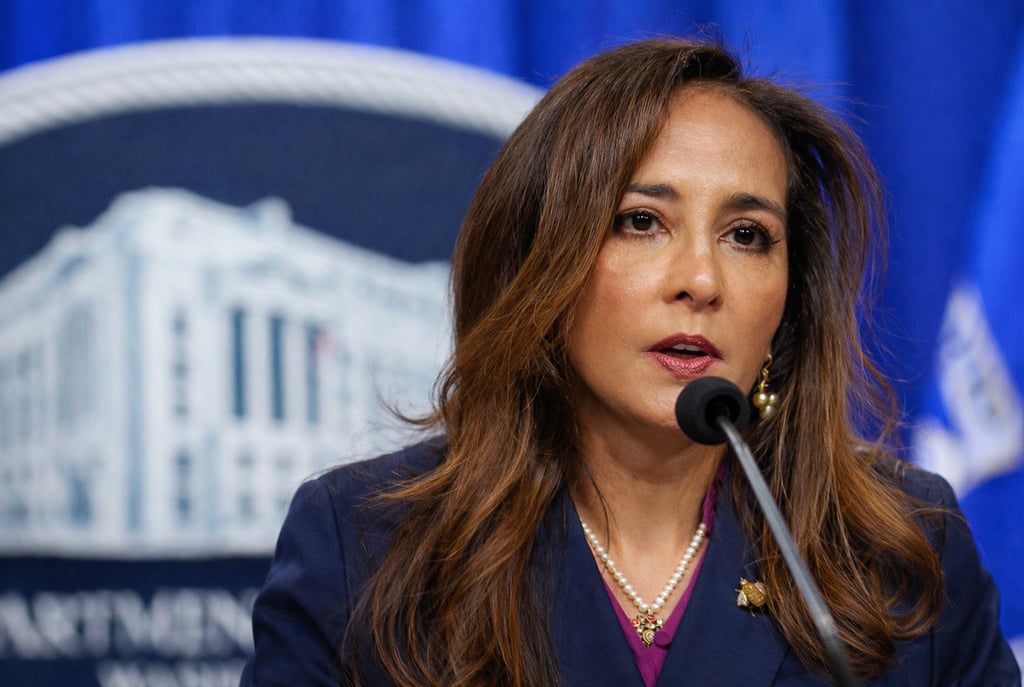
Assistant Attorney General Harmeet Dhillon, who heads the DOJ's Civil Rights Division, announced the lawsuit via social media platform X, stating according to The Hill: "Virginia becomes the 24th state sued for ignoring federal law! @JusticeDept means business — @CivilRights will keep fighting to clean up voter rolls. Happy Friday!"
Attorney General Bondi's Expansive Legal Theory: 24 States and Counting
Attorney General Pam Bondi, who assumed office in Trump's second term, has made voter roll data collection a signature priority. According to the official DOJ statement reported by WTVR, WTKR, and The Hill, Bondi declared: "This Department of Justice has now sued 24 states for failing to provide voter roll data and will continue filing lawsuits to protect American elections. Accurate voter rolls are the foundation of election integrity, and any state that fails to meet this basic obligation of transparency can expect to see us in court."
The Hill reported that Bondi's legal justification rests on three federal statutes: "Bondi argued that both the National Voter Registration Act and the Help America Vote Act grant her access to state voter data. Her office noted that she could invoke the Civil Rights Act to demand the production, examination, and analysis of statewide voter registration lists." According to WJLA and WTKR, these acts "are designed to ensure states maintain proper voter registration and list maintenance programs," with the Civil Rights Act of 1960 specifically empowering the Attorney General to demand production and inspection of registration lists.
According to the Brennan Center for Justice at NYU, as reported by WTVR and tracked on the Brennan Center's public database, "the DOJ has requested election records and data from nearly every state and Washington D.C." The Brennan Center's comprehensive tracker, updated through January 2026, shows that at least 44 states and Washington, D.C., have received requests for complete voter registration lists, with the DOJ having sued "Washington, DC, and 23 states for refusing to do so: Arizona, California, Colorado, Connecticut, Delaware, Georgia, Hawai'i, Illinois, Maine, Maryland, Massachusetts, Michigan, Minnesota, Nevada, New Hampshire, New Mexico, New York, Oregon, Pennsylvania, Rhode Island, Vermont, Wisconsin, and Washington"—now including Virginia as the 24th state.
The Data Sought: Sensitive Personal Information and Privacy Concerns
The scope of the DOJ's data requests has alarmed privacy advocates and state officials. According to Democracy Docket and the Brennan Center, the Justice Department seeks "voters' full names, addresses, birthdates, driver's license and partial Social Security numbers"—far more sensitive information than the publicly available voter files that most states routinely provide.
The Brennan Center reported that "most states have provided a publicly available version (which does not include Social Security numbers and driver's license numbers) or have not provided the voter registration lists at all," but that at least "10 states have either provided or said they will provide their full statewide voter registration lists, including driver's license and Social Security numbers: Alaska, Arkansas, Indiana, Kansas, Louisiana, Mississippi, Nebraska, Tennessee, Texas, and Wyoming"—all states with Republican-controlled governments.
According to The Hill, Minnesota Secretary of State Steve Simon (D) articulated concerns shared by many state election officials, stating that "federal law does not permit the state to release voter data to the DOJ 'unless they provide information about how the information will be used and secured.'" Simon added: "The DOJ remained silent, providing no information about how the data would be protected or used. Instead, they chose to file a lawsuit."
The Brennan Center's analysis emphasized that the administration's data collection efforts are "unprecedented" and noted that "while it is unusual, it is not unprecedented for the DOJ to send a mass mailing to states with questions about election administration. Requesting voter registration databases from such a large number of states, however, is unprecedented." The organization warned that "this bid by the federal government to gather voter records from across the country is cause for concern and poses risks to voters and election officials."
Courts Begin Shutting Down DOJ Efforts: California and Oregon Dismissals
Even as the DOJ expands its litigation campaign, federal judges have begun dismissing the lawsuits on legal grounds. According to NPR, ABC News, Democracy Docket, and the Virginia Lawyers Weekly, a federal judge dismissed the DOJ's lawsuit against California on or around January 15, 2026, dealing "the Trump administration its first legal setback in its unprecedented effort to consolidate voter data traditionally held by states."
Virginia Lawyers Weekly reported that the judge ruled "the request violated privacy laws and could" endanger voter information security, while ABC News noted the judge dismissed "a U.S. Department of Justice lawsuit against California that sought detailed voting records and personal data." Democracy Docket confirmed that "the cases in California and Oregon have been dismissed," indicating at least two successful state defenses against the federal data collection effort.
NPR reported that the California dismissal represented a significant shift from Trump's first term, when states largely resisted federal voter data requests: "However, circumstances have shifted. At least eight Republican-governed states have either willingly provided or indicated their intention to submit their complete statewide registration lists to the administration in this second term, as tracked by the Brennan Center for Justice."
The DHS Connection: SAVE System and the Search for Non-Citizen Voters
According to NPR and the Brennan Center, the voter data collected by the DOJ is being routed through a Department of Homeland Security system designed to identify non-citizens on voter rolls. NPR reported that "in several instances, the data has been processed through a newly designed system at the Department of Homeland Security aimed at identifying noncitizens. NPR was the first to report on the specifics of this system, known as SAVE."
Critically, NPR noted that "despite running tens of millions of records through it, no substantial evidence of the widespread voter fraud that Trump has frequently mentioned has emerged"—undermining the administration's stated justification for the massive data collection effort. The Brennan Center reported that in November 2025, "chief election officials from 10 states sought clarification from the DOJ and Department of Homeland Security on how the statewide voter registration lists will be used," and that "a DHS official told state election officials that it had neither received nor requested any voter data from the DOJ. However, the Trump administration then released a statement asserting that the DOJ was sharing the voter registration data it collects with DHS"—contradicting the DHS official's earlier assurances.
Legal Skepticism: Inadequate Statutory Justifications
Legal experts and the Brennan Center have questioned whether the DOJ's cited statutory authorities actually support the broad data requests. The Brennan Center's analysis noted that "the law requires that the DOJ provide a 'basis and purpose' for the request. Many of its letters to states do not appear to satisfy this requirement."
According to the Brennan Center, the DOJ's National Voter Registration Act rationale "falls short, however, as a single snapshot of the voter rolls doesn't provide enough information to evaluate a state's list-maintenance practices"—because assessing list maintenance requires examining changes over time, not a single database snapshot. Similarly, the Help America Vote Act justification fails because "looking at a voter file alone would not allow the DOJ to assess whether jurisdictions requested certain identifying information at the time of registration"—that determination requires examining registration processes, not final voter lists.
These analytical weaknesses may explain why federal judges have begun dismissing the DOJ lawsuits, finding the statutory justifications insufficient to override state authority over election administration and voter privacy protections.
Virginia's Context: Youngkin Executive Order and Prior Conflicts
The Virginia lawsuit arrives amid complex recent history regarding the state's voter rolls and federal oversight. WJLA reported that "in September, Gov. Glenn Youngkin issued an executive order aimed at strengthening election security as Virginians prepared for early voting in the 2025 general election. The order directed the Virginia Department of Elections to update system standards, improve collaboration with federal agencies and review the state's voter rolls."
However, the DOJ's own archives reveal prior conflict with Virginia over voter roll management. According to a February 2025 DOJ press release preserved in Justice Department archives, "a federal court in the Eastern District of Virginia has entered an order requiring the Commonwealth of Virginia to cease a program to remove voters from Virginia's voting rolls between now and the Nov. 5 general election"—indicating the Trump administration's Justice Department had previously sued Virginia for removing too many voters, and is now suing for not providing voter data to facilitate such removals, creating apparent policy contradictions.
The Broader Federalism Debate: State vs. Federal Election Authority
The DOJ's nationwide voter data collection campaign has reignited fundamental debates about federalism and the constitutional allocation of election administration authority. The Brennan Center, quoted by WTVR, characterized the effort as "unprecedented and a clear encroachment on states' power to run elections"—invoking the Constitution's grant of election administration authority to state governments.
WTVR noted that state officials view the lawsuit as part of a broader federal overreach into traditionally state-controlled election processes. The resistance from both Democratic and Republican state officials—though Republican-governed states have been more compliant—suggests concerns transcend partisan politics and reflect institutional tensions between state sovereignty and federal authority.
The Virginia lawsuit and its 23 predecessors raise questions about whether the Trump administration's Justice Department possesses the statutory and constitutional authority to compel states to surrender sensitive voter information absent specific evidence of legal violations requiring such data for enforcement. As federal courts begin answering these questions unfavorably to the DOJ—with California and Oregon dismissals potentially previewing outcomes in other jurisdictions—the administration faces the prospect that its ambitious voter data consolidation project may founder on federalism principles and privacy protections that judges find more compelling than the DOJ's stated election integrity justifications.
With the Virginia case now joined and at least 20 other state lawsuits pending, the coming months will determine whether the Trump administration succeeds in creating an unprecedented federal voter database or whether courts and state resistance force a retreat that reaffirms traditional state authority over election administration and voter data protection.
Updates
Delivering timely news and inspiring life stories.
Links
Contact
+917976343438
© 2025. All rights reserved.