
Growing Tensions at Manchester United: How Ruben Amorim’s Relationship With the Club Broke Down
Ruben Amorim’s turbulent spell at Manchester United comes under the spotlight as tensions with the club hierarchy boil over. From January transfer frustrations and tactical disputes to explosive media comments and expert pundit reaction, this in-depth blog breaks down how authority, structure, and long-term vision collided at Old Trafford — and why the breakdown between Ruben Amorim and Manchester United became inevitable.
Sandeep
1/5/20264 min read
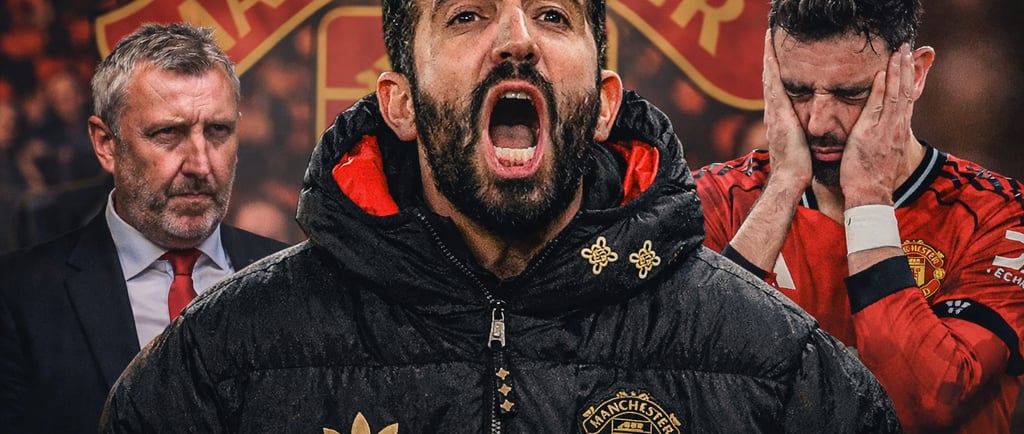
Tensions between Ruben Amorim and the hierarchy at Manchester United have been building steadily, culminating in a public breakdown that ultimately proved unsustainable. While disagreements over January transfers are common in football, this situation went far beyond routine friction — exposing a deeper clash over authority, tactics, and long-term vision.
Transfer Window Frustration: Short-Term Ambition vs Long-Term Planning
Amorim has grown increasingly dissatisfied with the pace and scale of United’s recruitment work. From his perspective, immediate January investment was essential to push the team into Champions League contention.
The club, however, have remained firm in sticking to a long-term financial and sporting plan, resisting short-term spending that could disrupt future windows. While United’s leadership acknowledge the squad is currently stretched, they believe this pressure will ease soon with players returning from international duty and injuries.
This fundamental difference in priorities created persistent tension behind the scenes.
Tactical Dispute: The 3-4-3 Flashpoint
At the core of the strained relationship lies a disagreement over tactical direction. Amorim has been committed to his 3-4-3 system, arguing that it represents the best long-term identity for the team — but only if backed by significant investment.
Senior figures at the club questioned:
Whether the system suited the current squad
Amorim’s willingness to adapt
Frequent shifts between a back four and back five
These concerns fed into doubts over consistency and progress, further straining trust between the coach and the hierarchy.
A Shift in Tone: Media Signals of Discontent
For weeks, Amorim hinted at frustration during media appearances. On Christmas Eve, he openly admitted that achieving his “perfect” 3-4-3 would require substantial spending, adding that he was beginning to realise it might not happen.
Days later, he spoke about the need to find “common ground” with director of football Jason Wilcox, confirming that internal disagreements were influencing recruitment decisions.
By early January, his demeanour in press conferences noticeably changed — colder, shorter, and defensive — a stark contrast to his previously relaxed media style.
Elland Road Fallout: The Breaking Point
The situation reached a climax after the 1–1 draw with Leeds United at Elland Road. Amorim publicly stated that he joined Manchester United to be the manager, not merely the head coach.
This distinction was widely interpreted as a direct challenge to United’s executive-led football structure, where responsibilities for recruitment and long-term strategy sit above the coach.
Unlike previous flashpoints, there was no attempt to soften or clarify his remarks — signalling a clear line had been crossed.
Pundit Reaction: A Club Divided on Amorim
The response from pundits reflected how polarising Amorim’s stance had become.
Jamie Carragher, speaking on Sky Sports, was blunt, questioning Amorim’s authority to challenge those above him and criticising his tactical indecision.
Gary Neville, meanwhile, suggested Amorim was “starting to unleash,” interpreting his comments as a sign of feeling undermined and unsupported. Neville argued that Amorim’s use of the term manager implied a desire to control areas beyond the training ground, including recruitment and football operations.
Timeline of Key Moments
Dec 24: Amorim admits heavy spending would be needed to perfect his 3-4-3
Dec 26: Public call for “common ground” with the board and Wilcox
Jan 2: Tense press conference, refusing to discuss budgets or tactics
Jan 4: Declares he came to United to be the manager, not just the coach
Each moment added pressure, making reconciliation increasingly unlikely.
The Bigger Picture at Old Trafford
This episode underlines a familiar issue at Manchester United: the difficulty of aligning a strong-willed head coach with a modern, executive-led football model.
Amorim wanted authority, control, and immediate backing.
The club wanted structure, patience, and long-term planning.
When those two philosophies collided, the breakdown became inevitable.
Conclusion
What began as a disagreement over transfers and tactics evolved into a fundamental power struggle. Amorim’s public comments merely exposed tensions that had been growing quietly for weeks. At a club of Manchester United’s scale, such divisions rarely end quietly — and rarely end with compromise.
This chapter serves as another reminder that success at Old Trafford depends not just on talent on the pitch, but on alignment behind the scenes.
Club Response: Why United Held Their Line
From Manchester United’s perspective, the stance was clear. Senior figures were determined to avoid another short-term reset, believing past mistakes stemmed from reactive spending and excessive managerial control.
The club’s leadership remained committed to a multi-window rebuild, even if that meant short-term pain. Internally, there was a strong feeling that compromising the structure to satisfy one head coach would undermine the entire sporting model being built.
Dressing Room Impact: An Unsettled Environment
While no public player dissent emerged, the ongoing tension inevitably filtered into the squad. Mixed tactical messaging, uncertainty over system changes, and visible frustration from the head coach created an uneasy atmosphere, particularly during a demanding run of fixtures.
In elite environments, clarity is critical — and United were operating without it.
What This Means for United’s Future Model
This episode reinforces a defining shift at Old Trafford:
Manchester United no longer operate as a manager-led club.
The modern structure prioritises:
Centralised recruitment
Executive control over long-term planning
Coaches hired to fit the system — not shape it
Any future appointment will now be judged as much on alignment as on results.
Ruben Amorim’s departure was not triggered by one result, one press conference, or one disagreement. It was the outcome of two incompatible visions colliding.
Amorim wanted authority.
United wanted structure.
At a club still rebuilding its identity, there was room for only one of those philosophies — and the hierarchy made its choice.
Updates
Delivering timely news and inspiring life stories.
Links
Contact
+917976343438
© 2025. All rights reserved.