
Guatemala Declares State of Siege After Deadly Gang Violence Claims Seven Police Officers' Lives in Coordinated Prison Riots and Retaliatory Attacks
Guatemala has declared a nationwide state of siege following a wave of extreme gang violence that left seven police officers dead. The attacks were carried out through coordinated prison riots and retaliatory assaults, signaling an alarming escalation by powerful criminal gangs operating both inside and outside prison walls.
LATIN AMERICAN SECURITY & LAW ENFORCEMENT
Sandeep Gawdiya
1/19/20267 min read
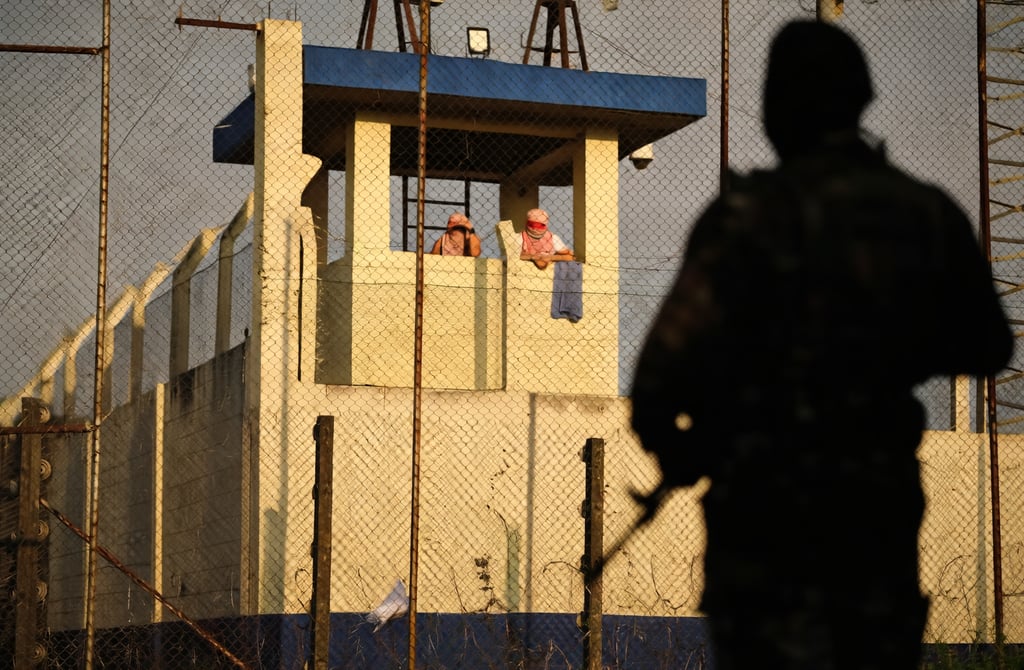

GUATEMALA CITY, Guatemala — Guatemala's President Bernardo Arévalo has declared a nationwide state of siege following a wave of deadly gang violence that erupted after coordinated prison riots left seven police officers dead and dozens of prison guards held hostage across three maximum-security facilities. The dramatic escalation of violence, which unfolded over the weekend, has exposed the growing power of criminal gangs within Guatemala's prison system and their ability to orchestrate deadly attacks from behind bars.
The crisis began Saturday morning when inmates simultaneously seized control of three separate prisons in different parts of the country, taking a total of 46 guards hostage in what officials describe as a meticulously coordinated operation. The uprising was triggered by the government's decision to transfer a high-ranking leader of the notorious Barrio 18 gang and to strip certain privileges from incarcerated gang bosses as part of an intensified crackdown on organized crime.
Within hours of the prison takeovers, suspected gang members outside the prison walls launched a series of coordinated attacks targeting police officers across Guatemala City, killing seven and wounding at least ten others in what authorities characterize as calculated retaliation against the government's hardline stance. The brazen assaults sent shockwaves through the Central American nation and prompted President Arévalo to declare a state of siege, granting security forces expanded powers to combat gang violence.
"These terrorists have declared war on the Guatemalan state," Interior Minister Marco Antonio Villeda said during an emergency press conference Sunday evening. "The murders of our police officers were executed in cold blood, ordered by criminal leaders attempting to demonstrate their power. But we will not be intimidated. The government will use every legal tool at its disposal to dismantle these criminal organizations and restore order."
The violence represents one of the most serious challenges yet for President Arévalo, who took office in January 2024 promising to combat corruption and restore the rule of law in a country long plagued by gang violence, drug trafficking, and institutional weakness. The coordinated nature of the attacks and the ability of imprisoned gang leaders to order deadly operations from inside maximum-security facilities underscore the deep-rooted problems facing Guatemala's criminal justice system.
The crisis began at the Renovación prison in Escuintla, approximately 76 kilometers southwest of Guatemala City, where inmates overpowered guards and seized control of key sections of the facility. Nearly simultaneously, prisoners at the Pavón and Fraijanes prisons, both located near the capital, executed similar takeovers. In each case, inmates armed with improvised weapons subdued guards and took them hostage, barricading themselves inside cell blocks and issuing demands to prison authorities.
Security camera footage and witness accounts describe scenes of chaos as inmates used crude weapons, including sharpened metal objects and homemade clubs, to overpower guards during shift changes when security protocols are most vulnerable. The coordinated timing suggests weeks or months of planning and communication between gang members in different facilities.
"This was not a spontaneous uprising," explained Carlos Mendoza, a security analyst specializing in Central American gang activity. "The simultaneous execution at three separate prisons demonstrates sophisticated planning and communication networks that extend beyond prison walls. It reveals the extent to which gangs have infiltrated and corrupted the prison system, maintaining command and control structures even while incarcerated."
The immediate catalyst for the riots was the government's transfer of Aldo Duppie, known by his gang alias "El Lobo" (The Wolf), a senior leader within the Barrio 18 gang. Duppie was moved from his previous facility to a more restrictive prison environment as part of the government's strategy to isolate gang leadership and disrupt their ability to coordinate criminal activities. Prison officials had also implemented new restrictions limiting cell phone access, visitation rights, and other privileges that gang leaders had previously enjoyed.
Barrio 18, along with its rival Mara Salvatrucha (MS-13), represents one of the most powerful and violent criminal organizations in Central America. Originally formed in Los Angeles in the 1980s, these gangs expanded throughout the region as deportees returned to their home countries, bringing gang culture and criminal expertise with them. Today, they control drug trafficking routes, extortion rackets, and illegal businesses throughout Guatemala, El Salvador, and Honduras.
As news of the prison takeovers spread Saturday afternoon, gang members on the outside began implementing what appears to have been a pre-planned response. Teams of armed gang members launched attacks on police officers at various locations across Guatemala City, targeting both uniformed officers on patrol and off-duty personnel. The attacks occurred in rapid succession, suggesting coordination and real-time communication.
Officer Miguel Hernandez, 34, was killed while conducting a routine traffic stop in Zone 18 of Guatemala City. Three other officers were ambushed while responding to what they believed was a disturbance call in Zone 7. Two more officers were shot and killed at a police checkpoint, and another officer died defending a government building from an attempted arson attack. The locations and methods varied, but the message was clear: the gangs were demonstrating their reach and willingness to directly confront state authority.
"They hunted us like animals," said Officer Roberto Quintana, who survived one of the attacks with gunshot wounds to his shoulder and leg. "They knew exactly where to find us. They knew our patrol routes, our shift changes. This wasn't random violence. They wanted to send a message that they can strike anywhere, anytime."
By Sunday morning, as the death toll among police officers climbed, President Arévalo convened an emergency cabinet meeting to coordinate the government's response. The decision was made to deploy specialized anti-riot police units and military personnel to retake the prisons by force while simultaneously declaring a state of siege that would allow security forces to operate with expanded authority.
The assault on Renovación prison in Escuintla began Sunday afternoon with hundreds of heavily armed anti-riot police storming the facility. Using tear gas, flash-bang grenades, and tactical equipment, security forces methodically cleared cell blocks and secured hostages. Gunfire echoed through the prison as inmates mounted resistance, but the overwhelming force quickly subdued them. All nine guards held hostage at Renovación were freed without serious injury.
By late Sunday evening, authorities had successfully retaken all three prisons and freed all 46 hostages. The operations resulted in one suspected gang member being killed and dozens of inmates sustaining injuries. Prison officials reported that several sections of the facilities suffered significant damage during the riots and subsequent rescue operations, including fires set by inmates and structural damage from forced entries by security forces.
The declaration of a state of siege, officially announced by President Arévalo in a nationally televised address Sunday night, grants the government emergency powers for an initial period of 30 days. Under the state of siege, authorities can restrict freedom of movement, conduct searches without warrants, detain suspects for extended periods without formal charges, and deploy military forces to support police operations in civilian areas.
"Guatemala will not surrender to criminal terror," President Arévalo declared. "The state of siege will enable our security forces to pursue these criminals wherever they hide, to dismantle their networks, and to restore peace and security to our communities. We will not rest until every gang member responsible for these attacks faces justice."
The state of siege has drawn mixed reactions from human rights organizations and civil society groups. While many Guatemalans support strong action against gang violence, some worry about potential abuses of the expanded police and military powers. Guatemala's history includes periods of military rule and civil conflict during which security forces committed serious human rights violations, leaving many citizens wary of militarized responses to security challenges.
"We understand the government's need to respond to this violence, but we urge restraint and respect for human rights," said Maria Rodriguez, director of the Guatemalan Human Rights Commission. "States of siege can quickly lead to abuses if not carefully monitored. We will be watching to ensure that security operations target actual criminals and do not violate the rights of innocent citizens."
The prison riots and subsequent violence have also renewed attention to conditions within Guatemala's severely overcrowded and under-resourced prison system. Many facilities operate at more than twice their designed capacity, with inadequate staffing, minimal rehabilitation programs, and chronic corruption that allows gang leaders to maintain power and coordinate criminal activities from inside prison walls.
"Guatemala's prisons have essentially become gang headquarters," explained Dr. Ana Solis, a criminologist at the University of San Carlos. "Overcrowding, corruption, and lack of proper segregation mean that gang leaders can recruit, plan operations, and maintain control of their organizations even while incarcerated. Until we reform the prison system fundamentally, we will continue to see these kinds of incidents."
International observers note parallels between Guatemala's crisis and similar gang-related violence in neighboring El Salvador, where President Nayib Bukele has implemented an aggressive anti-gang campaign that has dramatically reduced violence but raised serious human rights concerns. Bukele's government has arrested more than 75,000 suspected gang members since 2022, often with minimal due process, and has constructed a massive new prison specifically designed to isolate gang leaders.
The regional nature of gang activity means that actions taken in one Central American country often have ripple effects throughout the region. Security experts warn that overly aggressive crackdowns can sometimes push gang members to relocate to neighboring countries, spreading the problem rather than solving it.
As Guatemala begins implementing its state of siege, security forces have already arrested dozens of suspected gang members in raids across the capital and other cities. Authorities report seizing weapons, drugs, and evidence of gang operations. The government has also announced plans to accelerate construction of new, more secure prison facilities and to hire additional guards and security personnel.
For the families of the seven slain police officers, the government's promises offer little consolation. Funerals are being planned throughout the coming week, and the National Police have announced that all officers will receive honors for their service. The government has pledged financial support for the families of the deceased and injured officers.
"My husband died protecting his community," said Sofia Martinez, widow of Officer Hernandez. "He knew the dangers, but he believed in his duty. Now my children have no father. I pray that his sacrifice leads to real change, that something good can come from this tragedy."
As Guatemala confronts its latest crisis, the incident serves as a stark reminder of the challenges facing Central American nations struggling to combat deeply entrenched gang violence while respecting human rights and democratic principles. The coming weeks will test whether President Arévalo's government can effectively use its emergency powers to weaken gang structures without crossing lines that have haunted the country's past.
Updates
Delivering timely news and inspiring life stories.
Links
Contact
+917976343438
© 2025. All rights reserved.