
India's Largest Airline Hit With Record $26 Million Fine After Stranding 300,000 Passengers
IndiGo faces unprecedented penalty and $60M bank guarantee requirement as aviation regulator exposes systematic safety violations behind December's travel chaos
Sandeep Gawdiya
1/18/20269 min read
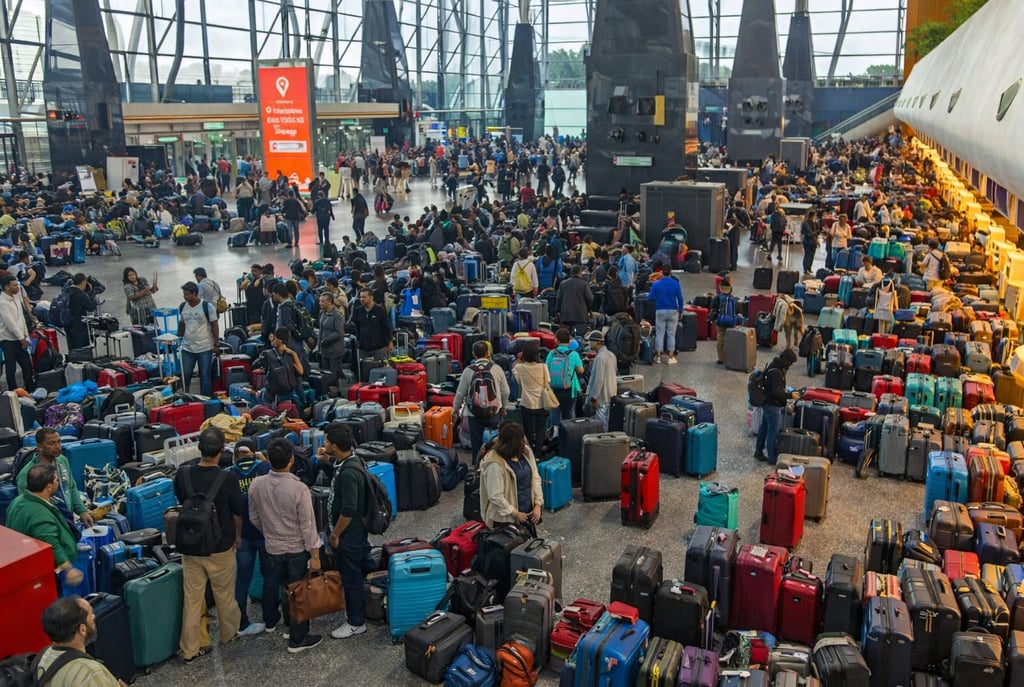
India's aviation regulator has imposed the largest fine in the country's aviation history—₹22.20 crore (approximately $26 million USD)—on IndiGo Airlines following a comprehensive investigation that revealed catastrophic planning failures and regulatory violations behind last month's operational meltdown that stranded over 300,000 passengers across the country. The penalty, announced just hours ago by the Directorate General of Civil Aviation (DGCA), comes alongside an unprecedented requirement that IndiGo deposit a ₹50 crore ($60 million) bank guarantee to ensure implementation of sweeping reforms.
The record-breaking enforcement action targets India's dominant domestic carrier, which controls nearly 60% of the country's passenger aviation market and operates one of the world's largest fleets of Airbus A320 family aircraft. The December 2025 crisis saw IndiGo cancel 2,507 flights and delay another 1,852 over just three days, creating unprecedented chaos at airports nationwide and exposing serious vulnerabilities in the airline's operations.
December's Perfect Storm: When India's Aviation Giant Collapsed
The operational breakdown began on December 3, 2025, when IndiGo's carefully calibrated—but dangerously fragile—scheduling system started to unravel. What began as minor delays quickly cascaded into a full-scale crisis as the airline's overstretched crew, aircraft, and management systems proved incapable of recovery. Within 72 hours, hundreds of thousands of passengers found themselves stranded at airports from Mumbai to Kolkata, Delhi to Bengaluru, with minimal information, inadequate rebooking options, and mounting frustration.
The chaos unfolded during one of India's peak travel periods, amplifying the impact on passengers. Business travelers missed critical meetings, families were separated during wedding season—one of India's most important social periods—and students attempting to return home for holidays found themselves sleeping on airport floors. Social media exploded with images of massive queues, exhausted passengers, and overwhelmed airline staff unable to provide basic information about when normal operations might resume.
"I had a confirmed ticket from Delhi to Mumbai for my daughter's wedding," recounted Rajesh Sharma, a businessman caught in the disruption. "IndiGo canceled my flight with just two hours' notice, offered no alternative until three days later, and when I demanded a refund to book with another airline, they told me it would take 30 days to process. I ended up paying triple the original fare on another carrier just to make it in time."
Sharma's experience was replicated thousands of times across India as the scale of IndiGo's operational failure became clear. The airline's customer service infrastructure, designed for routine operations, completely collapsed under the surge of passengers seeking rebooking, refunds, or simply information about their travel options.
The Investigation: Regulatory Failures Exposed
Following the crisis, DGCA constituted a four-member committee to conduct a comprehensive investigation into the circumstances that precipitated IndiGo's operational breakdown. The committee's findings, released this weekend, paint a damning picture of systematic regulatory violations, inadequate management oversight, and corporate priorities that placed optimization and profit ahead of operational resilience and passenger welfare.
The investigation revealed that IndiGo had implemented revised Flight Duty Time Limitation (FDTL) regulations—designed to prevent pilot fatigue and enhance safety—in a manner that pushed the airline's entire operational system to its breaking point. Rather than building adequate buffers to accommodate the new regulations, IndiGo management pursued aggressive optimization strategies that maximized crew utilization, aircraft deployment, and network efficiency while minimizing slack in the system.
"The airline's management failed to properly assess the impact of implementing revised Flight Duty Time Limitation rules during the winter schedule," the DGCA investigation concluded. "This approach left minimal buffer for recovery when problems emerged".
FDTL regulations exist to prevent pilot and crew fatigue—a leading cause of aviation accidents worldwide. The rules strictly limit how many hours pilots can fly within specific time periods, mandate minimum rest requirements between flights, and establish protocols for managing scheduling conflicts. These regulations represent hard-won safety protections developed over decades of aviation operations and informed by numerous tragic accidents where crew fatigue contributed to catastrophic failures.
IndiGo's decision to implement new FDTL requirements while simultaneously maintaining aggressive growth targets and tight scheduling created a house of cards that collapsed when even minor disruptions occurred. Weather delays, mechanical issues, air traffic congestion—normal operational challenges that robust airlines handle routinely—triggered cascading failures throughout IndiGo's network because no buffer existed to absorb shocks.
Breaking Down the Record Penalty
The ₹22.20 crore fine represents an unprecedented enforcement action against an Indian airline and reflects DGCA's determination to send a clear message about the consequences of prioritizing profit over safety and passenger welfare. The penalty structure reveals both the severity and systematic nature of IndiGo's violations:
₹1.80 crore ($2.1 million): One-time systemic penalty for six separate violations of Civil Aviation Requirements (CARs), including:
- Failure to comply with FDTL norms
- Improper operational control systems
- Inadequate management oversight
- Insufficient crew planning and management
- Deficient contingency procedures
- Poor passenger communication protocols
₹20.40 crore ($24 million): Daily penalties of ₹30 lakh ($35,000) for continued non-compliance with revised FDTL provisions over 68 days, calculated from December 5, 2025, through February 10, 2026. This extended penalty period reflects DGCA's finding that IndiGo's violations were not merely isolated incidents but represented ongoing systematic failure to meet regulatory requirements.
Senior DGCA officials acknowledged that while the fine appears substantial, it represents the maximum penalty available under current aviation regulations. "This is the highest penalty we have levied on any airline for causing disruptions. The fines have not gone beyond ₹1 crore in the past," explained a DGCA spokesperson, suggesting that the regulator pushed enforcement to its legal limits in response to the severity of IndiGo's violations.
Critics argue that even a ₹22 crore fine barely scratches the surface for an airline that generated ₹46,960 crore ($5.6 billion) in revenue during fiscal year 2024-25 and maintains a dominant market position. The penalty represents less than 0.05% of annual revenue—potentially insufficient to drive meaningful behavioral change at the corporate level.
The Bank Guarantee: Ensuring Real Reform
Recognizing the potential inadequacy of financial penalties alone, DGCA has taken the unprecedented step of requiring IndiGo to deposit a ₹50 crore ($60 million) bank guarantee as collateral for implementing comprehensive reforms across four critical areas: leadership and governance, manpower planning, digital systems, and board oversight.
The bank guarantee structure represents a novel regulatory approach designed to ensure compliance through financial leverage rather than simply punishing past violations. IndiGo must demonstrate tangible progress in each reform area before portions of the guarantee will be released. DGCA has established strict verification protocols, with independent audits required at each compliance milestone.
Leadership and Governance Reforms:
IndiGo must restructure its senior management accountability systems, establishing clear responsibility chains for operational decisions and implementing transparent reporting mechanisms that prevent corporate priorities from overriding safety and regulatory compliance. The airline must also create independent safety oversight functions with authority to halt operations when compliance concerns arise.
Manpower Planning:
The airline must develop realistic crew planning models that incorporate adequate buffers for sick leave, training requirements, regulatory compliance, and unexpected operational disruptions. DGCA has mandated that IndiGo demonstrate it can maintain operations under stress without violating FDTL or other crew regulations.
Digital Systems:
IndiGo must upgrade its operational control and crew scheduling systems to incorporate real-time compliance monitoring, automated conflict detection, and predictive analytics that identify potential regulatory violations before they occur. The airline's customer service infrastructure must also be expanded to handle surge demand during disruption events.
Board Oversight:
IndiGo's Board of Directors must establish safety and compliance as standing agenda items, receive regular reports on operational metrics and regulatory performance, and implement governance structures that prevent management from prioritizing financial optimization over safe and reliable operations.
The phased release mechanism ensures IndiGo cannot simply deposit the guarantee and continue business as usual. Each quarter, DGCA will assess progress across all four reform areas. Only after demonstrating sustained compliance over an extended period—likely 12-18 months—will IndiGo recover the full ₹50 crore guarantee.
Passenger Rights and Corporate Accountability
The IndiGo crisis has reignited debates about passenger rights in India's rapidly growing but sometimes chaotic aviation market. Despite being the world's third-largest domestic aviation market and one of the fastest-growing, India lacks comprehensive passenger protection regulations comparable to those in the United States or European Union.
Under current Indian regulations, passengers affected by cancellations are entitled to refunds or alternate flights, but enforcement remains inconsistent and airlines often delay refunds for weeks or months. Compensation for delays is minimal compared to international standards, and passengers bear significant burden in documenting claims and pursuing remedies.
"IndiGo's December crisis stranded over 3 lakh (300,000) passengers, disrupting travel plans, causing financial losses, and creating enormous inconvenience," noted consumer rights advocate Bejon Misra. "Yet the airline faces relatively modest financial penalties while passengers struggle to recover costs for hotel stays, missed connections, and lost business opportunities. We need comprehensive passenger protection legislation that ensures meaningful compensation when airlines fail to deliver promised services."
The crisis also exposed inadequacies in India's aviation consumer protection infrastructure. DGCA received thousands of complaints from affected passengers but lacks resources and legal authority to efficiently resolve individual cases. Passengers seeking compensation beyond basic refunds must pursue claims through consumer courts—a time-consuming and costly process that deters most people from seeking redress.
International travelers affected by IndiGo's disruptions who held connecting international flights faced particularly severe consequences. Travel insurance often excludes coverage when delays originate with the initial carrier, leaving passengers to bear costs for missed international connections, additional accommodation, and visa complications arising from altered travel dates.
Market Impact and Competitive Dynamics
IndiGo's dominance of India's domestic aviation market means operational failures at the airline have outsized impacts on the entire national transportation network. With approximately 60% market share, IndiGo effectively functions as critical infrastructure rather than merely one competitor among many. When IndiGo experiences significant disruptions, alternative capacity simply doesn't exist to absorb displaced passengers.
Competitors including Air India, SpiceJet, and Vistara (now merged with Air India) benefited from the December chaos as desperate passengers paid premium fares for available seats. However, their limited capacity meant most stranded IndiGo passengers had no realistic alternatives beyond waiting for the airline to restore normal operations.
The crisis has prompted discussions about whether India's aviation market has become unhealthily concentrated, with IndiGo's dominance potentially creating systemic risk. Market concentration also raises questions about regulatory capture—whether DGCA faces implicit pressure to avoid actions that might seriously impact an airline that dominates the national transportation network.
International Implications and Lessons
The IndiGo crisis carries lessons for aviation markets worldwide, particularly in rapidly developing economies where aviation growth often outpaces regulatory capacity and infrastructure development. Several themes resonate internationally:
Regulatory Capacity: Aviation regulators must maintain resources and expertise sufficient to conduct meaningful oversight of increasingly complex airline operations. As carriers employ sophisticated optimization algorithms and just-in-time business models, regulators need corresponding analytical capabilities to identify vulnerabilities before they cause major disruptions.
Safety vs. Efficiency: The aviation industry perpetually balances safety and efficiency. IndiGo's crisis demonstrates the dangers when efficiency optimization crosses into recklessness. Regulations exist for good reasons, often written in response to previous accidents and failures. Airlines that treat regulations as obstacles to profit rather than essential safeguards eventually face consequences.
Consumer Protection: Passenger rights protections must evolve alongside aviation markets. As flying becomes increasingly commoditized and price competition intensifies, carriers face mounting pressure to cut costs and maximize efficiency. Strong consumer protection frameworks help ensure that competitive pressure doesn't translate into degraded service and diminished safety.
Systemic Risk: In concentrated aviation markets, regulators must consider whether dominant carriers represent systemic risk requiring enhanced oversight, stricter capital requirements, or other prudential measures to protect the broader transportation network from failures at any single airline.
IndiGo's Response and Path Forward
IndiGo has publicly accepted the DGCA findings and committed to implementing required reforms. The airline's management has emphasized actions taken since December to restore operational stability, including crew hiring, schedule adjustments, and systems upgrades. DGCA acknowledged these efforts while maintaining that systematic reforms remain necessary to prevent future failures.
"IndiGo recognizes the inconvenience caused to passengers during the December operational challenges and has been working diligently with DGCA to address identified issues," the airline stated. "We are committed to the highest standards of safety, regulatory compliance, and customer service, and will continue investing in people, processes, and technology to ensure reliable operations."
Whether IndiGo's reforms prove genuine or merely performative will become clear over the coming months as DGCA conducts verification audits tied to the bank guarantee release. The airline faces strong incentives to demonstrate real change—both to recover the ₹50 crore guarantee and to avoid further regulatory action that could include operational restrictions or management sanctions.
The December crisis damaged IndiGo's reputation, though the airline's dominant market position limits passenger ability to vote with their wallets. In competitive markets, operational failures drive customers to competitors; in concentrated markets like India's, passengers often have little choice but to continue flying with airlines that have disappointed them.
Looking Ahead
As India prepares for continued aviation growth—with projections suggesting the country will become the world's second-largest aviation market by 2030—the IndiGo crisis serves as a critical inflection point. Will it drive genuine reforms that strengthen India's aviation sector, or will it be remembered as a temporary disruption that changed little?
The answer depends partly on regulatory vigilance and partly on corporate culture at India's airlines. DGCA has demonstrated willingness to impose meaningful penalties and demand structural reforms. Sustaining this approach requires political support, adequate resources, and resistance to industry pressure for lighter-touch regulation.
For passengers, the crisis highlights the importance of understanding their rights, documenting disruptions, and demanding accountability when airlines fail to deliver promised services. Consumer advocacy will play a crucial role in pushing for stronger passenger protection regulations and ensuring existing rules are effectively enforced.
The record ₹22.20 crore fine and ₹50 crore bank guarantee represent significant steps toward accountability in India's aviation sector. Whether they prove sufficient to drive lasting change remains to be seen—but they establish precedents that will shape Indian aviation regulation for years to come.
Updates
Delivering timely news and inspiring life stories.
Links
Contact
+917976343438
© 2025. All rights reserved.