
NASA Evacuates Astronaut from Space Station in Unprecedented Medical Emergency
Crew-11 mission cut short by mystery illness, exposing critical gaps in orbital healthcare as space agencies prepare for Mars missions
SPACE & SCIENCE
Sandeep Gawdiya
1/18/20268 min read
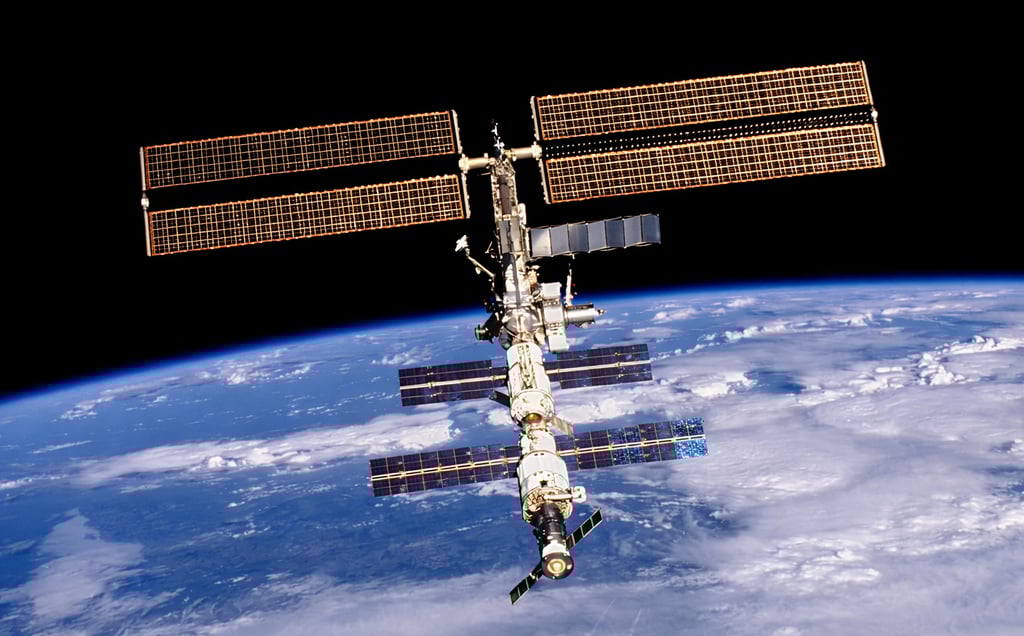
In a sobering reminder of the perils of space exploration, NASA has completed its first-ever medical evacuation from the International Space Station, bringing home four astronauts nearly six weeks ahead of schedule after one crew member developed a serious but undisclosed medical condition. The historic early return marks a watershed moment for human spaceflight and raises urgent questions about medical capabilities as space agencies prepare for long-duration missions to the Moon and Mars.
The SpaceX Crew-11 capsule splashed down safely off the California coast early Thursday morning, ending a 167-day mission that began with high hopes in August but concluded under extraordinary circumstances. NASA astronauts Zena Cardman and Mike Fincke, Japan Aerospace Exploration Agency (JAXA) astronaut Kimiya Yui, and Russian cosmonaut Oleg Platonov emerged from the Dragon spacecraft in good spirits, though NASA continues to withhold details about which crew member experienced the medical crisis and the nature of the condition.
A Medical Mystery 250 Miles Above Earth
The medical incident began on January 7, when one of the Crew-11 astronauts developed health problems that ISS flight surgeons could not confidently diagnose using the limited medical equipment available in microgravity. The situation was serious enough to prompt NASA to immediately cancel a scheduled spacewalk planned for the following day, when Cardman and Fincke were supposed to conduct maintenance outside the station.
"Clearly, we made this decision due to a significant medical issue," stated Jared Isaacman, NASA's newly appointed administrator, shortly after the capsule's landing. "The astronaut involved is presently doing well, in good spirits, and undergoing the necessary medical evaluations".
NASA has emphasized repeatedly that the situation did not constitute an "emergency evacuation," a technical distinction that suggests the astronaut's condition, while serious, was stable and not immediately life-threatening. However, the agency's decision to curtail the mission by more than a month underscores genuine concern about the crew member's wellbeing and the limitations of treating complex medical conditions in orbit.
"It's so good to be home!" Cardman, Crew-11's commander, said shortly after splashdown. "With deep gratitude to the teams that got us there and back".
The medical emergency forced an abrupt end to what had been a highly productive scientific mission. All four astronauts were transported to a local hospital for overnight observation following their return, with the affected crew member receiving additional specialized care. NASA's Chief Health and Medical Officer James Polk indicated that the medical situation was not connected to space station activities, suggesting the condition arose independently rather than as a result of orbital environment exposure.
Privacy vs. Public Interest
NASA's decision to withhold identifying information about the affected astronaut and details of their condition has sparked debate about transparency in government space programs. The agency has cited medical privacy rules that protect crew members with the same confidentiality afforded to patients on Earth—a policy that respects individual rights but leaves the public, Congress, and international partners with limited understanding of what went wrong.
Space policy experts note the delicate balance NASA must strike between respecting astronaut privacy and maintaining public trust in space exploration programs that cost taxpayers billions of dollars annually. While federal health privacy laws clearly apply to astronauts, their unique role as government employees undertaking high-risk missions funded by public money creates additional considerations.
"The American people have a right to understand the risks their astronauts face and the capabilities we have—or don't have—to address medical emergencies in space," argued Representative Frank Johnson, ranking member of the House Science Committee. "Complete opacity serves no one's interests, especially as we prepare to send humans on multi-year missions to Mars."
Medical professionals generally support NASA's privacy stance, arguing that concerns about public disclosure could discourage astronauts from reporting health issues promptly, potentially leading to more serious situations. The culture of spaceflight has historically emphasized stoicism and reluctance to admit weakness—traits that served test pilots well but could prove dangerous in the context of medical emergencies where early intervention is critical.
The Stark Reality of Space Medicine
The Crew-11 medical evacuation exposes fundamental limitations in humanity's ability to provide advanced healthcare beyond Earth. The International Space Station, humanity's most sophisticated outpost in space, possesses only rudimentary medical capabilities compared to even basic hospitals on Earth.
"Usually, there is no physician on board the ISS and diagnosis of medical conditions is a challenge," notes documentation from the National Space Biomedical Research Institute. ISS medical facilities include blood and urine sampling kits, ECG machines, blood pressure cuffs, and diagnostic ultrasound systems—collectively known as the Crew Health Care System. While these tools enable monitoring of basic vital signs and can help diagnose some conditions, they pale in comparison to the diagnostic imaging, laboratory testing, and treatment options available terrestrially.
Astronauts receive extensive medical training before their missions, with each crew typically including at least one member with advanced medical skills who serves as the mission's de facto physician. However, even the most well-trained astronaut-medic cannot substitute for the full range of medical specialists, surgical capabilities, and pharmaceutical options available on Earth.
Remote telemedicine guidance from ground-based physicians provides crucial support for ISS medical operations. Flight surgeons in Mission Control can observe patients via video link and guide astronaut-medics through examination and treatment procedures. NASA has conducted research demonstrating that remotely guided ultrasound scans—where astronauts perform imaging under real-time instruction from Earth-based experts—can effectively diagnose various conditions.
But significant communication delays make this approach impossible for missions beyond low Earth orbit. The Moon sits roughly 240,000 miles from Earth, creating a 2.5-second one-way communication lag. Mars, depending on orbital positions, ranges from 34 million to 250 million miles distant—meaning radio signals can take between 4 and 24 minutes to traverse the distance. Real-time medical consultation becomes impossible under such circumstances.
A Wake-Up Call for Deep Space Missions
The timing of the Crew-11 medical evacuation could hardly be more significant. NASA currently targets the late 2020s for crewed missions returning humans to the lunar surface under the Artemis program. The agency's Artemis II mission—a crewed flight around the Moon—is scheduled to launch within weeks, with the massive Space Launch System rocket and Orion spacecraft recently rolled out to the launch pad at Kennedy Space Center for final preparations.
Looking further ahead, NASA and international partners aim to establish a permanent lunar base and eventually send crews on multi-year missions to Mars. These ambitious plans assume astronauts can remain healthy for extended periods far from Earth, with limited medical resources and no possibility of emergency evacuation.
The Crew-11 incident demonstrates how quickly situations can evolve from routine operations to medical crisis. If a similar emergency occurred during a Mars mission—where the nearest hospital sits 34 million miles away at closest approach and requires roughly nine months of space travel to reach—the consequences could be catastrophic.
"This event should serve as a wake-up call," warns Dr. Jennifer Chen, a space medicine researcher at Johns Hopkins University. "We're planning missions to Mars with medical capabilities that proved insufficient to handle an emergency on the ISS, where we could bring someone home in a matter of hours. We need dramatically improved diagnostic tools, surgical capabilities, and pharmaceutical options before we send humans on multi-year deep space missions."
The Five Hazards of Spaceflight
NASA classifies the impact of spaceflight on human health into five broad categories known as the "Five Hazards": radiation exposure, isolation and confinement, distance from Earth, gravity fields (including microgravity), and hostile/closed environments.
Each hazard presents unique challenges to astronaut health:
Radiation: Space radiation exposure—dramatically higher beyond Earth's protective magnetic field—increases cancer risk, damages the central nervous system, and can alter cognitive function, reduce motor function, and prompt behavioral changes. The ISS, operating just within Earth's magnetosphere, still exposes crew to radiation levels ten times higher than on Earth's surface. Mars missions would subject astronauts to far greater radiation doses over extended periods.
Microgravity: Prolonged exposure to weightlessness causes bone density loss, muscle atrophy, cardiovascular deconditioning, immune system changes, and viral reactivation. Astronauts can lose up to 1% of bone mass per month in space, creating long-term health risks. Recent research suggests microgravity may also disrupt cellular stability and cause damage at the mitochondrial level, potentially accelerating biological aging.
Isolation and Confinement: Psychological stress from cramped quarters, limited privacy, monotonous routines, and separation from family affects mental health and crew dynamics. Sleep disruption from the ISS's 16 daily sunrise-sunset cycles compounds these challenges.
Distance from Earth: As the Crew-11 evacuation demonstrates, getting sick astronauts home for treatment becomes progressively more difficult—and eventually impossible—as missions venture deeper into space.
Hostile Environment: The vacuum of space, extreme temperatures, and potential for equipment failure create constant background risk that can exacerbate medical emergencies.
Recent research has identified "accelerated aging phenotype" (AAP) as a critical emerging concern for long-duration missions. The 2024 Space Health Report from The Guy Foundation warns that radiation, microgravity, and disrupted circadian rhythms may accelerate biological aging and impair astronauts' ability to perform in space and recover after returning to Earth.
Operational Impact: A Skeleton Crew in Orbit
Crew-11's early departure left the ISS temporarily staffed by just three people—NASA's Christopher Williams and Russian cosmonauts Sergey Kud-Sverchkov and Sergei Mikayev. This skeletal crew must maintain the football-field-sized facility, continue critical scientific research, and prepare for the arrival of replacement astronauts.
NASA and SpaceX are working to accelerate the launch of Crew-12, currently scheduled for mid-February. However, the expedited timeline creates potential complications. Depending on exact launch dates, NASA could find itself simultaneously supporting a Crew-12 launch to the ISS and the Artemis II lunar flyby mission—an unprecedented operational challenge requiring careful coordination of ground support teams, tracking systems, and mission control resources.
The Crew-11 early return also disrupted carefully planned research schedules. Dozens of experiments across multiple scientific disciplines—from human health studies to materials science, fluid dynamics to Earth observation—had to be curtailed, postponed, or handed off to the remaining skeleton crew. The full scientific impact of the abbreviated mission won't be known for months as researchers assess which objectives were achieved and which fell victim to the emergency.
Not the First, But Historic for NASA
While NASA officials have emphasized this marks the first medical evacuation in the agency's 68-year history, Soviet and Russian space programs previously brought cosmonauts home early due to health concerns. During the Salyut and Mir space station eras, several missions ended prematurely when crew members developed medical issues requiring return to Earth.
However, the Crew-11 evacuation represents a first for the ISS program and underscores how even the most sophisticated orbital facility lacks capabilities for handling serious medical conditions. ISS crew surgeons have successfully managed various health issues over the station's 25-year operational history, including skin rashes, dental abscesses, lacerations, and cardiac rhythm abnormalities. But until now, no condition proved serious enough to warrant cutting a mission short—a testament either to astronaut health screening and monitoring, or to good fortune.
Looking Forward: The Medical Challenges Ahead
As space agencies worldwide pursue increasingly ambitious exploration goals, the Crew-11 medical evacuation demands honest assessment of healthcare capabilities for deep space missions. Several critical areas require urgent attention:
Advanced Diagnostics: Future spacecraft need portable medical imaging beyond ultrasound, including compact CT or MRI alternatives. Lab-on-a-chip technology could provide comprehensive blood analysis. Artificial intelligence might assist with diagnosis when ground-based medical consultation proves impractical.
Surgical Capability: Mars missions may require genuine surgical facilities with proper sterile environments, anesthesia capability, and blood storage. Training astronauts to perform emergency surgery under microgravity conditions presents extraordinary challenges.
Pharmaceutical Production: Carrying sufficient medications for every potential condition over multi-year missions is impractical. On-demand pharmaceutical synthesis or bioengineering capabilities could address this limitation.
Telemedicine Enhancement: While communication delays prevent real-time consultation for deep space missions, sophisticated AI-assisted diagnostic systems could provide decision support when human expertise remains minutes or hours away.
Crew Selection and Monitoring: Enhanced pre-mission health screening and real-time physiological monitoring might identify developing problems before they become critical emergencies.
The incident also highlights the need for honest conversations about risk tolerance. Space exploration has always been dangerous—pioneers accepting elevated risk in pursuit of discovery. But as space agencies transition from government test pilots to more diverse crews including scientists, engineers, and eventually civilians, societal expectations about acceptable risk levels may shift.
The Human Element
Behind the statistics, technical analyses, and policy discussions lie four human beings whose carefully planned mission ended unexpectedly. For Zena Cardman and cosmonaut Oleg Platonov, Crew-11 represented their first spaceflight—a career milestone years in the making that ended prematurely. Commander Cardman and her crew handled the emergency with professionalism, but returning to Earth ahead of schedule after months of training and anticipation brings its own psychological challenges.
Mike Fincke, a veteran astronaut on his fourth spaceflight, has now accumulated 549 days in space over his career—time he'll never get back. JAXA's Kimiya Yui, on his second flight, brought his total to 309 days off Earth. Both sacrificed the final weeks of their planned missions to ensure their crewmate received necessary care.
Their graceful handling of an unprecedented situation exemplifies the professionalism and mutual support that defines human spaceflight. As humanity reaches further into the cosmos, these qualities—alongside improved medical capabilities—will prove essential to ensuring that space exploration enriches human knowledge without unnecessary sacrifice of human life.
Updates
Delivering timely news and inspiring life stories.
Links
Contact
+917976343438
© 2025. All rights reserved.