
NASA’s SpaceX Crew-11 returns to Earth after historic ISS medical evacuation
SpaceX Crew-11 astronauts have safely returned to Earth after the first-ever medical evacuation from the International Space Station (ISS), marking a historic moment in human spaceflight. The crew’s early return highlights NASA’s safety-first approach and the reliability of modern spacecraft systems in responding to unexpected medical situations in orbit. The successful splashdown demonstrates the strength of astronaut health monitoring, emergency preparedness, and public–private collaboration between NASA and SpaceX, while setting new benchmarks for future long-duration missions to the Moon, Mars, and beyond.
SPACE & SCIENCE
Sandeep
1/15/20267 min read

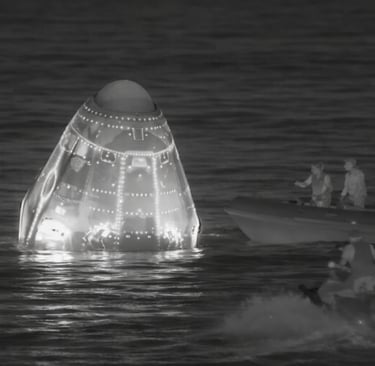
In a historic moment for space exploration, four astronauts from NASA’s Crew-11 mission safely returned to Earth earlier than planned after the first-ever medical evacuation from the International Space Station (ISS), marking a major milestone in human spaceflight. The SpaceX Crew Dragon capsule splashed down in the Pacific Ocean near California on January 15, ending the mission about a month early due to a serious but stable medical condition affecting one crew member. While NASA has not shared personal details for privacy reasons, officials clarified that this was not an emergency but a precaution, as proper diagnosis and treatment were not possible aboard the ISS. The return leaves just three astronauts temporarily operating the space station, a situation NASA says is manageable. This rare event highlights both the risks of long-duration space missions and the strong safety systems in place to protect astronauts, even hundreds of kilometers above Earth.
Following the early return of Crew-11, space agencies are now closely reviewing health monitoring and emergency preparedness for future missions, as long stays in space can affect the human body in unexpected ways. Officials from NASA explained that although astronauts train extensively for medical situations, some conditions still require advanced treatment only available on Earth. The mission’s safe landing using a SpaceX Crew Dragon capsule proved that current return systems work reliably even under unusual circumstances. Meanwhile, the International Space Station continues operations with a smaller crew, showing the flexibility of modern space missions. This event is now being seen as an important learning point that will help make future space travel safer, especially as agencies prepare for longer missions to the Moon and Mars.
This rare medical evacuation from space is now being seen as a wake-up call for future deep-space missions, especially those planned to the Moon and Mars. Experts say the Crew-11 incident highlights why space agencies like NASA must strengthen in-orbit health monitoring, onboard medical tools, and faster decision-making systems. Although the astronaut’s condition was stable, the choice to return early showed a strong “safety-first” approach, proving that human health comes before mission timelines. With private companies such as SpaceX playing a growing role in space travel, this mission also demonstrated how public–private partnerships can respond quickly to unexpected challenges. Overall, the event is expected to reshape medical protocols in space and make future human missions beyond Earth safer and more resilient.
The Crew-11 return has sparked global discussion on how prepared humans really are for long-term space living, especially as space travel becomes more frequent. Scientists note that even with advanced training, the human body reacts differently in microgravity, making medical surprises unavoidable. Agencies like NASA are now expected to upgrade onboard medical diagnostics and rely more on real-time support from Earth. The smooth and safe landing of the crew also boosted confidence in modern spacecraft designed by companies such as SpaceX, proving that astronaut safety systems are evolving fast. This incident may look like a setback, but experts say it will ultimately strengthen space missions by putting human health at the center of exploration plans.
The early return of Crew-11 has quietly changed the way the world looks at human spaceflight, reminding everyone that space exploration is as much about human limits as technology. Space agencies like NASA made it clear that ending the mission early was a responsible decision, taken to protect astronaut health rather than push risks. The successful splashdown using a capsule built by SpaceX showed how far space safety systems have advanced, even during unexpected situations. While the International Space Station continues to function with a smaller crew, experts say this incident will lead to better medical planning and smarter mission designs. In the long run, this historic medical evacuation may help make future space journeys safer, stronger, and more human-focused.
As the space community waits for NASA’s final medical review and official closing report, experts believe the Crew-11 incident will influence future astronaut health policies worldwide. Officials from NASA are expected to share key lessons on medical screening, in-flight monitoring, and emergency decision-making, which could reshape how long missions are planned. The safe early return using SpaceX technology has already reassured the public that human safety remains the top priority in space. Once the final findings are released, they are likely to set new global standards for space medicine—I will inform you immediately when the final update comes out.
With attention now shifting to the official mission closure and expert analysis, the Crew-11 story is being widely described as a turning point in modern spaceflight. Space analysts say the incident proved that agencies like NASA are willing to take tough decisions when astronaut health is involved, even if it means ending a mission early. The calm, well-managed return also highlighted the reliability of new-generation spacecraft developed with partners such as SpaceX. Rather than being seen as a failure, this mission is now viewed as a success story of preparedness, transparency, and human-first space exploration—setting a safer path for future journeys beyond Earth.
The Crew-11 medical evacuation has now entered its final review phase, and experts say its impact will be felt far beyond this single mission. The decision by NASA to bring astronauts home early reinforced a strong global message that human safety comes before mission duration or milestones. The smooth return aboard a capsule built by SpaceX also strengthened confidence in modern spaceflight systems designed to handle unexpected situations. While the International Space Station continues operating normally, this rare event is already shaping discussions on astronaut health, mission planning, and emergency readiness. Many scientists believe this moment will be remembered as a key step toward safer and more responsible human space exploration in the future.
As interest around the Crew-11 story continues to grow, space experts say this event has brought space medicine into the global spotlight. The early return showed how agencies like NASA are preparing not just for successful missions, but also for unexpected human challenges in space. The flawless performance of the return capsule developed by SpaceX reassured scientists and the public that astronauts can be brought back safely when needed. Meanwhile, the International Space Station continues its work, proving its flexibility even with fewer crew members. Overall, this mission is now being seen as a real-life stress test that will help shape safer, smarter, and more human-centered space exploration in the years ahead.
Looking ahead, the Crew-11 experience is expected to reshape future space mission rules and health safeguards. Officials at NASA are likely to tighten medical screening, expand in-orbit diagnostics, and refine return-to-Earth decision protocols based on lessons learned. The reliable performance of recovery systems built by SpaceX has also strengthened confidence in rapid, safe crew returns when conditions demand it. While the International Space Station continues normal operations, this incident is now widely viewed as a constructive turning point—one that prioritizes astronaut well-being and sets a stronger foundation for future missions deeper into space.
As the Crew-11 chapter nears its conclusion, space observers say the mission has quietly set a new benchmark for responsibility in human spaceflight. By choosing health over timelines, NASA sent a strong message that astronaut safety is non-negotiable, even during routine missions. The smooth return powered by systems developed with SpaceX also highlighted how advanced and dependable modern space technology has become. While the International Space Station continues its scientific work, this rare event is now being remembered as a learning milestone—one that will help shape safer policies, stronger medical planning, and more human-focused space exploration in the future.
With final assessments underway, the Crew-11 mission is increasingly being described as a defining lesson in modern space safety culture. The early return decision taken by NASA showed that space missions today are guided by caution, science, and compassion rather than pressure to meet schedules. The reliable performance of crew-return systems built by SpaceX reinforced trust in emergency preparedness, even hundreds of kilometers above Earth. As the International Space Station continues operations and prepares for the next crew, experts believe this incident will leave a lasting impact—strengthening astronaut healthcare, refining mission protocols, and making future human space exploration safer and more resilient.
As the final reports are expected soon, the Crew-11 episode is being seen as a quiet but powerful reminder of the realities of space travel. The decision by NASA to end the mission early showed maturity and responsibility, proving that protecting human life outweighs completing planned timelines. The safe and controlled return using spacecraft developed with SpaceX further strengthened confidence in modern spaceflight safety systems. While work continues aboard the International Space Station, this rare medical evacuation is now shaping conversations worldwide—pushing agencies to design future missions that are not only ambitious, but also deeply human-centered and medically prepared.
As attention slowly moves toward the next crew launch, the Crew-11 mission is being remembered as a real-world test of how space agencies handle the unexpected. By choosing a careful and early return, NASA reinforced global confidence that astronaut health is always the top priority. The smooth splashdown using systems developed with SpaceX once again proved that modern space travel is equipped to respond safely to sudden challenges. Even as the International Space Station continues its scientific mission, this incident is now widely seen as a learning milestone—one that will help build safer, smarter, and more responsible human space exploration in the years to come.
Bringing everything together, the Crew-11 medical evacuation has emerged as a historic and defining moment in human spaceflight, highlighting both the risks of long-duration missions and the strength of modern safety systems. The early return decision by NASA sent a clear global message that astronaut health comes before mission schedules, setting a new standard for responsibility and transparency. The smooth splashdown using spacecraft developed with SpaceX proved that emergency return capabilities are reliable and ready when needed. Even as the International Space Station continued operations with a smaller crew, the incident pushed space medicine, in-orbit diagnostics, and mission planning into sharper focus. Overall, this rare event is now widely seen not as a setback, but as a learning milestone that will make future missions—to the Moon, Mars, and beyond—safer, more prepared, and firmly human-centered.
Historic Human Spaceflight Medical Evacuations & Early Returns
Year Mission Space Agency Reason for Early Return Outcome
1973 Skylab 4 NASA Crew health concerns & fatigue Mission shortened, safe return
1985 Soyuz T-14 Soviet Space Program Illness among crew members Early return to Earth
1997 Soyuz TM-25 Roscosmos Health & operational issues Crew returned safely
2024 Crew-11 SpaceX / NASA First-ever ISS medical evacuation Safe splashdown, mission milestone
Updates
Delivering timely news and inspiring life stories.
Links
Contact
+917976343438
© 2025. All rights reserved.