
South Korea's Former President Yoon Suk Yeol Sentenced to Five Years in Prison Over Failed Martial Law Attempt
Former South Korean President Yoon Suk Yeol received a five-year prison sentence for obstructing justice and fabricating documents related to his martial law bid.
EAST ASIAN POLITICS & RULE OF LAW
Sandeep Gawdiya
1/17/20267 min read
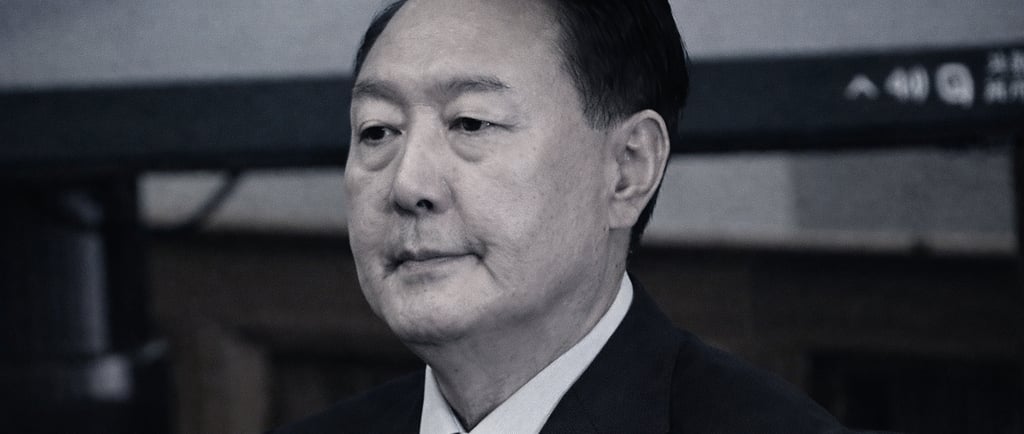
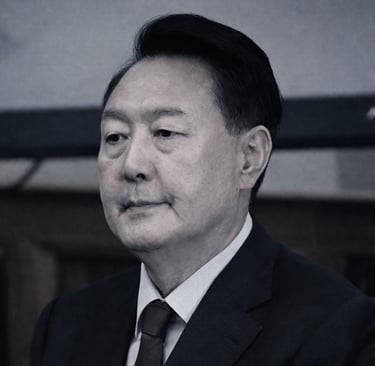
Historic Verdict Marks First Conviction in Series of Trials Against Impeached Leader
A South Korean court delivered a historic verdict on Friday, sentencing former President Yoon Suk Yeol to five years in prison on charges including obstruction of justice, abuse of power, and fabrication of official documents related to his failed attempt to impose martial law in December 2024. The ruling represents the first criminal conviction in a series of eight separate trials stemming from Yoon's controversial decree that plunged the nation into unprecedented political turmoil.
The Seoul Central District Court found the 64-year-old former leader guilty of mobilizing presidential security forces to obstruct his lawful arrest, failing to convene a proper cabinet meeting before declaring martial law, and falsifying documents to legitimize his extraordinary decree. The live-televised proceedings showed Yoon, dressed in a white shirt and navy suit, displaying no visible reaction as presiding Judge Baek Dae-hyun read the verdict to a packed courtroom and millions of viewers across the nation.
Court Condemns Abuse of Presidential Authority
Judge Baek delivered a scathing assessment of Yoon's actions during the sentencing hearing, emphasizing the gravity of constitutional violations committed by someone entrusted with the nation's highest office. The judge stated that Yoon had transformed the Presidential Security Service, which should have remained loyal to the nation and constitution, into what effectively became a private militia serving his personal security interests and political survival.
The court determined that Yoon deliberately used heavily armed presidential security personnel to prevent law enforcement officials from executing a legally issued arrest warrant in January 2025, when investigators first attempted to detain him at his official residence on insurrection-related charges. Thousands of security agents formed human barriers and blockades, successfully preventing authorities from serving the warrant during their initial attempt.
Judge Baek emphasized that the former president bore greater responsibility than any ordinary citizen to uphold constitutional principles, yet he instead violated the very legal frameworks designed to prevent presidential arbitrariness and abuse of power. The judge noted that Yoon had repeatedly demonstrated a lack of remorse throughout the legal proceedings, relying on what the court characterized as difficult-to-understand justifications for his actions.
Martial Law Crisis That Shocked a Democratic Nation
The criminal charges stem from Yoon's stunning declaration of martial law on the evening of December 3, 2024—an extraordinary move that shocked South Koreans and sent tremors through the international community. In a late-night televised address, Yoon announced the imposition of emergency military rule, citing unspecified threats to national security and accusing opposition politicians of paralyzing government functions through what he termed anti-state activities.
Within hours of the decree, military helicopters circled above Seoul's government district as hundreds of soldiers surrounded the National Assembly building in an attempt to prevent lawmakers from convening. Despite the military presence, opposition legislators and even some members of Yoon's own party managed to enter the parliamentary chambers through various entrances, with some climbing over walls and fences to reach the assembly floor.
In a dramatic late-night session broadcast live to the nation, 190 members of the 300-seat National Assembly voted unanimously to demand the immediate lifting of martial law. Under South Korea's constitution, the president must comply with such a parliamentary vote, and Yoon reluctantly rescinded the decree approximately six hours after its initial declaration—making it one of the shortest-lived martial law periods in modern democratic history.
Constitutional Violations and Document Fabrication
The court's Friday ruling specifically addressed Yoon's failure to follow constitutional procedures requiring a full cabinet meeting before declaring martial law. Evidence presented during the trial revealed that Yoon convened only a select group of handpicked ministers rather than the entire cabinet, deliberately excluding members he suspected might oppose the controversial decree.
This selective consultation violated the constitutional rights of cabinet members who were not informed about the martial law discussion, denying them the opportunity to deliberate on such a momentous decision as mandated by law. The court characterized this as a calculated attempt to create the appearance of proper governmental process while actually circumventing legal safeguards designed to prevent unilateral presidential action.
Additionally, Yoon was convicted of fabricating an official document that falsely indicated the martial law proposal had received approval from both the Prime Minister and the Defense Minister before its announcement. Prosecutors demonstrated that this document was created after the fact in an apparent effort to legitimize the decree retrospectively, representing a deliberate falsification of the governmental record.
Dramatic Arrest After Armed Standoff
The court also found Yoon guilty of unlawfully employing presidential security forces to obstruct his arrest in January 2025, when the Corruption Investigation Office (CIO) first attempted to execute a detention warrant. Video footage from the standoff showed hundreds of heavily armed security personnel forming defensive perimeters around Yoon's residence, with some agents wielding automatic weapons and riot shields.
The former president remained barricaded inside his official residence for several days, surrounded by security forces who refused to allow investigators access despite their legal authority. The unprecedented standoff raised serious questions about the appropriate boundaries of presidential security protection and whether such services could be lawfully deployed to prevent enforcement of judicial orders.
Law enforcement ultimately succeeded in arresting Yoon during a second operation on January 15, deploying over 3,000 police officers in a massive coordinated effort that overcame the security barriers. The arrest marked the first time in South Korean history that a sitting president had been taken into custody, representing a watershed moment for the nation's young democracy.
Prosecutors Had Sought Harsher Sentence
Prosecutors in Friday's case had requested a ten-year prison term, arguing that the severity of Yoon's constitutional violations and his complete lack of remorse warranted substantial punishment. The court's decision to impose a five-year sentence rather than the requested decade suggests judges found some mitigating factors, though court officials noted this was Yoon's first criminal conviction.
Legal experts observed that the five-year sentence, while significant, might indicate the judiciary's approach to the more serious insurrection charges that Yoon faces in a separate trial. Prosecutors in that case are seeking the death penalty, arguing that his martial law declaration constituted an attempted rebellion against constitutional order punishable by South Korea's most severe sanction.
The insurrection trial is scheduled to deliver its verdict on February 19, with many legal analysts predicting the court will impose a life sentence or lengthy prison term rather than capital punishment. South Korea has maintained an effective moratorium on executions since 1997, with death sentences rarely imposed and never carried out in recent decades.
Political Crisis Continues to Divide Nation
Yoon's martial law declaration and subsequent legal troubles have left South Korea deeply polarized more than a year after the initial crisis. Supporters of the former president, many elderly conservatives who view him as a bulwark against North Korea and progressive political movements, continue to rally outside courthouses and detention facilities where Yoon appears.
These supporters argue that Yoon acted within his constitutional prerogatives to address what he perceived as a national security emergency, and they characterize the multiple prosecutions as politically motivated persecution by opponents seeking to eliminate a conservative leader. Some have gathered tens of thousands of signatures supporting Yoon and opposing what they view as unjust legal proceedings.
Meanwhile, opposition politicians and civic groups have collected over 18,000 signatures supporting the death penalty for Yoon's insurrection charges, arguing that his actions represented the most serious threat to South Korean democracy since the country's transition from authoritarian military rule in the late 1980s. These critics contend that accountability for Yoon's constitutional violations is essential to preventing future presidential abuses of power.
International Implications and Democratic Resilience
The crisis surrounding Yoon's presidency has drawn international attention to South Korea's democratic institutions and their capacity to respond to unprecedented challenges. The swift parliamentary rejection of martial law and the subsequent legal proceedings against a former president demonstrate the relative strength of constitutional checks and balances in one of Asia's most vibrant democracies.
However, the prolonged political instability has raised concerns among South Korea's allies, particularly the United States and Japan, about the potential impacts on regional security cooperation at a time of heightened tensions with North Korea. South Korea currently operates under an acting president following Yoon's impeachment, creating uncertainty about major policy decisions and international commitments.
Multiple Trials Still Pending
Friday's conviction represents only the first of eight separate criminal trials that Yoon faces stemming from his martial law declaration and subsequent conduct. In addition to the pending insurrection case that could potentially result in a death sentence or life imprisonment, Yoon faces charges related to campaign finance violations and other abuses of power during his presidency.
Legal proceedings are expected to continue for many months, potentially extending into 2027, as prosecutors pursue accountability for what they characterize as systematic violations of law and constitution. Each trial will examine different aspects of Yoon's conduct, with verdicts potentially carrying cumulative prison sentences that could effectively ensure he spends the remainder of his life incarcerated if convicted on all charges.
Defense Team Plans Appeal
Yoon's legal team immediately announced plans to appeal Friday's conviction, characterizing the verdict as politically motivated and based on what they termed illiberal legal reasoning. Defense attorneys argued that the court failed to properly distinguish between legitimate exercises of presidential constitutional authority and criminal conduct, essentially criminalizing decisions that fall within executive discretion.
The lawyers contended that the ruling oversimplified complex questions about presidential powers during national emergencies and set dangerous precedents that could inhibit future leaders from making difficult decisions. They have seven days to file formal appeal paperwork, which will send the case to a higher court for review that could take many additional months.
Historical Context and Precedent
South Korea's modern political history has been marked by dramatic rises and falls of presidential power, with several former leaders facing corruption charges and imprisonment after leaving office. However, Yoon's case represents an unprecedented situation involving martial law declarations and insurrection allegations in the democratic era, testing legal frameworks in ways not previously contemplated.
The Friday verdict establishes important precedents regarding the limits of presidential authority and the judiciary's willingness to hold even the highest officials accountable for constitutional violations. Legal scholars will study this case for years to come as they analyze the boundaries between executive power and criminal conduct in democratic systems facing internal crises.
Path Forward for Traumatized Nation
As South Korea processes this latest development in an ongoing political crisis, questions remain about how the nation will heal deep divisions exposed by Yoon's presidency and its dramatic conclusion. The multiple pending trials ensure that these issues will remain in the public spotlight for the foreseeable future, potentially complicating efforts to move beyond the turmoil.
For South Korea's 52 million citizens, the Yoon saga represents both a test of their democratic institutions and a reminder of the fragility of constitutional governance even in mature democracies. The coming months will reveal whether the legal accountability process helps restore faith in democratic norms or further entrenches the political polarization that has defined this unprecedented chapter in the nation's history.
Updates
Delivering timely news and inspiring life stories.
Links
Contact
+917976343438
© 2025. All rights reserved.