
Southern Africa Floods Kill Over 100, Displace Hundreds of Thousands as Rains Intensify
Torrential rains in southern Africa have killed over 100 people and displaced hundreds of thousands, triggering mass evacuations and urgent rescue efforts.
Sandeep Gawdiya
1/17/20265 min read
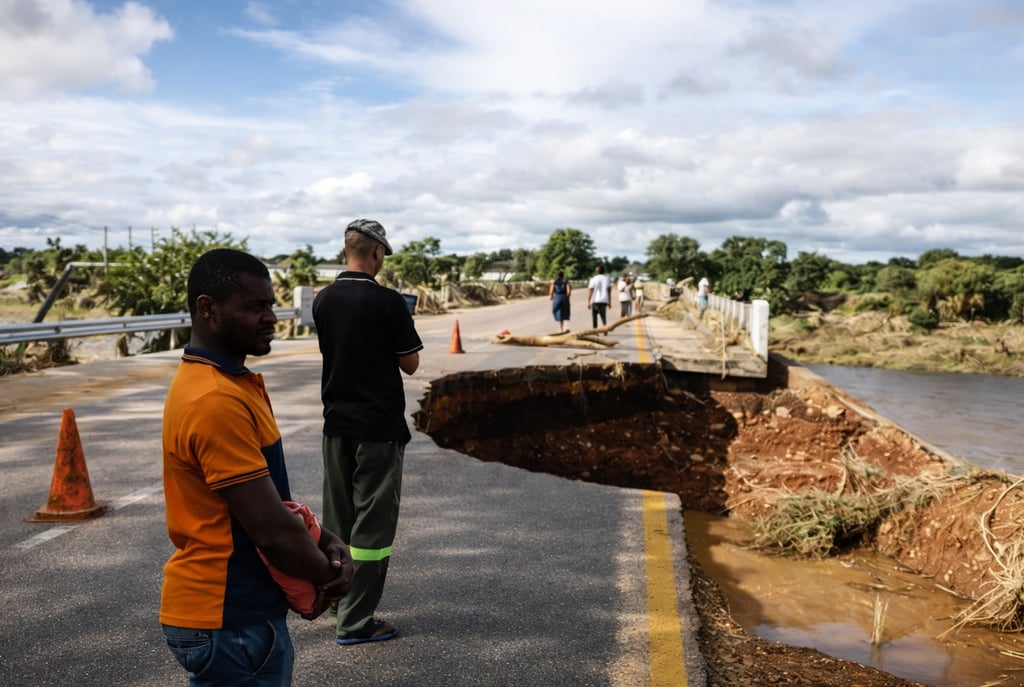
Torrential rains linked to a powerful storm system have triggered severe flooding across multiple countries in southern Africa, with early tallies indicating more than 100 deaths as of January 17, 2026. Authorities and aid agencies report that the toll is expected to rise as rescuers reach cut‑off areas and confirm the scale of destruction in remote communities.
The worst impacts are being reported from countries including Mozambique, South Africa and neighboring states where rivers have burst their banks and dam spillways have been opened to relieve pressure. Images and local reports describe communities submerged under muddy water, washed‑out roads and bridges, and families sheltering on higher ground or in overcrowded schools and churches converted into temporary shelters.
Where the floods hit hardest
Meteorologists and disaster agencies say days of heavy rainfall have saturated the ground across a wide swath of southern Africa, turning normally manageable seasonal rains into catastrophic flooding. Urban areas have faced flash floods that inundated townships and informal settlements, while rural districts along major rivers have seen slow‑moving but relentless waters engulf homes and fields.
Preliminary assessments suggest that parts of Mozambique and South Africa have experienced the most severe damage, with entire neighborhoods reported underwater and key roads impassable. Officials in affected countries have declared local or national states of disaster, activating emergency funds and mobilizing military units, police, and volunteer rescue teams to support evacuations and relief operations.
Rising death toll and mass displacement
Regional humanitarian officials estimate that more than 100 people have been killed, though they caution that this figure is likely an undercount given the number of communities still out of reach. Many of the fatalities have been attributed to drowning, collapsing buildings, landslides and vehicles swept away by fast‑moving water.
In addition to the confirmed deaths, hundreds of thousands of people have been displaced across southern Africa, forced to flee as water levels rose rapidly around their homes. Temporary shelters in schools, churches and municipal buildings are already straining to cope, with families sleeping on floors, access to clean water limited, and health workers warning about the risk of water‑borne diseases such as cholera and diarrhea.
Government response and rescue efforts
Governments in the region have deployed soldiers, police units and civil protection teams to assist with evacuations, distribute food and water, and help locate those still missing. In some areas, rescuers are using boats and helicopters to reach people stranded on rooftops or on small patches of high ground, as ground access remains blocked by submerged roads and mudslides.
Officials say their immediate priorities are saving lives, restoring access to cut‑off communities and ensuring that displaced families have safe shelter, clean water and basic medical care. At the same time, engineers are inspecting dams and key infrastructure to prevent further failures, while electricity and communications crews work to restore power and mobile networks where they have been knocked out by the storm.
Role of international agencies and early aid
Humanitarian agencies and international partners are beginning to mobilize support, although the full scale of the crisis is still being mapped. Organizations focusing on emergency shelter, food assistance, and water and sanitation are preparing to send in supplies such as tents, blankets, water purification tablets, and ready‑to‑eat meals.
Early appeals emphasize the need for rapid funding to sustain relief efforts over the coming weeks, particularly as many of those displaced have lost not just homes but also crops, livestock and small businesses. Aid workers warn that without swift assistance, the disaster could deepen existing vulnerabilities in communities already grappling with poverty, food insecurity and fragile health systems.
Climate change and a pattern of extreme weather
Experts note that the region has experienced a string of severe weather events in recent years, including cyclones, floods and droughts, which have repeatedly eroded resilience and pushed vulnerable communities into crisis. While individual storms cannot be attributed solely to climate change, scientists say a warming climate is increasing the intensity and unpredictability of heavy rainfall events in many parts of the world, including southern Africa.
This latest flooding comes against a backdrop of long‑term concern that infrastructure, housing and early‑warning systems in the region are not keeping pace with the growing risks. Urban expansion into flood‑prone areas, limited drainage systems and deforestation along riverbanks all amplify the damage when extreme rainstorms strike, leaving low‑income communities especially exposed.
Impact on agriculture, food security and livelihoods
The floods have inundated farmland and washed away crops that many families depend on for both food and income, raising fears about the knock‑on effects on food security in the months ahead. In some areas, fields that were approaching harvest have been destroyed, while stored grain and seeds have been spoiled by rising water, leaving farmers with few resources to restart.
Livestock losses are also being reported as animals drown, are swept away, or fall sick after prolonged exposure to wet and unsanitary conditions. These losses can be devastating for rural households that rely on a small number of cattle, goats or chickens as their primary assets, making it harder for them to recover once the waters recede.
Health risks in crowded shelters
Public health officials are warning that crowded temporary shelters and damaged water systems create ideal conditions for outbreaks of disease. With toilets and sanitation facilities often overwhelmed or destroyed, floodwater can quickly become contaminated, spreading bacteria and parasites that cause serious illness.
Vaccination campaigns and mobile clinics may be needed to prevent outbreaks of diseases such as cholera, measles and respiratory infections, particularly among children and older people. Aid agencies stress that providing clean water, soap, and basic hygiene supplies will be crucial in preventing a health emergency from compounding the immediate disaster.
Rebuilding homes and infrastructure
Once the floodwaters begin to recede, attention will shift to the massive task of rebuilding damaged homes, roads, schools and health centers. In some towns and villages, large numbers of houses constructed from mud brick or other fragile materials have collapsed after being saturated for days, leaving families with little to return to.
Repairing roads and bridges will be essential to reconnect trade routes and enable aid deliveries, but the cost is expected to strain already tight national budgets. Experts argue that reconstruction should prioritize more resilient designs—such as raised foundations, improved drainage and better land‑use planning—to reduce the impact of future floods.
Regional coordination and long‑term resilience
Given the cross‑border nature of the storm system and river basins, regional coordination will be important in managing both the immediate response and long‑term planning. River levels and dam releases in one country can affect flood risks downstream in another, making information‑sharing and joint planning vital.
Regional bodies and international partners are likely to play a role in strengthening early‑warning systems, improving weather forecasting, and supporting joint disaster‑management exercises. Advocates say such cooperation, combined with investments in resilient infrastructure and social protection, will be key to reducing the human and economic cost of future extreme weather events.
What happens next
In the coming days, rescue and relief operations will remain focused on reaching isolated communities, verifying the number of dead and missing, and ensuring that those in shelters have basic necessities. As the picture becomes clearer, governments and aid agencies are expected to issue more detailed damage assessments and formal international appeals for assistance.
For now, authorities are urging residents in low‑lying areas to heed evacuation orders, avoid crossing flooded roads and stay tuned to official alerts as the situation remains volatile. With more rain possible in some areas and river levels still high, officials warn that the risk of additional flooding and landslides has not yet passed, even as the region begins to confront the long recovery ahead.
Updates
Delivering timely news and inspiring life stories.
Links
Contact
+917976343438
© 2025. All rights reserved.