
Trump Imposes 25% Tariff on Advanced AI Chips One Day After Approving Nvidia H200 Exports to China in Contradictory Policy
President announces semiconductor tariffs on Nvidia and AMD chips hours after sealing Taiwan trade deal, creating policy whiplash for US tech giants.
TRADE POLICY & TECHNOLOGY GEOPOLITICS
Sandeep Gawdiya
1/16/20267 min read
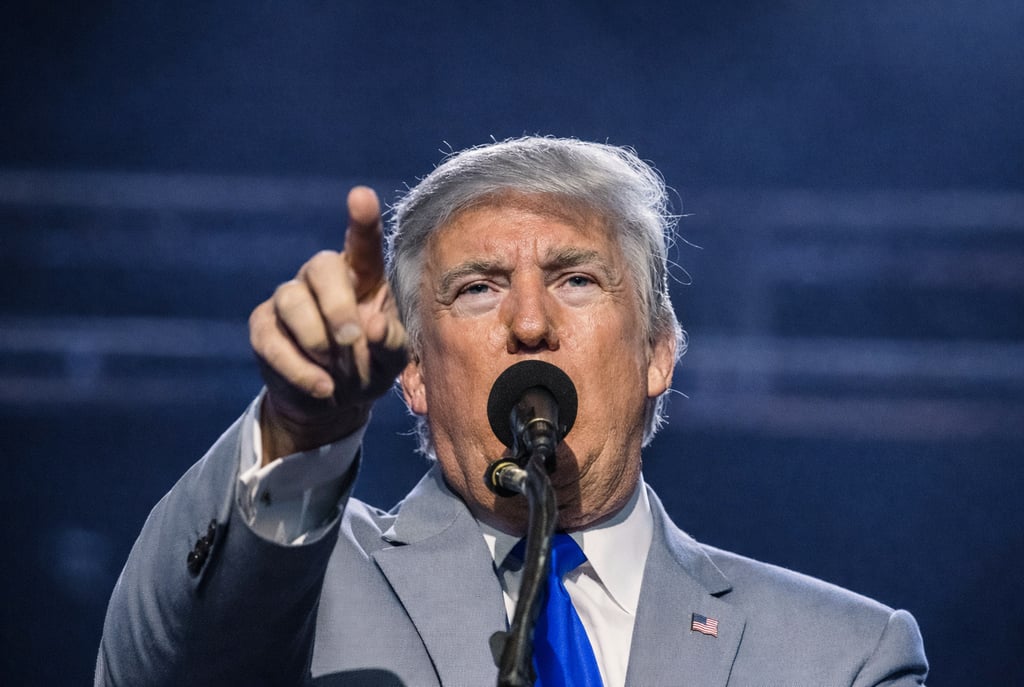
Trump Imposes 25% Tariff on Advanced AI Chips One Day After Approving Nvidia H200 Exports to China in Contradictory Policy
President's national security proclamation targets select processors including Nvidia H200 and AMD MI325X just hours after Taiwan semiconductor trade agreement
WASHINGTON — President Donald Trump announced Wednesday a 25 percent tariff on certain advanced artificial intelligence chips including Nvidia's H200 processor and AMD's MI325X, citing "significant economic and national security risk," just one day after his administration approved H200 exports to China—creating extraordinary policy whiplash that reflects competing priorities between domestic semiconductor manufacturing and maintaining American chipmakers' global competitiveness.
The tariff, formalized through a White House national security proclamation under Section 232 of the Trade Expansion Act, follows a nine-month investigation and targets AI semiconductors meeting specific performance benchmarks. The move aims to incentivize onshore chip production at a time when the United States manufactures only approximately 10 percent of the semiconductors it requires, making it heavily reliant on foreign supply chains.
"We're allowing them to do it, but the United States is getting 25% of the chips, in terms of the dollar value," Trump stated, framing the tariff as revenue collection from chipmakers selling to foreign customers rather than traditional protectionist trade policy. The announcement came just hours after the United States and Taiwan reached a historic trade agreement to build semiconductor chips and manufacturing facilities on American soil.
Tariff Structure and Strategic Exemptions
The 25 percent import duty applies specifically to AI chips manufactured by companies such as Nvidia and AMD when these products are imported into the United States and subsequently re-exported to other countries. Critically, the tariff does not affect semiconductors intended for domestic use within American data centers or products for US consumers, businesses, startups, or government entities.
According to a White House fact sheet, the exemption structure reveals the administration's primary target is commercial imports that could be manufactured domestically, rather than chips supporting US-based AI development and deployment. However, chips routed through the United States for mandatory export testing before shipment to foreign markets—such as China-bound H200 processors—appear to fall within the tariff's scope, creating compliance complexity for manufacturers.
The proclamation clarifies that the 25 percent AI chip tariff would not stack on top of other Trump administration tariffs imposed under separate Section 232 orders on copper, aluminum, steel, and automotive parts. Affected semiconductors would be exempt from those additional duties, preventing cumulative tariff burdens that could reach prohibitive levels.
The limited scope targets what the administration characterizes as the most advanced computing chips, including the Nvidia H200 and AMD MI325X processors that represent the cutting edge of AI hardware capabilities. Lower-performance AI accelerators and graphics processing units used for gaming, consumer applications, and less computationally intensive tasks remain exempt from the tariff.
Policy Contradiction and H200 Export Reversal
The timing creates a jarring policy contradiction. On Tuesday, Trump's Commerce Department approved Nvidia's application to export H200 chips to approved Chinese customers as part of a "pay-to-play" scheme announced in December 2025, wherein American AI semiconductor manufacturers including Nvidia can sell high-end chips to China in exchange for a 25 percent revenue stake flowing to the US government.
By Wednesday, those same H200 chips subject to the export approval faced 25 percent import tariffs if routed through US territory for licensing compliance and testing before China delivery. The sequential announcements—first enabling exports, then taxing the export pathway—reflect competing policy objectives that have left semiconductor industry executives struggling to understand implementation details.
Trump first proposed taking a financial cut of chip sales to China in August 2025, describing the approach as accountability for companies selling advanced technology to geopolitical competitors while benefiting from US innovation ecosystems. The December 2025 announcement created a new phase in US-China semiconductor relations by introducing revenue-sharing requirements alongside traditional export licensing.
The H200, Nvidia's latest data center GPU designed for AI training and inference workloads, represents precisely the technology US export controls have sought to restrict from Chinese access since October 2022. The decision to permit conditional exports under licensing while simultaneously taxing the transaction reflects internal administration debates between hawks favoring maximum restrictions and pragmatists concerned about American chipmakers losing market share to foreign competitors.
Taiwan Trade Deal and Semiconductor Investment Commitments
The tariff announcement came within hours of finalizing a long-sought US-Taiwan trade pact that would lower tariffs on goods from the self-governed island to 15 percent and see Taiwanese semiconductor companies increase financing for American operations by $500 billion.
Under terms announced Thursday, duties on Taiwanese shipments would fall from the previous 20 percent rate—putting them on par with Japan and South Korea, which struck their own deals last year. The new rate would not stack on top of existing most-favored-nation duties, according to a statement from Taiwan's cabinet.
Taiwan's semiconductor and technology sectors committed to investing a minimum of $250 billion in the United States as part of the agreement, though some reports suggest commitments could reach $500 billion depending on implementation details. The Commerce Department characterized the agreement as "historic," stating it would "enhance US economic resilience, generate high-wage jobs, and strengthen national security".
President Trump had originally implemented a 32 percent tariff on Taiwanese products as part of his extensive "Liberation Day" tariffs last spring, which he later adjusted to 20 percent before this week's further reduction to 15 percent. The progressive tariff reductions reflect Taiwan's strategic importance in global semiconductor supply chains and Trump's determination to secure massive investment commitments in American manufacturing.
The agreement stipulates that Taiwanese companies that have established or are constructing semiconductor facilities in the United States will be permitted to import specified quantities of chips, corresponding to their US production capacity, duty-free. This carve-out provides regulatory relief for Taiwan Semiconductor Manufacturing Company (TSMC), which is constructing large fabrication facilities in Arizona representing tens of billions in capital investment.
Strategic Rationale and Domestic Manufacturing Push
"The United States currently fully manufactures only approximately 10 percent of the chips it requires, making it heavily reliant on foreign supply chains," declares a White House proclamation explaining the tariff rationale. The administration frames the 25 percent levy as essential to reversing decades of semiconductor manufacturing offshoring that has left America vulnerable to supply disruptions and geopolitical leverage by foreign governments.
The semiconductor industry globalized dramatically over the past four decades, with manufacturing concentrating in East Asia—particularly Taiwan, South Korea, and China—while American companies increasingly focused on chip design and software rather than fabrication. This division of labor created efficiency gains and cost reductions but also strategic dependencies that became painfully apparent during pandemic-era chip shortages that crippled automotive and consumer electronics production.]
Trump's tariff policy extends his long-standing campaign to force or incentivize American companies to locate production domestically. In August 2025, Trump announced a 100 percent tariff on semiconductors made outside the United States as a way to hold accountable companies that backtrack on pledges to open US manufacturing plants. He indicated firms planning to relocate production to America would be exempt from tariffs, even before completing construction.
The approach combines punitive trade measures with massive federal subsidies provided through the CHIPS and Science Act, which allocated $52 billion for semiconductor manufacturing incentives and research investments. Together, these policies aim to restore American chipmaking capacity to roughly 30 percent of global production by 2030, up from the current 10 percent.
Industry Impact and Compliance Challenges
For Nvidia and AMD, the twin market leaders in AI acceleration hardware, the tariff creates significant operational and strategic complications. Both companies derive substantial revenue from sales to hyperscale cloud providers, enterprises, and research institutions in China and other foreign markets that now face 25 percent cost increases if chips route through American import-export channels.
Nvidia said H200 sales would still require US approval and that the share destined for China remained modest compared to domestic demand. The company's remarks highlight how the market for frontier AI hardware concentrates heavily among US firms and domestic buyers, with export sales representing a valuable but not dominant revenue stream.
However, the tariff creates pricing disadvantages versus potential foreign competitors if other nations develop competitive AI processors without the American tax burden. Industry analysts worry the policy could accelerate China's domestic semiconductor development efforts by making American chips prohibitively expensive while incentivizing Beijing to subsidize indigenous alternatives.
The exemption structure suggests careful industry lobbying to protect domestic AI development ecosystems. By excluding chips destined for American data centers, the tariff avoids hampering US technology companies' ability to deploy cutting-edge hardware for training large language models, autonomous systems, and other strategic applications. This carve-out preserves American AI competitiveness while extracting revenue from foreign commercial deployments.
Geopolitical Dimensions and Export Control Evolution
The tariff represents the latest development in escalating US-China technology competition that has seen both nations impose successive restrictions on semiconductor trade since 2022. The United States implemented unprecedented export controls on advanced semiconductors and manufacturing equipment to China in October 2022, subsequently expanded in 2023 and 2024, aimed at limiting Chinese AI capabilities and military applications.
China has responded with its own export restrictions on rare earth minerals essential to semiconductor manufacturing, investigations of American chipmakers under anti-monopoly laws, and massive state subsidies for domestic semiconductor development. Beijing considers recent limits on certain imports even when the United States permits them under controlled conditions, underscoring dynamics where each country seeks to influence the other's access to computing power that drives advanced AI.
Enforcement remains active, with US authorities continuing to investigate and prosecute smuggling attempts involving advanced chips. These efforts run alongside the new licensed export channel, indicating the government intends to maintain pressure on unauthorized transfers even while permitting controlled sales under strict conditions.
The H200 decision shows how policies continue evolving. It reveals a government willing to open narrow channels for exports while keeping tighter restrictions on the most powerful chips, creating a graduated system where commercial access depends on end-use verification, licensing compliance, and revenue-sharing.
Market Reactions and Long-Term Implications
The semiconductor industry reacted with concern to the policy whiplash, noting that Tuesday's export approval followed by Wednesday's import tariff creates regulatory uncertainty that complicates long-term business planning. Compliance teams at Nvidia, AMD, and other affected companies scrambled to understand whether chips could be profitably exported to China given the 25 percent tariff burden on top of licensing costs and revenue-sharing requirements.
Stock markets showed muted reactions, suggesting investors had anticipated protectionist semiconductor policies from the Trump administration and had already priced in trade friction impacts on chipmaker valuations. However, analysts noted the exemptions for domestic use preserved the most lucrative market segments, limiting immediate financial damage.
The Taiwan trade deal provided offsetting positive news, with massive investment commitments potentially creating tens of thousands of American manufacturing jobs over coming years. Whether Taiwanese firms ultimately fulfill the $250-500 billion investment pledges remains uncertain, as similar commitments from previous trade negotiations have sometimes fallen short during implementation.
For American AI development, the exemption structure protects access to cutting-edge hardware while extracting revenue from foreign deployments—potentially an optimal policy balance if enforcement proves workable. However, critics warn that even well-intentioned tariffs create compliance burdens, administrative costs, and market distortions that could hamper American competitiveness in fast-moving technology sectors where speed and agility determine winners.
As the semiconductor industry adjusts to this latest policy shift, the fundamental tension remains unresolved: Can the United States simultaneously maintain technological leadership in AI through unrestricted domestic hardware access while limiting foreign competitors through export controls and tariffs, or do these conflicting objectives ultimately undermine both goals? The coming months will test whether Trump's hybrid approach of selective liberalization with heavy taxation can achieve the administration's dual objectives of domestic manufacturing growth and geopolitical technology advantage.
Updates
Delivering timely news and inspiring life stories.
Links
Contact
+917976343438
© 2025. All rights reserved.