
Trump Slaps 10% Tariffs on Eight European Nations in Unprecedented Greenland Showdown
US-EU relations reach new low as President retaliates against military deployments to Arctic territory, threatening decades of transatlantic cooperation
TRADE POLICY & GEOPOLITICS
Sandeep Gawdiya
1/18/20268 min read
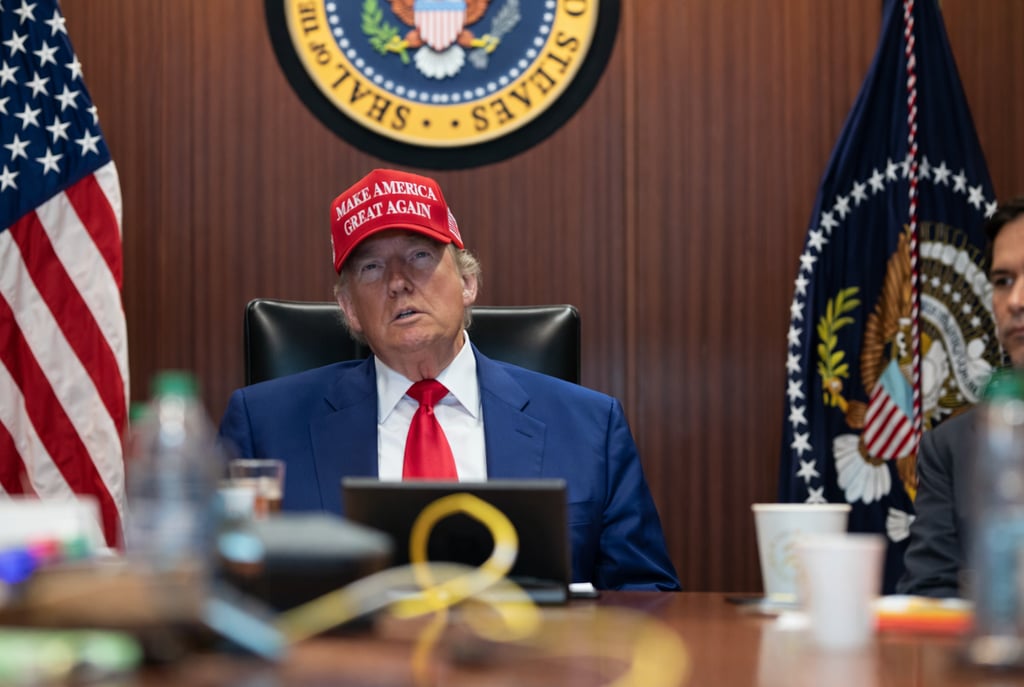
In a stunning escalation of tensions between Washington and its traditional European allies, President Donald Trump announced Saturday that the United States will impose a sweeping 10 percent import tariff on goods from eight European nations, effective February 1st. The controversial move represents the most significant trade action against European partners in recent memory and marks a dramatic deterioration in transatlantic relations over Trump's pursuit of Greenland.
The targeted countries—Denmark, Germany, France, Italy, Spain, Belgium, the Netherlands, and Portugal—face the punitive measures in direct response to their decision to deploy military personnel to Greenland earlier this week at Denmark's request. The unprecedented tariffs threaten to upend billions of dollars in trade and could trigger a cascade of retaliatory measures that economists warn might destabilize the global economy.
A Geopolitical Powder Keg in the Arctic
The crisis centers on Greenland, the world's largest island and an autonomous territory within the Kingdom of Denmark. Trump has repeatedly expressed interest in purchasing Greenland, citing strategic military importance and access to valuable natural resources, including rare earth minerals critical to advanced technology manufacturing. The President's fixation on acquiring the Arctic territory has become a defining—and divisive—feature of his second term.
"These nations, engaging in this perilous game, have introduced a level of risk that is neither acceptable nor sustainable," Trump declared in his announcement from the White House. "The United States of America is ready to engage in negotiations with Denmark and/or any of these countries that have jeopardized so much, despite our extensive support for them, including maximum protection over many years". The rhetoric reflects Trump's longstanding grievance that European nations benefit from American military protection through NATO while simultaneously opposing US strategic objectives. The President views the European military deployment to Greenland as a direct rebuke to American interests and has framed the tariff announcement as both retaliation and leverage in future negotiations.
Europe Responds: Trade Talks Frozen
The European Union's response was swift and unequivocal. Within hours of Trump's tariff announcement, Brussels announced an immediate suspension of all ongoing trade deal negotiations with the United States. The EU also convened an emergency ministerial meeting scheduled for later today to coordinate a unified response to what European Commission President has termed "economic blackmail".
"Following US President Donald Trump's warning to impose tariffs on Denmark and other European countries over the sale of Greenland, the European Union has put bilateral trade negotiations on indefinite hold," stated an official EU communiqué released early Sunday morning. The statement emphasized that "the EU cannot negotiate in good faith while facing threats of punitive economic measures".
Trade experts suggest the fallout could be catastrophic for businesses on both sides of the Atlantic. The eight targeted European nations collectively represent one of America's largest trading partners, with bilateral trade exceeding $500 billion annually. Major industries—from automotive manufacturing to pharmaceuticals, aerospace to agriculture—face immediate uncertainty as companies scramble to assess the potential impact on supply chains and pricing structures.
German automotive manufacturers, already navigating challenging market conditions, expressed alarm at the prospect of a 10 percent tariff on vehicles and parts exported to the United States. Similarly, French luxury goods producers, Italian fashion houses, and Dutch agricultural exporters voiced concerns about maintaining competitiveness in the crucial American market with the added cost burden.
Greenland: Strategic Prize or Diplomatic Disaster?
Greenland's strategic importance has grown exponentially in recent years as climate change opens new Arctic shipping routes and makes previously inaccessible mineral deposits economically viable. The island sits astride key maritime passages between North America and Europe, hosts a major US military installation at Thule Air Base, and contains substantial reserves of rare earth elements essential for everything from smartphones to advanced weapons systems.
China's growing interest in Arctic resources has only intensified Washington's focus on Greenland. American policymakers worry that increased Chinese economic engagement with Greenland—including investments in mining operations and infrastructure projects—could eventually translate into strategic influence over the territory. From this perspective, Trump's push to acquire Greenland reflects broader concerns about great power competition in a rapidly changing Arctic landscape.
However, the President's approach has alienated precisely those allies whose cooperation would be essential for managing Arctic security challenges. Denmark, a founding NATO member with whom the United States has maintained close defense ties for over seven decades, has categorically rejected any discussion of selling Greenland. Greenland's own government has similarly dismissed the idea, asserting the territory's right to self-determination.
The decision by European nations to deploy military personnel to Greenland represents a calculated show of solidarity with Denmark and a clear signal that America's traditional allies will not acquiesce to what they view as bullying tactics. Military analysts note that the deployments, while modest in scale, carry significant symbolic weight—effectively drawing a red line against unilateral US action regarding Greenland's status.
Economic Fallout: Winners and Losers
The immediate economic consequences of Trump's tariff announcement remain uncertain, but early market reactions suggest investor anxiety about the potential for a wider trade war. European stock indexes opened lower Sunday evening, with particular weakness in export-dependent sectors. The euro declined against the dollar, reflecting concerns about reduced European competitiveness in the American market.
American consumers will likely face higher prices on a wide range of imported goods, from European automobiles and machinery to wine, cheese, and other specialty food products. The 10 percent tariff functions as a sales tax, with costs typically passed along to end consumers rather than absorbed by foreign producers or importers.
Certain American industries might benefit from reduced European competition. Domestic manufacturers competing against European imports could gain market share if foreign goods become less price-competitive. However, economists caution that these gains may be offset by retaliatory tariffs that European nations are certain to impose on American exports, hurting US manufacturers, farmers, and service providers who depend on European markets.
The agricultural sector presents a particularly vulnerable target for European retaliation. American farmers still remember the trade war with China during Trump's first term, which required tens of billions of dollars in federal subsidies to offset lost export sales. A similar dynamic could emerge with Europe, where American agricultural products—especially soybeans, corn, pork, and beef—face potential tariff increases or outright import restrictions.
Trump's Radical Foreign Policy Agenda
The Greenland tariff announcement represents just one element of Trump's increasingly aggressive foreign policy approach as he marks the one-year anniversary of his return to the White House. In recent weeks, the President has threatened military intervention in Iran, demanded that NATO allies dramatically increase defense spending, and pursued what critics characterize as reckless brinksmanship with traditional American partners.
In a particularly controversial move revealed this weekend, Trump is establishing a new "Board of Peace" that would require aspiring member nations to contribute at least $1 billion for permanent membership. The initiative, initially framed as part of efforts to manage the Gaza ceasefire, appears designed to evolve into a broader mechanism for Trump to exert influence over international conflict resolution—with access contingent on substantial financial payments to the US government.
"Trump wants nations to pay $1 billion to stay on his peace board," reported international media outlets, describing the unprecedented proposal as "pay-to-play diplomacy" that subordinates traditional diplomatic relationships to transactional financial arrangements. Critics argue this approach fundamentally undermines the established international order and risks isolating the United States from long-standing allies.
The cumulative effect of these policies has been a dramatic realignment of global diplomatic relationships. Traditional American allies increasingly look to other partners—including each other—for leadership on international issues, while competitors like China position themselves as more reliable and predictable actors on the world stage.
Congressional Response and Domestic Politics
Reaction from Capitol Hill has split largely along partisan lines, though some Republicans have expressed private concern about the wisdom of antagonizing European allies over Greenland. Democrats have been uniformly critical, arguing that Trump's tariff announcement represents dangerous economic nationalism that will ultimately harm American workers, businesses, and consumers.
"Slapping tariffs on our closest allies over a territorial dispute that has nothing to do with trade is the definition of arbitrary and capricious policy-making," argued Senator Elizabeth Warren in a statement released late Saturday. "This isn't protecting American interests—it's indulging one man's obsessions at the expense of working families who will pay higher prices for everyday goods."
Republican supporters of the President, however, have rallied to his defense, framing the tariffs as necessary hardball tactics to secure American strategic interests. "For too long, European countries have taken American security guarantees for granted while working against our interests," stated Senator Josh Hawley. "President Trump is right to use every tool at our disposal, including tariffs, to ensure that our allies actually act like allies."
Trade policy experts note that the President possesses broad legal authority to impose tariffs on national security grounds, though using this power to retaliate for European military cooperation with Denmark stretches the traditional understanding of what constitutes a security justification. Legal challenges appear likely, though courts have historically been reluctant to second-guess presidential determinations on national security matters.
Looking Ahead: Escalation or Resolution?
The critical question now facing policymakers, businesses, and citizens on both sides of the Atlantic is whether this crisis represents a temporary diplomatic rupture that can be resolved through negotiation, or the beginning of a fundamental and lasting breach in transatlantic relations.
Trump's statement indicated willingness to negotiate with Denmark and the affected European countries, suggesting the tariffs might be reversed if Europe abandons its military support for Greenland and opens discussions about the island's future status. However, European leaders have shown no inclination to back down, viewing any concessions as rewarding bullying tactics and setting a dangerous precedent.
The European Union's emergency meeting will likely produce a coordinated retaliatory response, though the precise form remains unclear. Options range from targeted tariffs on politically significant American exports to broader restrictions on US companies operating in European markets. The EU could also accelerate efforts to reduce economic dependence on the United States by diversifying trade relationships and strengthening partnerships with other major economies.
For businesses caught in the crossfire, uncertainty reigns. Companies are rushing to assess exposure to the new tariffs, evaluating options for restructuring supply chains, and preparing for potential volatility in currency markets and commodity prices. Many firms may be forced to make significant strategic decisions—such as relocating production facilities or finding alternative suppliers—based on what may ultimately prove to be temporary policy positions.
The Broader Implications
Beyond the immediate economic and diplomatic consequences, Trump's Greenland tariff offensive raises profound questions about the future of the international system. For decades, the United States has championed a rules-based international order built on multilateral institutions, alliance relationships, and norms of behavior that constrain the arbitrary exercise of power.
The current crisis suggests a fundamental shift toward transactional, power-based international relations where relationships depend on immediate reciprocity rather than shared values and long-term strategic interests. While Trump and his supporters argue this approach better serves American interests, critics warn it surrenders the soft power and moral authority that have historically amplified American influence far beyond raw military and economic might.
The world is watching to see whether traditional American allies will maintain unity in the face of US pressure or whether the transatlantic partnership, forged in the aftermath of World War II and tested throughout the Cold War, will fracture under the weight of contemporary disagreements.
As February 1st approaches and the tariffs prepare to take effect, time is running short for diplomatic resolution. European capitals remain defiant, American businesses grow increasingly anxious, and President Trump shows no signs of backing down from his Greenland ambitions.
What began as an unorthodox territorial aspiration has evolved into a full-blown crisis that threatens to reshape decades of transatlantic cooperation. The coming weeks will reveal whether pragmatism and mutual interest can overcome current animosities—or whether the United States and Europe are embarking on a new era of competition and conflict that will diminish both sides while empowering their rivals.
Updates
Delivering timely news and inspiring life stories.
Links
Contact
+917976343438
© 2025. All rights reserved.