
Trump Threatens Insurrection Act Deployment as Minneapolis ICE Protests Escalate After Second Federal Shooting
President Trump warns he'll deploy military forces to Minneapolis under rarely-used Insurrection Act as protests intensify following second ICE shooting incident.
U.S. POLITICS & CIVIL UNREST
Sandeep Gawdiya
1/16/20267 min read
Trump Threatens Insurrection Act Deployment as Minneapolis ICE Protests Escalate After Second Federal Shooting
President considers deploying active-duty military to Minnesota as tensions flare following fatal shooting of Renee Good and subsequent violence involving federal immigration officers
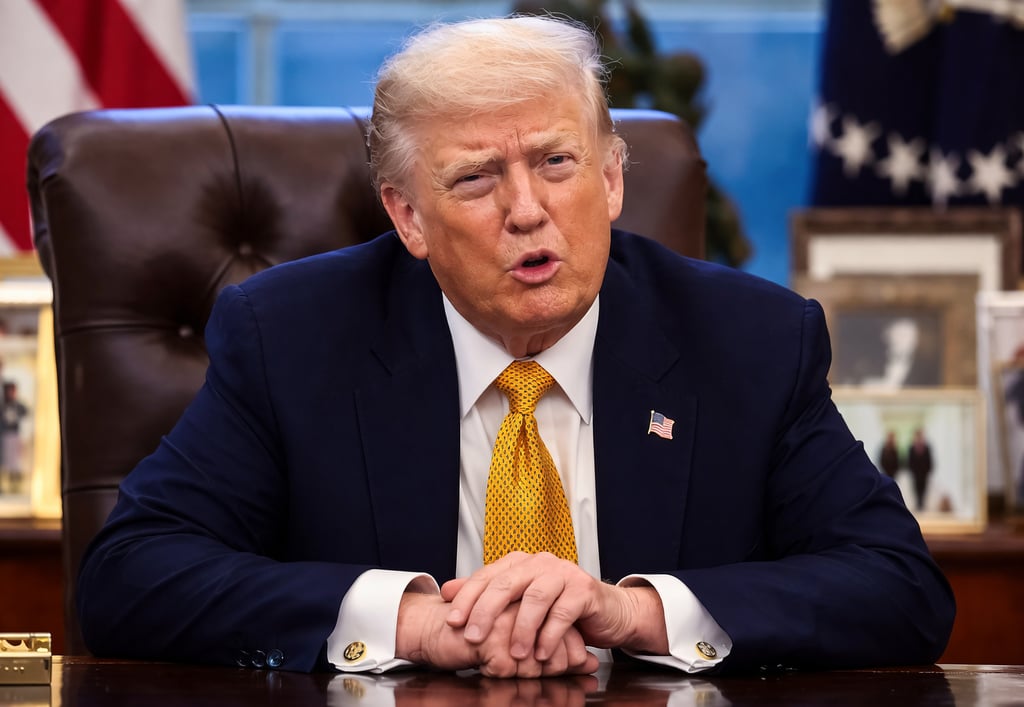
MINNEAPOLIS, MINNESOTA — President Donald Trump threatened Thursday to invoke the rarely-used Insurrection Act and deploy United States military forces to Minneapolis, escalating a confrontation with state and local Democratic officials over persistent protests against federal immigration enforcement operations that have roiled Minnesota's largest city for more than a week.
The threat came hours after a federal immigration officer shot a Minneapolis man in the leg during a confrontation Wednesday evening in which the man and two others allegedly assaulted the officer with a shovel and broom handle while the agent attempted to make an arrest, according to the Department of Homeland Security. The incident intensified already volatile tensions following the January 7 fatal shooting of Renee Nicole Good, a 37-year-old mother of three and United States citizen, by an Immigration and Customs Enforcement agent during a federal operation.
"If the corrupt politicians of Minnesota don't obey the law and stop the professional agitators and insurrectionists from attacking the Patriots of I.C.E., who are only trying to do their job, I will institute the INSURRECTION ACT," Trump posted on social media Thursday, directly targeting Minnesota Governor Tim Walz and Minneapolis Mayor Jacob Frey.
Legal Framework and Historical Precedent
The Insurrection Act, dating to 1807, grants the president authority to deploy active-duty military personnel or federalize National Guard units for domestic law enforcement purposes under specific circumstances involving civil disorder, insurrection, or situations where state authorities cannot or will not maintain order. However, its invocation remains extraordinarily rare, with the most notable modern uses occurring during the civil rights era when President Dwight Eisenhower deployed federal troops to Little Rock, Arkansas in 1957 to enforce school desegregation against state resistance.
Department of Homeland Security Secretary Kristi Noem confirmed Thursday that she had discussed the possibility of invoking the Insurrection Act with the president, stating "He certainly has the constitutional authority to utilize that". The consideration marks a significant escalation in the administration's confrontation with state and local officials who have demanded federal immigration agents withdraw from Minneapolis following the Good shooting.
Legal scholars and civil liberties advocates have expressed alarm at the prospect of military deployment against protesters exercising First Amendment rights. Constitutional law experts note that past Insurrection Act invocations shared common features: genuine breakdown of civil authority, narrowly defined missions, and clear exit strategies with specific rules of engagement.
Timeline of Events: From Fatal Shooting to Federal-State Confrontation
The crisis began January 7 when ICE agent Jonathan Ross fatally shot Renee Good while she sat in her vehicle during a federal immigration operation in the area of East 34th Street and Portland Avenue. Federal authorities claimed Good "weaponized her vehicle" and attempted to run over officers, justifying the shooting as self-defense. However, Minneapolis officials and multiple video analyses, including one conducted by The New York Times, contradicted the administration's account, showing Good attempting to flee when she was shot.
"This was a federal agent recklessly using power that resulted in somebody dying," Minneapolis Mayor Jacob Frey stated following the shooting, adding that city officials had "dreaded this moment since the early stages of this ICE presence in Minneapolis". Good, a legal observer monitoring ICE activities according to city officials, was transported to Hennepin County Medical Center where she later died from gunshot wounds to the head.
The administration's characterization of Good as a "domestic terrorist" and Vice President JD Vance's description of her death as a "tragedy of her own making" ignited nationwide outrage. Protests erupted across multiple cities including Boston, New York, Philadelphia, and Minneapolis under the banner "ICE Out For Good," organized by progressive groups including Indivisible.
Wednesday's second shooting occurred as approximately 3,000 federal officers remained deployed in Minnesota as part of Operation Metro Surge, the Trump administration's expanded immigration enforcement initiative. According to DHS, an ICE officer was attempting an arrest when the subject exited his vehicle and two individuals from a nearby apartment allegedly attacked the officer with implements, prompting the officer to fire in self-defense. The injured man was hospitalized with non-life-threatening injuries while the two alleged assailants were taken into custody.
Protests Turn Violent as Federal-Local Tensions Escalate
Wednesday evening's demonstrations near the shooting site in Minneapolis's Hawthorne neighborhood devolved into confrontations between protesters and law enforcement. Minneapolis Police Chief Brian O'Hara reported officers faced projectiles including fireworks, ice chunks, and snowballs, while local media documented damage to vehicles believed to belong to federal authorities.
Federal agents wearing gas masks and helmets deployed tear gas into crowds of protesters, who responded by throwing rocks and igniting fireworks. CNN camera crews covering the protests were struck by tear gas and flashbangs as they reported from the scene. Chief O'Hara declared the gathering an unlawful assembly and ordered dispersal, with 29 arrests made during recent demonstrations and at least one officer injured.
By early Thursday, the immediate tensions had subsided, though small numbers of protesters and law enforcement officers remained at the site. However, protests have become a regular occurrence in Minneapolis since Good's killing, with demonstrators chanting, blowing whistles, recording federal officers with smartphones, and demanding ICE withdrawal from the city.
Federal-State Authority Clash Intensifies
The confrontation has exposed deep fractures between the Trump administration and Minnesota's Democratic leadership over immigration enforcement jurisdiction and accountability. U.S. Deputy Attorney General Todd Blanche labeled the Minneapolis protests as an "insurrection" and accused Governor Walz and Mayor Frey of inciting violence against law enforcement.
Minnesota officials have pushed back forcefully against these characterizations while demanding accountability for Good's death. Governor Walz issued a warning order preparing the Minnesota National Guard for possible deployment in response to the protests, though state officials have insisted they are responding to federal overreach rather than instigating unrest.
Mayor Frey directly challenged the administration's narrative of the Good shooting, urging Americans to "watch the video" which he said clearly shows "the ICE agent was not run over, as Trump stated" and depicts "a person that was definitively trying to just get out of there". City officials have demanded the investigation be conducted by Minnesota's Bureau of Criminal Apprehension rather than exclusively by federal authorities, citing concerns about bias.
The jurisdictional dispute extended to congressional oversight when three Democratic congresswomen—Ilhan Omar, Kelly Morrison, and Angie Craig—were expelled from an ICE facility in Minneapolis's federal building on January 10 after initially being granted access. The lawmakers accused ICE agents of impeding congressional oversight responsibilities and showing "no regard for the fact that they are infringing upon federal law".
Civil Liberties Concerns and Detention Practices
Civil liberties organizations have documented aggressive federal tactics beyond the shootings themselves. The American Civil Liberties Union filed suit alleging immigration officers have been monitoring activists observing ICE operations in the Twin Cities, violating First Amendment rights.
Two legal observers, Brandon Sigüenza and Patty O'Keefe, both United States citizens, detailed their January 12 detention by ICE while monitoring federal operations. According to their accounts provided to The Associated Press, officers sprayed pepper spray through O'Keefe's car ventilation system and shattered windows despite unlocked doors. Sigüenza reported an immigration officer offered monetary compensation or legal assistance in exchange for identifying protest organizers or undocumented neighbors.
Both described harsh conditions during processing at an ICE facility, including denial of water and bathroom access, failure to provide medical attention to injured detainees, and what O'Keefe characterized as agents laughing while detained individuals experienced distress.
Secretary Noem announced plans to restrict congressional visits to immigration detention facilities just one day after the Good shooting, a move that contributed to the congresswomen being denied facility access.
Political Ramifications and Congressional Response
The Minneapolis crisis has created fissures even within the Republican coalition supporting the administration's immigration enforcement priorities. Some Republican lawmakers and former ICE officials have expressed concern the administration's response could undermine confidence in investigations and called for greater ICE training and body camera requirements.
House Republicans offered Democrats explicit funding for ICE body cameras in fiscal 2026 Department of Homeland Security appropriations negotiations, acknowledging the agency needs additional law enforcement equipment. However, the broader DHS funding bill has stalled in the wake of the Good shooting, with Wednesday's scheduled floor vote on related appropriations facing uncertain prospects.
Democratic lawmakers including Connecticut Senator Chris Murphy suggested "there's not going to be an investigation" after Vice President Vance indicated the officer who killed Good "is protected by absolute immunity". Multiple senior federal prosecutors in Washington and Minnesota have resigned amid turmoil over the administration's handling of the investigation.
Republican officials have largely aligned with the administration's position, with Oklahoma Senator Markwayne Mullin stating law enforcement officials "have the right to use lethal force, too, if they're feeling threatened".
Operational Scale and Future Trajectory
The Trump administration has characterized Operation Metro Surge as the largest immigration enforcement operation in United States history, with Secretary Noem announcing "hundreds more" agents would arrive in Minnesota beyond the 3,000 already deployed. The operation has involved roving patrols, arrests without warrants, and forcible removals of individuals from vehicles and homes, according to organizers and civil liberties groups.
Despite nationwide protests and state legislative efforts to constrain ICE operations, the administration confirmed Operation Metro Surge will continue in Minnesota after a federal judge denied state prosecutors' request for a temporary restraining order against ICE.
The Insurrection Act threat represents Trump's most aggressive response to date regarding immigration enforcement resistance. While the president has invoked the act's possibility previously during his political career, actual deployment of military forces against protesters would constitute an unprecedented escalation in modern immigration enforcement conflicts.
Minneapolis officials emphasized the federal government bears responsibility for preventing further loss of life. "People are being hurt, families are being ripped apart, long-term Minneapolis residents who have contributed greatly to our city, to our culture, to our economy are being terrorized and now, someone is dead," Mayor Frey stated, adding "That's on you. It's also on you to leave".
As tensions remain elevated, the coming days will test whether federal and state authorities can find accommodation or whether the confrontation escalates toward unprecedented military intervention in a major American city over immigration enforcement operations.
Updates
Delivering timely news and inspiring life stories.
Links
Contact
+917976343438
© 2025. All rights reserved.