
Uganda Opposition Leader Bobi Wine Forcibly Abducted by Military Helicopter After Disputed Presidential Election
Ugandan opposition leader Bobi Wine was forcibly taken by military helicopter from his Kampala home following disputed election results favoring President Museveni.
AFRICAN POLITICS & HUMAN RIGHTS
Sandeep Gawdiya
1/17/20267 min read
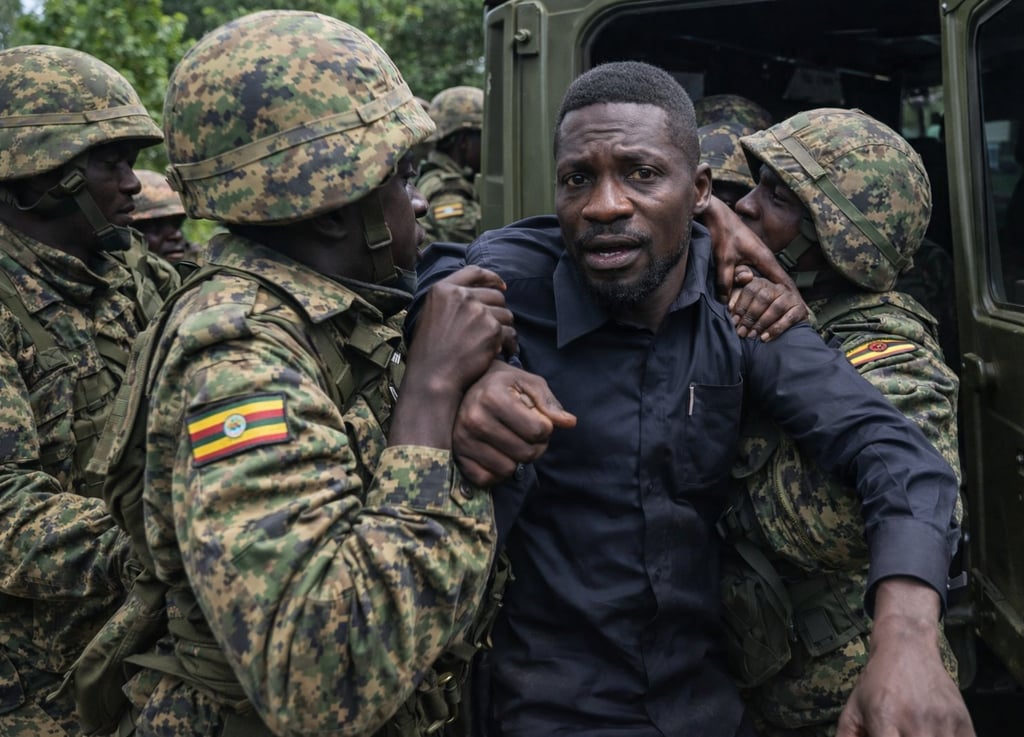
Uganda Opposition Leader Forcibly Taken by Military Helicopter Amid Electoral Crisis
Ugandan opposition presidential candidate Robert Kyagulanyi, widely known by his stage name Bobi Wine, was forcibly seized from his Kampala residence and transported to an undisclosed location via military helicopter late Friday, according to statements from his political party. The dramatic development came just one day after a highly contentious presidential election that international observers described as marred by widespread repression, violence, and an internet blackout.
The National Unity Platform (NUP), Wine's political party, announced on social media platform X that an army helicopter landed inside the compound of his home Friday evening, with military personnel violently assaulting his private security guards before taking the 43-year-old politician away. The party stated that Wine was transported to an unknown destination, raising immediate concerns about his safety and whereabouts among supporters and international human rights organizations.
Election Results Show Museveni With Commanding Lead
The alleged abduction occurred as preliminary results from Uganda's Electoral Commission showed incumbent President Yoweri Museveni maintaining a commanding lead with approximately 76 percent of the vote, compared to Wine's roughly 20 percent, with over 80 percent of ballots counted. The 81-year-old Museveni, who has ruled Uganda since 1986, is seeking an unprecedented seventh term in office, which would extend his nearly four-decade grip on power.
Wine and his supporters have vehemently contested the election's legitimacy, alleging massive electoral fraud, systematic ballot stuffing, and widespread intimidation of opposition polling agents. Speaking before his reported abduction, Wine urged Ugandans to rise up and reject what he characterized as a manipulated electoral process conducted under the cover of a government-imposed internet blackout that began Tuesday.
International Community Raises Alarm Over Electoral Conditions
The United Nations Human Rights Office issued a stark warning last week, stating that Uganda's presidential election was taking place in an environment characterized by widespread repression and intimidation of opposition figures and their supporters. The assessment underscored growing international concern about the deteriorating democratic space in the East African nation of approximately 46 million people.
The election campaign period was marked by systematic disruptions of opposition activities, with security forces accused of violently attacking Wine's rallies and detaining hundreds of his predominantly young supporters. Video footage verified by international media outlets showed military and police personnel using tear gas, rubber bullets, and live ammunition to disperse crowds at opposition campaign events.
House Arrest Preceded Helicopter Seizure
Prior to his reported forced removal, Wine had announced on social media that security forces surrounded his residence in Kampala, effectively placing him and his wife under house arrest. Al Jazeera reporters on the ground confirmed a heavy military and police presence around Wine's compound, with roadblocks established on surrounding streets and armored vehicles positioned at strategic points.
Catherine Soi, reporting for Al Jazeera from Kampala, noted that the government-imposed internet shutdown significantly hampered efforts to verify Wine's exact location and condition. The blackout prevented real-time communication and made it extremely difficult for journalists and international observers to document events as they unfolded across the country.
Pattern of Post-Election Repression Emerges
Wine's reported abduction fits a troubling pattern from Uganda's previous election cycle. Following the 2021 presidential contest, which Wine also contested and lost to Museveni, the opposition leader was placed under house arrest for several days after alleging electoral fraud. That post-election period saw at least 54 people killed in protests against the results, according to human rights organizations monitoring the situation.
In the current election's aftermath, reports of violence have already emerged from multiple locations across Uganda. Muwanga Kivumbi, a member of parliament representing Wine's party, told international media that security forces stormed his residence and killed ten of his campaign workers who had gathered awaiting election results. His wife, law professor Zahara Nampewo, described how the individuals were hiding in their garage when security personnel fired through the door.
Local police spokesperson Lydia Tumushabe countered these allegations, claiming that opposition supporters attacked a police station and vote-counting center with machetes, forcing security forces to fire in self-defense. She stated that 25 individuals were arrested in connection with the alleged attacks. The conflicting accounts underscore the difficulty of establishing verified facts amid the communications blackout and heightened tensions.
Singer-Turned-Politician Challenges Authoritarian Rule
Bobi Wine's political trajectory represents a remarkable transformation from international music star to leading opposition figure challenging one of Africa's longest-serving leaders. The former pop musician entered politics in 2017 when he won a parliamentary seat, quickly becoming a voice for Uganda's frustrated youth who comprise the majority of the country's population.
His 2021 presidential campaign garnered an impressive 35 percent of the vote despite facing significant obstacles, including limited funding, harassment by security forces, and what observers described as an uneven playing field heavily tilted toward the ruling National Resistance Movement party. That showing represented Museveni's narrowest victory margin since taking power through armed rebellion nearly four decades ago.
Wine's 2026 campaign operated under the slogan "People Power, Our Power," promoting a vision of a "New Uganda" characterized by reduced corruption, expanded economic opportunities for youth, and genuine democratic reforms. His message resonated particularly strongly in urban areas and among working-class populations frustrated by chronic unemployment and limited prospects for advancement.
Constitutional Changes Enable Museveni's Extended Rule
President Museveni's ability to continue seeking reelection stems from constitutional amendments pushed through Uganda's parliament in 2017 that removed the presidential age limit of 75 years. Previous constitutional changes had already eliminated term limits, clearing the way for Museveni to pursue what critics describe as life presidency.
The 81-year-old leader campaigned on a platform emphasizing stability, security, and economic progress under the slogan "Protecting the Gains." Museveni argues that his leadership has delivered substantial economic growth, with Uganda's economy expanding seventeen-fold during his tenure, while maintaining peace in a volatile regional context where neighboring countries have experienced coups and civil conflicts.
However, critics point to entrenched corruption, persistent poverty despite economic growth statistics, and the systematic dismantling of democratic institutions as evidence that Museveni's extended rule has come at significant cost to Uganda's political development and respect for human rights.
Speculation Grows About Succession Planning
As Museveni advances in age while maintaining his grip on power, speculation has intensified about potential succession arrangements within Uganda's ruling establishment. His son, General Muhoozi Kainerugaba, currently serves as head of Uganda's armed forces and has publicly expressed ambitions for political leadership, leading observers to suggest a potential dynastic transition may be under consideration.
The younger Kainerugaba has cultivated a significant social media presence and appears to enjoy strong support within military circles, leading some analysts to view him as the most likely successor should Museveni eventually step aside or become incapacitated. This prospect raises concerns about Uganda potentially moving from one form of authoritarian rule to another rather than toward genuine democratic governance.
Regional and International Implications
Uganda holds significant geopolitical importance in East Africa, serving as a key partner for Western nations in regional security operations. The country maintains troop deployments in Somalia as part of African Union peacekeeping efforts, has forces in South Sudan, and operates in the Democratic Republic of Congo. This security role has complicated international responses to Uganda's deteriorating democratic conditions, as Western governments balance human rights concerns against security cooperation imperatives.
The reported abduction of Bobi Wine occurred against a broader regional backdrop of democratic backsliding and increased authoritarianism in East Africa. Neighboring Kenya has experienced its own political tensions and violent protests, while Tanzania has also seen restrictions on opposition activities and press freedom. Uganda's election outcome may influence political dynamics throughout the region, either emboldening other authoritarian leaders or potentially inspiring opposition movements.
Communications Blackout Hampers Verification Efforts
The government-imposed internet shutdown that began Tuesday has created enormous challenges for journalists, election observers, and citizens attempting to document and verify events surrounding the election and its aftermath. Social media platforms, messaging applications, and news websites remained inaccessible to most Ugandans, effectively creating an information vacuum that prevented real-time reporting of alleged irregularities and violence.
Authorities justified the internet blackout as necessary to prevent the spread of misinformation and maintain public order during the sensitive election period. However, opposition figures and civil society organizations characterized it as a deliberate strategy to facilitate electoral manipulation while preventing citizens from organizing protests or sharing evidence of fraud with international audiences.
The blackout particularly affected Wine's ability to communicate with his supporters and international media, as his primary communication channels had been social media platforms. Members of his National Unity Platform party reported difficulty coordinating responses to the rapidly evolving situation and struggled to obtain accurate information about their leader's location following his reported helicopter abduction.
International Response and Calls for Transparency
As news of Wine's reported abduction spread through international media outlets, human rights organizations and democracy advocates called for immediate clarity regarding his whereabouts and condition. Amnesty International and Human Rights Watch issued statements demanding that Ugandan authorities provide information about Wine's location and ensure his safety, while calling for his immediate release if he is being held in custody.
Uganda's government and military officials had not issued official responses to the abduction allegations as of late Friday evening, with attempts by journalists to reach official spokespeople going unanswered. The silence from authorities deepened concerns among Wine's supporters and international observers about potential harm to the opposition leader.
Looking Ahead: Uncertain Future for Ugandan Democracy
The dramatic events surrounding Uganda's 2026 presidential election have cast a harsh spotlight on the state of democratic governance in the East African nation. Wine's reported military abduction, allegations of systematic electoral fraud, the communications blackout, and reports of post-election violence combine to paint a troubling picture of a country where opposition to entrenched power increasingly faces violent suppression rather than democratic competition.
As final election results are expected to be formally announced Saturday, the fundamental question facing Uganda concerns not merely who will govern for the next five years, but whether the country can chart a path back toward genuine democratic accountability, respect for human rights, and peaceful political competition. For the millions of young Ugandans who supported Wine's vision of political change, the answer to that question will shape their country's trajectory for decades to come.
The international community now faces critical decisions about how to respond to events in Uganda, balancing security cooperation interests against the imperative to support democratic norms and human rights principles. The coming days and weeks will reveal whether external pressure can influence Uganda's political trajectory or whether Museveni's authoritarian model has become so deeply entrenched that it can resist both domestic opposition and international criticism.
Updates
Delivering timely news and inspiring life stories.
Links
Contact
+917976343438
© 2025. All rights reserved.