
UN Security Council Holds Emergency Meeting on Iran Crisis as Death Toll Hits 3,428 and Trump Weighs Military Action Amid Internet Blackout
UN Security Council convenes urgent session on deadly Iran protests with over 3,400 killed, 18,000 detained, as White House claims 800 scheduled executions halted following Trump warnings.
GEOPOLITICS & INTERNATIONAL SECURITY
Sandeep Gawdiya
1/16/20269 min read
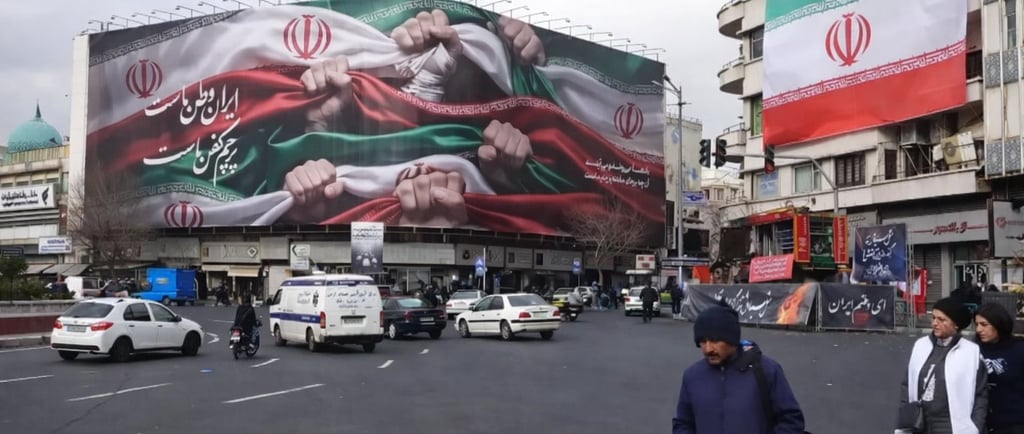
The United Nations Security Council convened an emergency session on Thursday evening in New York to address the catastrophic humanitarian crisis unfolding in Iran, where nationwide anti-government protests have been met with a brutal crackdown by security forces that has left at least 3,428 people dead and more than 18,000 detained, according to human rights organizations. The urgent meeting came as U.S. President Donald Trump continued to weigh military intervention options while simultaneously claiming that his threats had succeeded in halting 800 executions that Iranian authorities had allegedly scheduled for protesters.
The gathering of the world's most powerful diplomatic body exposed deep international divisions over how to respond to a crisis that threatens to destabilize the Middle East and potentially trigger a wider regional conflict. While the United States and its Western allies condemned Tehran's violent suppression of dissent and called for accountability, Russia and China urged non-interference in what they characterized as Iran's internal affairs, warning that external pressure could escalate an already volatile situation.
The backdrop to the Security Council session is a rapidly deteriorating situation inside Iran, where an internet blackout imposed by authorities has severely limited information flows and made it difficult to independently verify casualty figures, the scale of arrests, or the full extent of the government's response. What began as economic protests driven by soaring inflation, currency collapse, and widespread hardship has morphed into one of the most significant challenges to the Islamic Republic since its founding 47 years ago, with demonstrators openly calling for regime change and the end of clerical rule.
Diverging narratives: Iran defends crackdown, U.S. threatens action
During Thursday's Security Council meeting, Iran's deputy UN envoy Zahra Gholhosseinzi delivered a defiant address asserting that Tehran "does not seek escalation or confrontation" but would respond decisively to any aggression. "Any form of aggression, whether direct or indirect, would provoke a decisive and lawful response in accordance with Article 51 of the UN Charter," Gholhosseinzi warned. "This is not a threat; it's a statement of legal fact. Those who instigate such unlawful actions will bear full responsibility for the consequences."
The Iranian diplomat accused the United States of playing a "direct role in inciting unrest within Iran" and characterized the protests as orchestrated by external forces seeking to destabilize the country. Tehran's official narrative, which has been amplified through state media, claims that "organized terrorists" and "rioters" infiltrated peaceful demonstrations and opened fire on both security forces and civilians, aiming to provoke foreign military intervention and create conditions for regime change.
U.S. Ambassador to the UN Mike Waltz delivered a sharply contrasting message, condemning the Iranian government's handling of the protests and emphasizing that the ongoing internet blackout hampers the ability to assess the true scope of the authorities' brutal response. "The citizens of Iran are demanding their freedom more than ever during the harsh history of the Islamic Republic," Waltz stated, adding that Iran's assertion that the protests were part of a "foreign conspiracy to justify military action" indicated the government's fear of its own populace.
Waltz made clear that "President Donald J. Trump and the United States of America stand by the brave people of Iran," and warned that "President Trump is a man of action, not endless talk like we see at the United Nations." He added that Trump "has made it clear, all options are on the table to stop the slaughter, and no one should know that better than the leadership of the Iranian regime." Notably, however, Waltz did not provide specifics on what military actions might be under consideration or under what circumstances they would be implemented.
Casualty figures and the fog of information warfare
One of the most contentious aspects of the Iran crisis is the death toll, with estimates varying wildly depending on the source and methodology. The Human Rights Activists in Iran organization (HRANA), a U.S.-based group with networks inside the country, confirmed 2,403 protester deaths, 147 security force deaths, 12 minors killed, and nine civilians who were neither protesters nor military personnel as of January 14. The organization emphasized that its figures represent only confirmed deaths and that the actual toll is likely significantly higher.
Iran Human Rights NGO reported its own confirmed account of 3,428 protester deaths as of January 14, with most victims under the age of 30. The organization noted that estimates by Iran International television, which suggested as many as 12,000 deaths, and CBS News reports citing activist groups claiming possibly 20,000 fatalities, were difficult to verify because of the internet cutoff but that efforts to confirm these reports were ongoing.
An unnamed Iranian official told Reuters that the total number of deaths of protesters and security forces combined was approximately 2,000, claiming that both groups had been killed by "terrorists" rather than by government forces. This narrative, which Tehran has consistently promoted, attributes violence to foreign-directed operatives seeking to overthrow the Islamic Republic and holds the United States and Israel responsible for inciting bloodshed.
UN Assistant Secretary-General Martha Pobee, briefing the Security Council, acknowledged the difficulty in obtaining reliable information given the communications blackout but cited human rights watchdogs' reports of mass arrests, estimating over 18,000 detainees by mid-January 2026. She urged Iran to ensure humane treatment of detainees and to cease any executions connected to the protests. "All fatalities should be investigated promptly, independently, and transparently," Pobee insisted, adding that those who commit violations must be held accountable in accordance with international standards.
The UN Secretary-General conveyed profound concern regarding the reported excessive use of force and emphasized the urgent need to avert further casualties. He underscored that all Iranians should have the right to express their grievances peacefully and without fear, and that the rights to freedom of expression, assembly, and association—enshrined in international law—must be fully acknowledged and safeguarded. The Secretary-General called for immediate measures to restore access to information by lifting the internet blackout that has plunged much of the country into digital darkness.
White House claims executions halted, but military options remain
In what the Trump administration portrayed as a diplomatic victory, White House Press Secretary Karoline Leavitt announced on Wednesday that President Trump had been informed that 800 executions that were scheduled to take place had been halted following U.S. pressure. "The president has been informed that 800 executions that were planned and scheduled for yesterday have been halted," Leavitt told reporters, adding that Trump had communicated to Iranian officials that there would be "grave consequences" if killing of protesters continued.
Leavitt reiterated that while the U.S. has currently refrained from military actions, "all options remain available for the president." The claim about halted executions could not be independently verified, and human rights organizations expressed skepticism given Iran's history of conducting executions in secret and the current information blackout that makes monitoring state actions extremely difficult.
The Wall Street Journal reported on Thursday that Trump's advisers had informed him that a significant military assault on Iran was unlikely to lead to the collapse of the Iranian government and could potentially ignite a broader regional conflict. Sources indicated that Israeli Prime Minister Benjamin Netanyahu, in conversations with Trump, warned that an attack on Iran would not necessarily topple the regime and that U.S. forces would need substantial reinforcements in the Middle East not only to execute a large-scale strike but also to protect American troops and allies like Israel in the event of Iranian retaliation.
Trump's Middle East envoy Steve Witkoff suggested on Thursday that the administration preferred to resolve tensions through diplomatic means rather than military action, stating, "I spoke with the Iranians yesterday, and we were concerned about the mass hangings of protesters. The president announced that it was canceled, and it will not take place." Witkoff's comments appeared to indicate a cooling of the administration's bellicose rhetoric from earlier in the week, when Trump had warned Iran of "very strong action" and encouraged protesters to "take over institutions" and record the names of those responsible for violence.
Gulf allies, particularly Saudi Arabia, Qatar, and Oman, reportedly played a crucial role in persuading Trump to refrain from immediate military action, expressing concerns about potential "severe blowbacks in the region." A senior Saudi official indicated that regional powers had worked behind the scenes to de-escalate tensions and create space for diplomatic solutions, fearing that a U.S. strike could trigger Iranian retaliation against Gulf oil facilities, shipping lanes, and American military bases scattered across the region.
International responses and the geopolitical calculus
The emergency Security Council meeting highlighted the geopolitical fault lines that shape international responses to the Iran crisis. Russia and China, both of which have economic and strategic ties to Tehran, urged restraint and described the situation as an internal matter that should be resolved by Iranians without external interference. Neither country condemned the Iranian government's crackdown, instead emphasizing principles of sovereignty and non-interference in internal affairs.
European nations occupied a middle ground, expressing concern about human rights violations and calling for investigations into violence while stopping short of endorsing military action or aggressive rhetoric. France, which has deployed military personnel to Greenland in response to separate tensions with the United States over Arctic territorial claims, urged dialogue and de-escalation, reflecting broader European wariness about being drawn into another Middle East conflict.
Several countries have taken concrete steps to protect their nationals and reduce diplomatic exposure in Iran. The United Kingdom closed its embassy in Tehran and evacuated staff earlier this week, citing an "increasingly unsafe" security environment. India issued an advisory urging its citizens to leave Iran immediately and avoid travel to the country until further notice, following reports of a near-miss involving an IndiGo flight that exited Iranian airspace just before closures took effect. New Zealand announced on Thursday that it was shutting its embassy and flying out diplomatic personnel, joining a growing list of nations reducing their presence in Tehran.
The crisis has also prompted Iran to briefly close its airspace to commercial flights without explanation, forcing airlines to divert routes and creating disruptions for travelers and cargo operations. The closure, which lasted nearly five hours on Wednesday, fueled speculation about imminent military strikes and triggered panic selling in financial markets before Iranian authorities reopened the airspace and attributed the shutdown to "technical reasons."
Sanctions, isolation, and the economic roots of unrest
As the Security Council met, the United States announced additional sanctions targeting Iranian officials deemed responsible for the crackdown, including Ali Shamkhani, secretary of the Supreme National Security Council, and other senior figures in the government and security apparatus. These sanctions, which freeze assets and impose travel bans, add to an already extensive sanctions regime that has crippled Iran's economy, cut off access to international financial systems, and contributed to the inflation and currency collapse that initially sparked the protests.
Iran has faced stringent sanctions for years related to its nuclear program, missile development, and support for regional proxy groups, and the cumulative economic impact has been devastating. Inflation has soared into triple digits, the rial has lost most of its value against foreign currencies, unemployment is widespread especially among youth, and shortages of food, medicine, and essential goods have become routine. These economic grievances, combined with long-standing frustrations over political repression, corruption, and lack of opportunities, created the tinderbox that exploded into nationwide protests.
Critics of the sanctions regime argue that while intended to pressure the Iranian government to change its behavior, the measures primarily hurt ordinary Iranians who bear the brunt of economic hardship while elites and security forces remain relatively insulated. Supporters counter that sanctions are a necessary tool to constrain Iran's regional activities, nuclear ambitions, and human rights abuses, and that lifting them would reward and empower a government that consistently violates international norms.
The protests themselves have transcended economic demands to embrace calls for fundamental political change, including the end of clerical rule, greater democratic freedoms, women's rights, and national self-determination free from religious authority. Demonstrators have openly chanted slogans rejecting the Islamic Republic and its Supreme Leader Ayatollah Ali Khamenei, crossing red lines that in the past would have seemed unthinkable. The breadth and intensity of the protests suggest deep reservoirs of discontent that go beyond immediate economic conditions to fundamental questions about the nature and legitimacy of the Iranian political system.
The path ahead: Escalation, negotiation, or internal collapse?
As the Security Council meeting concluded without consensus or concrete action—Russia and China would likely veto any resolution authorizing intervention or imposing new sanctions—the crisis enters a dangerous and unpredictable phase. Trump's comments suggesting he is "watching the situation" and waiting to see how Tehran responds to protesters indicate that U.S. military action remains possible but not imminent, buying time for diplomatic efforts and allowing the administration to assess whether the reported halt in executions and any moderation in the crackdown are genuine or merely tactical.
Iranian authorities face a stark choice: continue the violent suppression and risk further international isolation, potential military strikes, and the possibility that protests intensify and spread to groups that have so far remained on the sidelines, or attempt some form of accommodation that addresses grievances, releases detainees, and creates space for political dialogue. The latter option would require the leadership to acknowledge legitimacy of popular demands and accept some dilution of its authority, steps that hardliners within the regime adamantly oppose.
For protesters and opposition groups, the challenge is sustaining momentum and unity despite the internet blackout, mass arrests, and brutal violence. The involvement of diaspora networks, satellite television channels, and international support provides some resources, but the asymmetry in coercive power between unarmed civilians and security forces backed by tanks, helicopters, and surveillance technology is overwhelming.
The coming days and weeks will test the resolve of all parties and determine whether the crisis can be contained through negotiations and reforms, or whether it escalates into a full-blown civil conflict or regional war with unpredictable consequences for the Middle East and the world. The UN Security Council's inability to forge a unified response reflects the broader paralysis of international institutions in addressing crises that cut across great power rivalries, and underscores the limits of diplomacy when fundamental interests and values collide.
Updates
Delivering timely news and inspiring life stories.
Links
Contact
+917976343438
© 2025. All rights reserved.