
White House Weighs Executive Action to Cap Credit Card Interest Rates at 10% as Trump Challenges Banking Industry
Trump administration considers executive order to enforce 10% credit card rate cap as banks push back, warning move could restrict credit access for millions of Americans.
U.S. ECONOMIC POLICY & FINANCIAL REGULATION
Sandeep Gawdiya
1/17/20269 min read
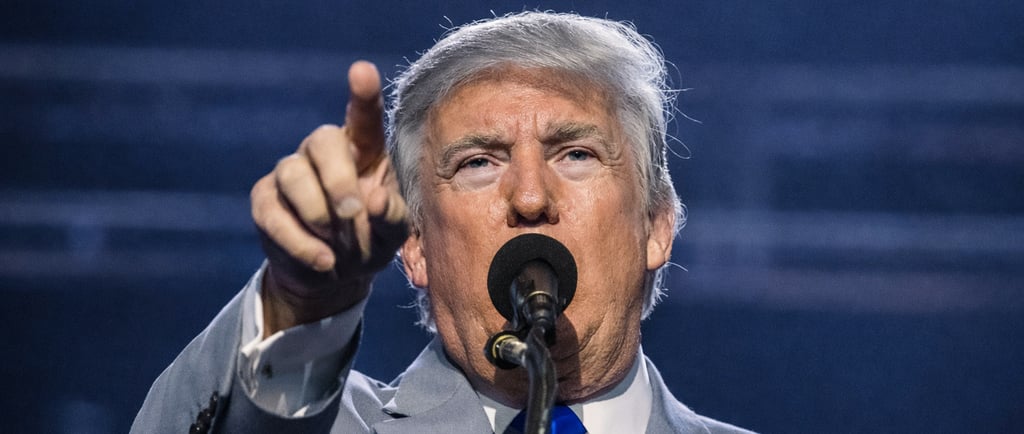
White House Weighs Executive Action to Cap Credit Card Interest Rates at 10% as Trump Challenges Banking Industry Ahead of Self-Imposed January 20 Deadline
The White House is actively considering an executive action to implement President Donald Trump's controversial proposal to cap credit card interest rates at 10% for one year, according to Bloomberg News reporting on Friday, January 16, 2026, citing sources familiar with internal deliberations—a dramatic move that would directly confront Wall Street's most profitable consumer lending operations and has already sent bank stocks tumbling while leaving financial institutions scrambling to determine their response strategy ahead of Trump's self-imposed January 20 implementation deadline. The administration's consideration of executive authority to enforce the cap comes after Trump announced the proposal via Truth Social on January 9, 2026, reviving a 2024 campaign promise amid midterm election concerns about affordability, but providing no details on implementation mechanisms—creating a week of uncertainty that has prompted major banks including JPMorgan Chase, Bank of America, and Capital One to warn that such restrictions could force them to dramatically reduce credit availability, eliminate rewards programs, and potentially exit the credit card business entirely for lower-income and subprime borrowers who currently rely on unsecured credit despite its high costs.
Bloomberg Report: Executive Action Under Active Consideration
According to Bloomberg News's January 16 report, cited by Reuters and multiple financial media outlets, "the White House is weighing an executive action to enact President Donald Trump's call for a cap on credit card interest rates, in addition to other measures seeking to ease US affordability challenges." The Bloomberg report noted that "the plan, which is still being crafted as administration officials discuss the terms with industry and Congress, is designed to lower interest rates on credit cards as part of a broader push to reduce costs for Americans."
Critically, Bloomberg reported that "Trump's action may also call on regulators to relax certain liquidity standards to help make the plan more attractive for the banks," suggesting the administration recognizes it must offer financial institutions concessions to gain compliance with what would otherwise represent a fundamental disruption to their business models. Reuters confirmed on January 16 that "the White House is weighing an executive action to enact U.S. President Donald Trump's call for a cap on credit card interest rates," though noting the sources requested anonymity due to the sensitive and ongoing nature of policy discussions.
The Economic Times of India reported on January 17 that the executive action consideration aims to "reduce costs for Americans" as part of the administration's broader affordability agenda, while Fortune magazine characterized the January 16 Bloomberg revelation as intensifying pressure on "big banks" already rattled by Trump's initial January 9 announcement.
Trump's Original Announcement: January 20 Deadline Without Implementation Details
President Trump first announced his credit card rate cap proposal on Friday, January 9, 2026, via a post on his Truth Social platform. According to Reuters, CNN, CNBC, and The New York Times, Trump stated: "Effective January 20, 2026, I, as President of the United States, am calling for a one year cap on Credit Card Interest Rates of 10%." He added, according to multiple outlets, that Americans "will no longer let the Public be ripped off by Credit Card Companies that charge Interest Rates of 20, 25, and even 30%."
The January 20 date holds symbolic significance as the first anniversary of Trump's second-term inauguration, according to The New York Times, though the publication noted on January 14 that "with less than a week remaining until that deadline, no major lender has voluntarily reduced its rates, and with Congress showing no urgency to take legislative action, industry analysts believe the most probable outcome is that the president's request will go unaddressed, at least for the time being."
Critically, as NBC News and CNN reported, Trump provided no details on how the cap would be enforced or whether he envisioned voluntary industry compliance or government-mandated restrictions. The New York Times noted that "Mr. Trump expressed his desire for the cap to be implemented by January 20," but the lack of specificity left financial institutions, regulators, and lawmakers uncertain about the administration's intentions—uncertainty that Bloomberg's January 16 report partially addressed by revealing the executive action consideration.
Banking Industry Response: "Very Bad for Consumers, Very Bad for the Economy"
The financial services industry responded to Trump's proposal with immediate alarm and forceful pushback, warning that a 10% rate cap could fundamentally restructure the credit card market in ways that would harm the very consumers Trump claims to protect. JPMorgan Chase Chief Financial Officer Jeremy Barnum delivered perhaps the most pointed critique during the bank's January 14 earnings call, stating according to Bloomberg and The New York Times: "If it were to happen, it would be very bad for consumers, very bad for the economy." Barnum warned that under such a scenario, "the card operation would be a business that we would have to significantly change."
The New York Times reported that Barnum told reporters JPMorgan was "considering every option" to counter the proposal, signaling the industry's readiness for confrontation with the administration. Bank of America CEO Brian Moynihan, according to The Wall Street Journal, cautioned on Wednesday, January 15: "Reducing the caps will limit credit availability. You need to weigh that against the goals of improving affordability."
Bank stocks experienced immediate declines following Trump's January 9 announcement. CNBC reported on January 12 that "shares of banks and financial services firms experienced a decline," with Capital One's stock falling 6% and Synchrony Financial dropping more than 8% during midday trading. The BBC noted on January 12 that the proposal "sent shockwaves through the financial sector," while Bloomberg characterized it on January 16 as raining "on big banks' earnings parade" during a week when major financial institutions were reporting quarterly results.
According to Investing.com and Reuters reporting on January 17, banks faced an acute dilemma as the January 20 deadline approached. Reuters noted that "as of Friday, there was no legal or regulatory requirement to comply," leaving lenders uncertain whether Trump's "call" represented a voluntary request, an expectation backed by regulatory enforcement threats, or a prelude to mandatory executive action—uncertainty partially clarified by Bloomberg's revelation that executive action was under active consideration.
The Bipartisan Legislative Backdrop: Sanders-Hawley Bill
Trump's proposal builds on bipartisan congressional efforts that have gained little traction despite broad populist appeal. On February 4, 2025, Senators Bernie Sanders (I-Vt.) and Josh Hawley (R-Mo.) introduced the "10 Percent Credit Card Interest Rate Cap Act" (S.381), which would immediately cap rates at 10% for five years—a more expansive version than Trump's one-year proposal.
According to Senator Sanders's press release and NBC News reporting, Sanders stated: "When large financial institutions charge over 25 percent interest on credit cards, they are not engaged in the business of making credit available. They are engaged in extortion and loan sharking." Senator Hawley added: "Working Americans are drowning in record credit card debt while the biggest credit card issuers get richer and richer by hiking their interest rates to the moon. It's not just wrong, it's exploitative. And it needs to end."
The Sanders-Hawley bill noted that according to a Forbes report, "the average credit card interest rate is 28.6%, even though banks are able to borrow money from the Federal Reserve at less than 4.5%"—highlighting the substantial margin between banks' borrowing costs and consumer lending rates. The legislation calculated that a consumer with a $5,000 balance at 28% interest making only minimum $166 monthly payments would take over 24 years to pay off the debt at a total cost approaching $11,000 in interest, compared to roughly $7,000 in savings if rates were capped at 10%.
CNBC reported on January 14 that the Sanders-Hawley "bill introduced last year that would cap rates at 10% for five years has stalled in Congress," though NBC News noted the proposal has garnered support from both progressive Democrats like Rep. Alexandria Ocasio-Cortez (D-N.Y.) and conservative Republicans like Rep. Anna Paulina Luna (R-Fla.), who introduced companion legislation in the House. Despite this unusual bipartisan alignment, The Wall Street Journal and other outlets noted that banking industry lobbying and concerns about unintended consequences have prevented legislative advancement.
White House Messaging: Vague Expectations Without Clear Enforcement Mechanism
White House communications regarding implementation have been notably vague, creating confusion about the administration's intentions and authority. Reuters reported on January 17 that White House spokeswoman Karoline Leavitt stated during a January 16 press briefing: "The president certainly expects... that credit card companies will comply. I can't specify what consequences might arise, but this is an expectation and, frankly, a demand from the president."
According to CNBC, when Trump was questioned about his social media post on Sunday, January 12, he told reporters that banks would be "in violation of the law" if they did not comply with the proposed rate limit—a statement that legal experts found puzzling given no such law currently exists. CNN reported that "currently, the specifics of Trump's proposals remain uncertain," while NBC News noted that "the Consumer Financial Protection Bureau (CFPB) is primarily responsible for drafting and enforcing federal consumer financial regulations, including those related to credit cards. This agency would likely be crucial for Trump in implementing a rate cap."
Reuters reported on January 17 that Kevin Hassett, a senior White House economic adviser, "said on Friday that the administration was discussing with big bank CEOs how to extend credit to borrowers who lack it but could otherwise qualify"—suggesting negotiations were occurring around expanding credit access in exchange for rate caps, though no concrete agreements had been announced. A White House official told Reuters that "the Trump administration was exploring every tool possible to address an affordability crisis that it blames on the Biden administration."
Industry Insider Reactions: Banks "Scratching Their Heads"
Investing.com reported on January 17, citing anonymous industry sources, that "banks have been scratching their heads about what may happen that day, given as of Friday, there was no legal or regulatory requirement to comply." According to the publication, "a source at a major bank who declined to be identified speaking about sensitive policy issues" confirmed that "the industry had been in discussions with the administration to gain clarity."
The Wall Street Journal reported on January 16 that "in the wake of it, one bank prepared its CEO in case of a call from an administration official," indicating financial institutions were anticipating direct pressure from the Trump administration. According to Investing.com, "despite the confusion over how the administration might implement the cap, lenders were taking Trump's directive seriously, said a third industry source."
TD Cowen managing director Moshe Orenbuch, quoted by Investing.com, suggested potential compromise approaches: "Banks could offer either a new card or a line to a customer at a rate that was probably in the 10% area, but keeping in mind that the likely features of that card would be less robust"—implying lenders might create no-frills products with 10% rates but without rewards, travel benefits, or fraud protections that characterize premium credit cards.
Economic and Consumer Impact Debates: Relief vs. Restriction
The proposal has ignited fierce debates about its likely consumer impact, with supporters emphasizing relief for debt-burdened Americans and critics warning of credit contraction that would harm vulnerable populations. CNN reported on January 16 that Trump's proposal "has struck a chord in debates about affordability, potentially setting up a confrontation with Wall Street," though questioning "whether such a cap might provide immediate relief, its effectiveness in tackling the fundamental issues of affordability remains uncertain."
According to CNN, critics warn "this measure could cause credit card issuers to limit access to credit and reduce rewards programs, which may adversely affect consumer spending and hinder economic expansion." David Krakauer, vice president of portfolio management for Mercer Advisors, told Reuters: "Credit cards are extremely profitable, and a cap could affect future earnings expectations of larger banks and card companies."
The Wall Street Journal noted that analysts cautioned the cap "could lead to many individuals, particularly those with lower incomes and credit ratings, losing access to credit"—creating a paradox where Trump's populist proposal aimed at helping struggling Americans might instead eliminate their access to credit of last resort. The Consumer Financial Monitor noted on January 13 that "a decades-long drive to cap credit card interest rates has received a sudden jolt from President Donald Trump—and widespread pushback from banks worried about profitability and credit availability."
CNBC reported on January 12 that "President Donald Trump's proposal for a temporary 10% limit on credit card interest rates, if put into action, could have considerable ramifications—both advantageous and detrimental—for borrowers," noting the complexity of predicting actual consumer outcomes given the interconnected nature of credit availability, pricing, rewards programs, and financial institution profitability.
What Happens January 20: Uncertainty Remains Despite Executive Action Consideration
As the January 20 deadline approaches, uncertainty persists despite Bloomberg's revelation of executive action consideration. The BBC reported on January 17 that "President Trump's proposal to cap credit card interest rates at 10%—an idea with bipartisan support—received swift backlash from bank executives," while Fortune noted on January 16 that Trump's proposal had "both supporters and critics" but remained unclear in implementation.
Reuters reported on January 17 that "U.S. banks are set to encounter a significant political challenge as they respond to President Donald Trump's proposal," characterizing Tuesday, January 20, as a test of whether voluntary industry compliance, negotiated compromises, or confrontational resistance would emerge as the dominant response strategy.
The Financial Times and other outlets suggested possible outcomes ranging from symbolic gestures—such as new 10% rate products for highly creditworthy borrowers—to complete industry defiance pending actual regulatory or legislative mandates. The administration's consideration of executive action, as revealed by Bloomberg, suggests Trump intends to move beyond mere rhetorical pressure, though the legal authority for such executive action remains contested given that credit card interest rate regulation typically falls to Congress and independent regulatory agencies rather than direct presidential control.
As the financial services industry, consumer advocates, and political observers await clarity on January 20 and beyond, Trump's credit card rate cap proposal exemplifies the tensions between populist policy appeals, complex financial market realities, and the practical limits of presidential authority in the American system—with potentially profound implications for the $1 trillion U.S. credit card market and the millions of Americans who rely on revolving credit despite its substantial costs.
Updates
Delivering timely news and inspiring life stories.
Links
Contact
+917976343438
© 2025. All rights reserved.