
World Marks Longest-Ever Pause in Nuclear Testing — But Looming US, Russian Moves Put Fragile Record at Risk
The world has set a record for the longest period without nuclear tests, but US and Russian hints at renewed testing threaten a fragile nonproliferation milestone. keywords: longest lull in nuclear tests, nuclear testing moratorium, US nuclear testing plans, Russia nuclear arsenal, North Korea nuclear tests, CTBT, global nonproliferation
GLOBAL SECURITY & NUCLEAR POLICY
Sandeep Gawdiya
1/16/20269 min read
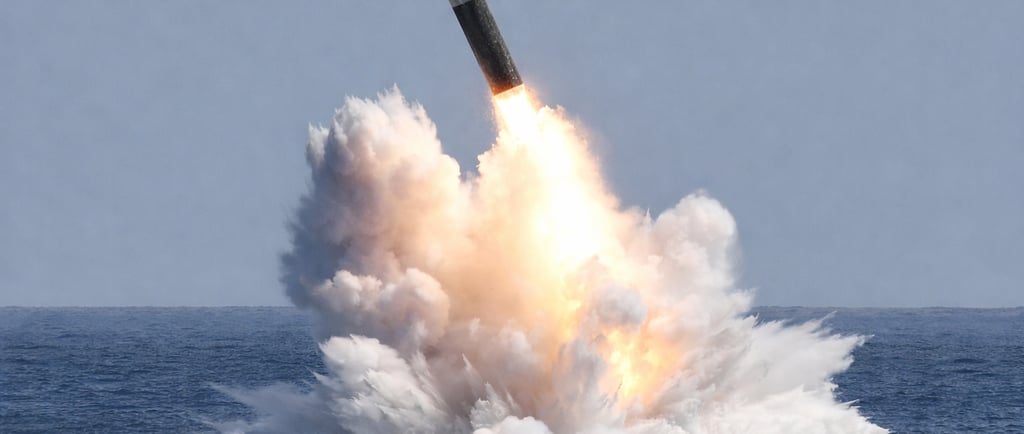
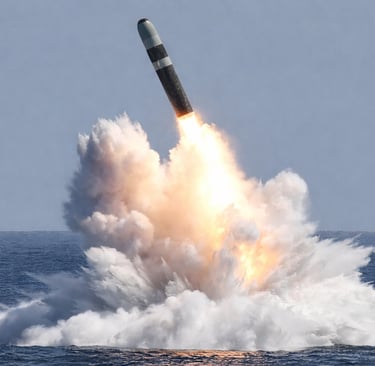
A rare bright spot in a tense nuclear era
For the first time since the first atomic blast in 1945, the world has gone longer without a single nuclear weapons test than at any previous point in the nuclear age, setting a quiet but extraordinary record for restraint. As of mid‑January 2026, more than eight years and four months have passed since North Korea’s last underground explosion in September 2017, pushing the global testing hiatus beyond all earlier breaks in nuclear detonations.
Arms‑control experts describe the extended pause as one of the few genuine success stories in a security environment otherwise marked by war in Ukraine, tensions in East Asia, and escalating rivalry among the world’s major powers. Yet they also warn that this “winning streak” is on shaky ground because leaders in both Washington and Moscow have openly floated the possibility of resuming tests, and key treaty limits are under strain or at risk of expiring.
The new record underlines a paradox of the current moment: nuclear weapons remain central to global power politics, and several states are modernizing or expanding arsenals, but the most visible and destructive form of demonstration — full‑scale explosive testing — has been absent for years. Whether that restraint survives the next round of political and technological competition will help determine the shape of the 21st‑century nuclear order.
How the world reached a record non‑testing streak
The latest milestone was highlighted by the Union of Concerned Scientists (UCS), which calculated that on 14 January 2026 the world had gone eight years, four months and 11 days without a nuclear test. That span exceeds the previous longest pause, which ran from the last French test in 1996 to North Korea’s first nuclear detonation in October 2006, and it also surpasses the gap between China’s final test in 1996 and Pyongyang’s 2006 explosion.
The current lull began after North Korea’s sixth test in September 2017, a powerful underground blast that capped a rapid period of nuclear and missile development by Pyongyang. Since then, all nine nuclear‑armed countries — the United States, Russia, China, Britain, France, India, Pakistan, Israel and North Korea — have refrained from conducting declared explosive tests, even as several modernize their arsenals.
The United States has not held a full nuclear test since 1992, when it ended underground detonations at the Nevada Test Site and shifted to computer simulations and non‑critical experiments to certify warhead reliability. Russia’s last acknowledged explosive test dates back to 1990, during the final years of the Soviet Union, while China’s final test took place in 1996, just before the Comprehensive Nuclear‑Test‑Ban Treaty (CTBT) opened for signature.
In the three decades since, the CTBT has anchored a de facto global norm against explosive nuclear testing, even though it has not formally entered into force because several key states, including the United States and China, have not ratified it. The treaty’s monitoring system, run by the Comprehensive Nuclear‑Test‑Ban Treaty Organization (CTBTO), now includes a global network of seismic, hydroacoustic, infrasound and radionuclide sensors designed to detect any future tests.
Why a testing pause matters for global security
Specialists stress that the absence of nuclear tests does not mean nuclear risks have vanished, but it does remove one avenue for escalation and technological competition that historically fueled arms races. During the Cold War, the United States and the Soviet Union conducted hundreds of explosive tests, using them to validate new warhead designs, refine delivery systems and signal capability to adversaries and allies alike.
Limiting testing makes it harder for states to develop and prove advanced new weapons, particularly designs that push the boundaries of existing warheads or attempt novel configurations. It also makes it more challenging for would‑be proliferators to move from basic nuclear know‑how to reliable, deployable arsenals, because underground tests have traditionally been a critical step in demonstrating that a design works as intended.
The long pause also has environmental and humanitarian significance, because decades of atmospheric and underground testing left radioactive scars in places such as the Pacific islands, Kazakhstan, Nevada and Algeria. Many communities near historic test sites still grapple with health problems, contamination and unresolved claims for compensation, making the non‑testing norm an important safeguard against repeating that legacy.
For non‑nuclear‑weapon states, the sustained moratorium is seen as one of the few tangible restraints on nuclear powers at a time when disarmament progress has largely stalled. It bolsters the credibility of the Nuclear Non‑Proliferation Treaty (NPT) bargain, in which most countries agreed not to seek nuclear arms in exchange for commitments by the nuclear‑armed states to pursue disarmament and share peaceful nuclear technology.
Trump’s testing hints and the US debate
Despite the record, the atmosphere among arms‑control advocates is more anxious than celebratory, largely because of public statements by US President Donald Trump suggesting that Washington could restart nuclear testing. In interviews and speeches, Trump has indicated that he wants the United States to be able to test “on an equal basis” with Russia and China, and has said plans to resume explosive tests “will be announced,” without specifying timelines or test types.
Trump and some advisers argue that renewed testing might strengthen deterrence, demonstrate technological superiority and pressure rivals in any future arms negotiations. But nonproliferation experts counter that the United States already has one of the most sophisticated stockpile stewardship programs in the world, relying on high‑performance computing, advanced diagnostics and sub‑critical experiments that stop short of a full nuclear chain reaction.
Dylan Spaulding, a physicist with the Union of Concerned Scientists, wrote that nuclear‑armed states are “technically well past the point of needing explosive tests to know whether their weapons will work,” and that resuming them would be “dangerous and unnecessary.” Other specialists warn that a US decision to test would likely prompt Russia and possibly China to follow suit, quickly unraveling the moratorium and sparking a new round of dangerous competition.
There is also an arms‑control dimension to the US debate, because the same administration has shown skepticism toward key agreements that constrain strategic arsenals. The New START treaty, which limits deployed long‑range warheads and delivery systems for the United States and Russia, faces an uncertain future beyond its current parameters, and Trump has floated the idea of letting it lapse while seeking a broader deal that includes China.
Analysts point out that if both New START constraints and the testing moratorium weaken at the same time, the world could see not only more nuclear weapons but also renewed experiments aimed at refining or expanding their capabilities. That combination, they say, would increase the risk of miscalculation, crisis instability and accidents in any confrontation involving nuclear‑armed states.
Moscow, Beijing and allegations of secret tests
US hints about renewed testing come against a backdrop of mutual suspicion, with Washington accusing some rivals of covert nuclear activities and those governments denying the claims. US compliance reports and intelligence assessments have raised questions about possible low‑yield or non‑declared activity at Russia’s historic test range at Novaya Zemlya and China’s Lop Nur site, though neither country has acknowledged any violation of the moratorium.
China has publicly rejected allegations that it is quietly conducting explosive tests, describing them as unfounded and politically motivated. Beijing says it has adhered to a self‑imposed moratorium, emphasizes a declared “no first use” nuclear policy, and argues that it is acting responsibly by modernizing a relatively small arsenal compared with the thousands of warheads held by Washington and Moscow.
Russia, for its part, withdrew its ratification of the CTBT in 2023 but has said it will continue to observe the treaty’s main provisions so long as the United States does the same. Moscow has simultaneously showcased new nuclear‑capable systems, including a nuclear‑powered cruise missile and an undersea drone, to signal that it can evade US missile defenses and threaten targets at long range.
Experts note that even unproven claims about clandestine testing can undermine confidence in the non‑testing norm, especially when they are used domestically to justify calls for resuming tests. They argue that if any state truly suspected another of breaking the moratorium, the most constructive response would be to use the CTBT’s verification mechanisms and push for on‑site inspections rather than retaliate by restarting testing unilaterally.
North Korea’s test pause and missile surge
The last country to overtly cross the testing threshold was North Korea, whose six declared nuclear explosions between 2006 and 2017 transformed it from a threshold state into a de facto nuclear power. Pyongyang’s final and most powerful test in 2017 appears to have pushed its devices into the thermonuclear range, according to many outside analysts, and marked the point at which its arsenal became a central concern for US and regional planners.
Since then, North Korea has refrained from new nuclear detonations, even as it has poured resources into missile development, unveiling and testing a wide array of delivery systems including intercontinental ballistic missiles, submarine‑launched missiles and short‑range systems designed to evade defenses. That mix of restraint on testing but acceleration in missile work illustrates a broader trend: states can significantly enhance their nuclear posture without breaking the moratorium, especially once they have carried out enough past tests to validate core designs.
Diplomats and analysts differ on whether North Korea’s pause reflects technical calculations, political strategy or simple resource constraints, but most agree that the underlying nuclear challenge has not gone away. If the US or other major powers restart testing, some fear Pyongyang could seize the opportunity to conduct further explosions under the cover of a broader breakdown in norms.
The CTBT’s unfinished business
At the heart of the testing debate lies the Comprehensive Nuclear‑Test‑Ban Treaty, which set the legal and normative framework for ending explosive nuclear testing but has never been fully implemented. The CTBT opened for signature in 1996 and has now been signed by 187 states and ratified by 178, representing an overwhelming share of the international community.
However, the treaty requires ratification by a specific group of 44 states with nuclear technology capabilities before it can enter into force, and several of those key actors — including the United States, China, India, Pakistan, North Korea, Israel, Iran and Egypt — have not completed that step. The United States, in particular, signed the CTBT but the Senate rejected ratification in 1999, leaving Washington in the unusual position of supporting the treaty’s monitoring organization and global norm while remaining outside its formal constraints.
Supporters argue that bringing the CTBT into force would lock in the current testing pause, strengthen verification, and send a powerful signal that nuclear powers are serious about at least some aspects of disarmament. Skeptics in nuclear‑armed states worry about constraining future options, question verification in extreme scenarios, or argue that domestic politics make ratification too costly.
The CTBT’s monitoring system is already largely operational, and its data have been used not only to detect nuclear tests but also to track earthquakes and other geophysical phenomena, demonstrating the broader scientific value of the network. Yet without full legal force, the treaty remains vulnerable to shifting political winds, as illustrated by Russia’s decision to withdraw ratification and US hints at resumed testing.
What renewed testing would mean
Arms‑control veterans warn that even a single new nuclear test by a major power could trigger a cascade of consequences that goes far beyond the technical information gained from the explosion itself. If the United States were to resume testing, Russia would almost certainly respond, and China might feel compelled to follow suit to avoid falling behind in perceived capability.
India and Pakistan, which each conducted multiple tests in 1998 and have since expanded their arsenals and delivery systems, could also be tempted to re‑enter the testing arena if they saw the big powers discarding restraint. North Korea, already an outlier, might seize the symbolic moment to showcase new designs or higher yields, further destabilizing the security environment in Northeast Asia.
Such a chain reaction would have political, strategic and environmental costs:
It would erode trust among non‑nuclear states that have long pressed for disarmament and upheld nonproliferation obligations.
It would intensify arms racing dynamics, encouraging development of exotic warheads, new delivery systems, or doctrines that raise the risk of escalation in crisis scenarios.
It would reopen debates over testing sites, safety and contamination, likely reigniting domestic opposition in communities near potential ranges.
Experts also argue that renewed testing would offer little technical benefit relative to modern simulation capabilities for established nuclear powers, while sending a destabilizing political signal that the nuclear taboo is weakening. As one UCS analyst put it, the main effect of restarting tests now would be to “advertise a lack of confidence” in existing arsenals and undermine decades of careful stewardship.
A fragile achievement in need of political will
The world’s longest‑ever pause in nuclear weapons testing is, in many ways, an accidental success: it emerged from overlapping political choices, technological advances and treaty‑driven norms rather than from a single, decisive agreement. It demonstrates that even adversaries locked in intense rivalry can refrain from crossing certain lines when they judge the costs to outweigh perceived benefits.
But the same factors that enabled the lull — unratified treaties, informal moratoria, and political calculations in capitals — also make it vulnerable to reversal if leaders decide that domestic or strategic gains justify breaking precedent. With New START’s future uncertain, the CTBT not yet in force, and rhetoric about “keeping up” with rivals gaining traction in several nuclear‑armed states, the record non‑testing streak could prove short‑lived without renewed diplomatic effort.
Nonproliferation advocates argue that governments still have options: they can formally extend existing treaty limits, commit publicly not to test, support the CTBT’s monitoring regime, and invest in verification and dialogue instead of new detonations. Doing so, they say, would preserve a critical pillar of global stability at a time when other arms‑control structures are cracking — and ensure that this rare bright spot in nuclear history does not become just a brief pause before a more dangerous era.
Updates
Delivering timely news and inspiring life stories.
Links
Contact
+917976343438
© 2025. All rights reserved.